What to Know Before Buying the Best Brain Supplements for Adults
The brain-supplement market is crowded for a reason. Mental sharpness matters. So does memory, focus, motivation, and the ability to stay calm under pressure. The problem is that many products promise all of it at once, often with little more than clever branding and an overloaded label.
That is where healthy skepticism helps.
Most brain supplements do not turn you into a different person. They do not raise IQ, create photographic memory, or override a week of bad sleep. What they may do, when chosen well, is support pieces of normal cognitive function in healthy adults: focus, stress resilience, mood balance, nervous-system support, and nutrient status. That is a more modest claim, but it is also the honest one.
A good evaluation framework is simple. Look for five things:
- Clinical dose that matches the research
- Standardized ingredients when applicable, especially with botanicals
- Formulation logic, meaning each ingredient has a clear job
- Safety profile, including interactions and stimulant load
- Evidence quality, not just marketing language
The best choice depends on what you are actually trying to support. A student pulling long study days has different needs from a midlife adult under chronic stress. Someone focused on healthy aging may need to think more about B12 status, omega-3 intake, and overall nutrition than trendy nootropics.
What counts as a brain supplement?
"Brain supplements" is a broad category. It usually includes:
- Omega-3s, especially EPA and DHA
- B vitamins, particularly B12, folate, and B6
- Magnesium
- Adaptogens like rhodiola
- Saffron
- Bacopa monnieri
- Creatine
- Phosphatidylserine
- Caffeine and L-theanine formulas
Some are really nutrient supplements that happen to support the brain. Others are targeted nootropics aimed at focus, stress adaptation, or memory support.
What brain supplements cannot do
This is the part many articles skip.
Supplements do not treat dementia, ADHD, depression, anxiety disorders, or other diagnosable conditions. They are not substitutes for sleep, exercise, adequate protein intake, blood sugar stability, or medical care. If someone is dealing with significant memory decline, major mood changes, or worsening function, that is not a label-reading problem. It is a clinician conversation.
Which Ingredients Have the Best Evidence for Brain Support in Adults?
Some ingredients are worth knowing because they support common gaps or core physiology. Others are interesting but more conditional. The strongest options tend to have one thing in common: they match a specific use case.
Omega-3s, B vitamins, magnesium, and vitamin D: the foundational brain vitamins for adults
If you are searching for brain vitamins for adults, start here before chasing exotic nootropics.
Omega-3s have some of the broadest relevance, especially DHA, which is concentrated in the brain. They are most useful when dietary fish intake is low. Evidence is mixed for dramatic cognitive enhancement in healthy adults, but omega-3s remain reasonable foundational support for overall brain and cardiovascular health.
B vitamins matter because the brain depends on them for energy metabolism and neurotransmitter production. Vitamin B12 deserves special attention in older adults, vegetarians, and anyone with absorption issues. Low B12 can contribute to fatigue, brain fog, and memory complaints. Folate and B6 also play supporting roles, but more is not automatically better.
Magnesium is not a classic "brain booster," but it is highly relevant for nervous-system support, sleep quality, and stress reactivity. Magnesium glycinate is especially well tolerated and commonly used when tension, poor sleep, or feeling wired-but-tired is part of the picture.
Vitamin D is another foundational nutrient. It is not a fast-acting cognitive enhancer, but low levels are common and worth correcting with a clinician's guidance if needed.
These brain vitamins for adults work best when they address a real deficiency or support a known need. That is why a basic nutrient supplement can sometimes outperform a flashy nootropic stack.
Saffron, bacopa, rhodiola, and L-theanine: targeted support for mood, focus, and mental clarity
This is where supplements get more goal-specific.
Saffron is one of the more interesting evidence-backed botanicals for adults whose brain concerns overlap with mood, motivation, and emotional flatness. Clinical trials have studied saffron most often at about 28 to 30 mg per day, usually over 6 to 8 weeks. The evidence is encouraging for mood support, with smaller but relevant interest around stress, focus, and mental clarity. It is not a stimulant. It is better thought of as support for the chemistry underneath mood balance and cognitive steadiness.
Bacopa monnieri is often used for memory and learning support, but it usually requires patience. Research suggests benefits may take weeks to build, and some people find it too sedating or digestive-system irritating. It is more of a slow-burn memory ingredient than a same-day focus tool.
Rhodiola rosea is an adaptogen with a clearer stress-performance use case. Adults under pressure often use it for mental fatigue, stress resilience, and clearer thinking when overloaded. It tends to feel more energizing than calming.
L-theanine, especially when paired with caffeine, is one of the more practical options for concentration. The combination can help support alertness while softening the jittery edge of caffeine for some people. This is why it shows up often in formulas marketed as brain vitamins for studying, even though it is not technically a vitamin.
Creatine, phosphatidylserine, and other cognitive ingredients worth knowing
Creatine is best known for exercise performance, but it also helps support cellular energy. That matters in the brain too. The evidence is especially interesting for people under sleep deprivation, mental fatigue, or heavy cognitive demand. It is not a miracle focus ingredient, but it is more legitimate than many nootropics.
Phosphatidylserine is a phospholipid involved in cell membranes and has been studied for memory and age-related cognitive support. The evidence is promising but not strong enough to justify treating it as universal.
Other nootropic ingredients often sound impressive but have thinner or less consistent data. That does not make them useless. It just means they should not outrank the better-supported basics.
Six Brain Supplements Compared at a Glance
The picks below cover six different use cases for adult brain support. The table strips out marketing language and surfaces what each product is, what it costs per day at the one-time entry price, and what kind of guarantee window the brand puts behind it.
| Product | Best for | Hero ingredient & daily dose | Daily serving | Per-day cost (one-time) | Guarantee |
|---|---|---|---|---|---|
 Nature's Trove L-Theanine Nature's Trove L-Theanine
|
Calm alertness & focused study | L-theanine 200 mg per cap (no branded extract) | 1-2 caps | ~$0.08-0.17 (120-ct bottle) | Not stated on PDP |
 Saffron Co. Mood and Vitality Saffron Co. Mood and Vitality
|
Broader mood, stress & clarity stack | Saffron 30 mg (≥3.0% trans-crocin) + Rhodiola 100 mg + Mg glycinate 140 mg + ProbioMood® NU-10 + B6 P5P | 1-2 caps | ~$2.33 (30-day jar one-time) / ~$1.33 (90-day sub) | 90 days, written |
 Life Extension Rhodiola Extract Life Extension Rhodiola Extract
|
Stress-related mental fatigue & performance under pressure | Rhodiola rosea 250 mg per cap (3% rosavins, NLT 1% salidrosides) | 2 caps (500 mg/day) | ~$0.45 (one-time) / ~$0.40 (AutoShip) | Standard LE satisfaction policy |
 Double Wood Bacopa Monnieri Double Wood Bacopa Monnieri
|
Slow-burn memory & learning support | Bacopa monnieri 450 mg per cap (standardized to 20% bacosides) | 1 cap with food | ~$0.20 (90-day bottle) | 30 days |
 Optimum Nutrition Micronized Creatine Optimum Nutrition Micronized Creatine
|
Cognitive demand under sleep deprivation & heavy load | Creatine monohydrate 5 g per serving (generic, not Creapure®) | 1 tsp powder | ~$0.33 (0.79 lb / 60-serving tub) | 60 days |
 Viva Naturals Triple-Strength Omega-3 Viva Naturals Triple-Strength Omega-3
|
Foundational omega-3 (brain, heart, healthy aging) | 2,500 mg fish oil per serving: 1,500 mg EPA + 570 mg DHA + 50 mg DPA (rTG form) | 2 softgels with a meal | From $55.99 / bottle (verify per size) | 90 days |
The Picks: What to Choose for Which Goal
There is no single best formula for every adult. The better question is: best for what? Each pick below is a strong fit for a specific use case, with the trade-offs spelled out so you can match the formula to your actual goal.
Best for Calm Focus and Study Sessions
Nature's Trove L-Theanine
$9.98 / 120 capsules (one-time) | 200 mg per capsule | 1-2 capsules daily
L-theanine is one of the more practical brain supplement ingredients for adults who want softer focus, especially when paired with caffeine. Nature's Trove delivers 200 mg of L-theanine per capsule, which is in line with the doses used in studies on attention, perceived stress, and calm alertness. At under 10 dollars for a 120-count bottle, the per-day cost lands between roughly 8 and 17 cents depending on whether you take one capsule or two. That is the cheapest entry in this comparison.
What to consider: the capsule includes vegetable magnesium stearate as a flow agent, the brand does not name a clinical-grade branded extract such as Suntheanine, and the product page does not surface third-party testing, GMP certification, or a written return window. The formula is also single-ingredient, so it pairs well with coffee or tea but does not address mood, stress, or sleep on its own.
Choose this if you want the lowest-cost L-theanine option for the classic caffeine-and-L-theanine pairing during study or focused work, and you are comfortable with a single-ingredient formula at a value price point.

Best for the Broader Mood, Stress, and Clarity Stack
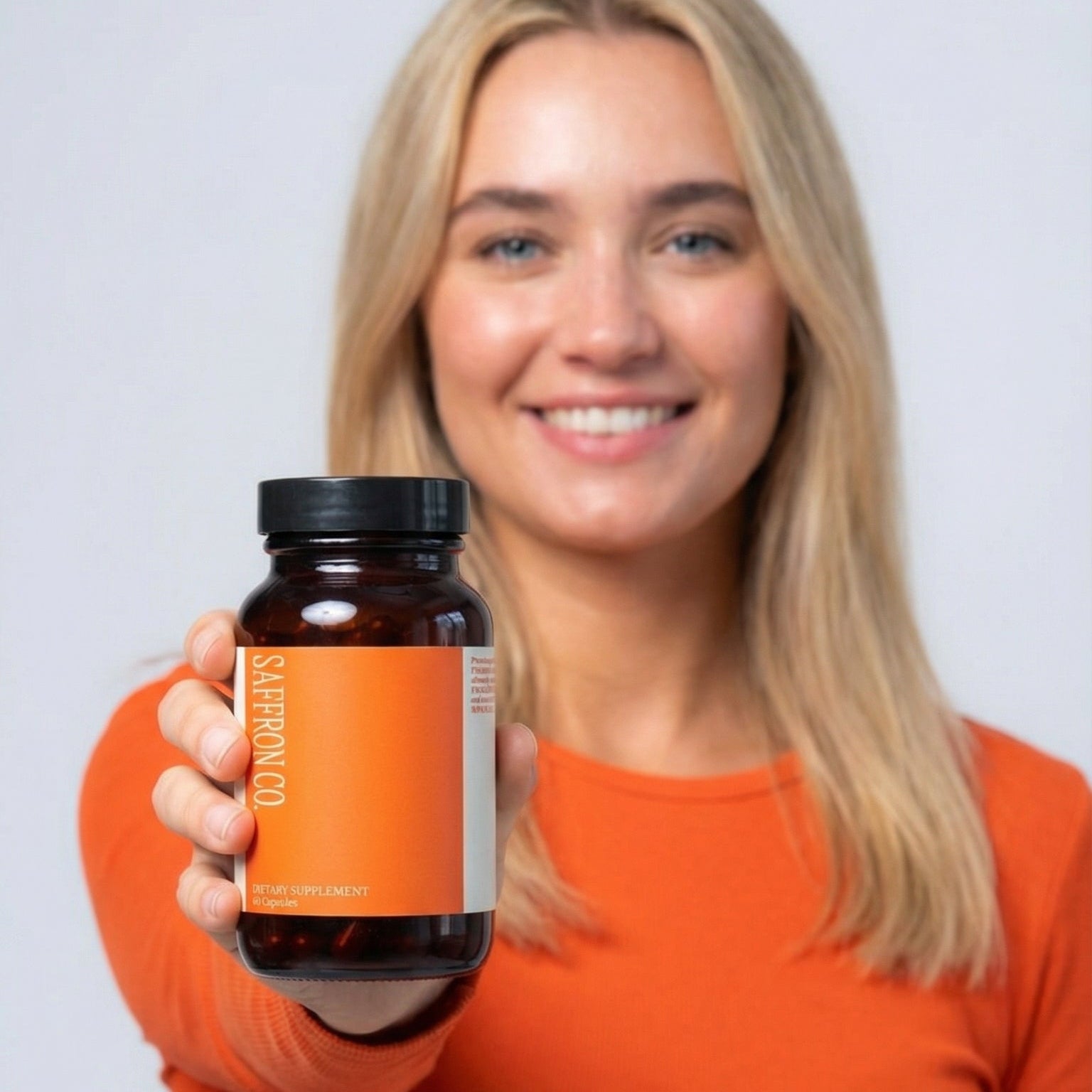
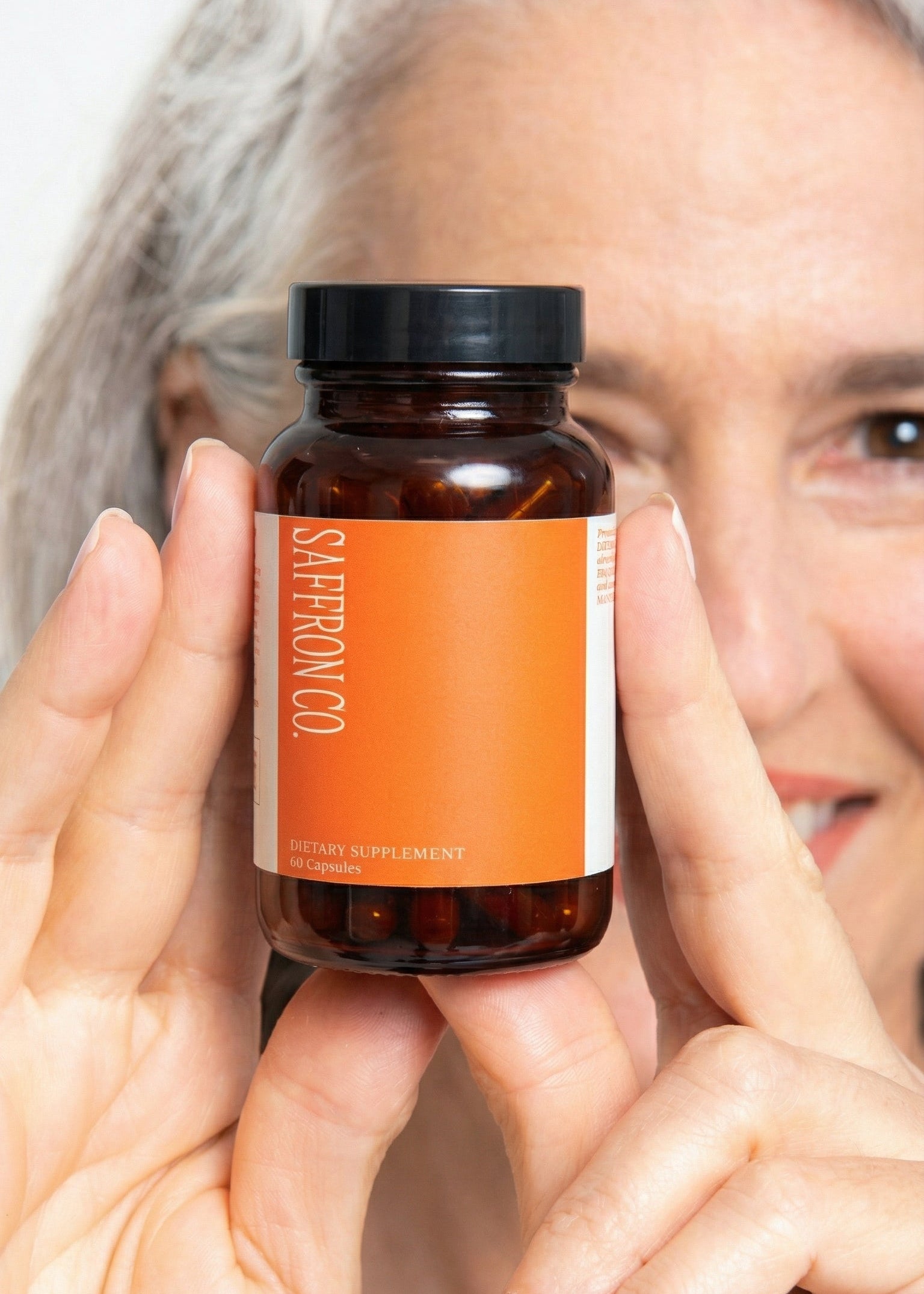
Saffron Co. Mood and Vitality Capsules
$69.90 one-time / $59.90 monthly subscription (15% off) / $119.92 on the 90-Day Supply subscription (43% off) | 60 capsules per jar | 1-2 capsules daily
For adults whose brain concerns are really a mix of low motivation, emotional flatness, stress overload, and reduced clarity, a formula built around clinically studied saffron tends to make more sense than another single-ingredient nootropic. Saffron Co. delivers 30 mg per day of Spanish saffron extract standardized to ≥3.0% trans-crocin and ~1.2% safranal, the active compound range used in most published saffron mood research. Four supporting ingredients each have a defined job: Rhodiola rosea 100 mg for stress adaptation, magnesium glycinate 140 mg (Albion TRAACS®) for nervous-system support, vitamin B6 5 mg as P5P (the active form) for neurotransmitter activation, and ProbioMood® NU-10 (Bacillus coagulans) at 2 billion CFU for the gut-brain axis.
What sets it apart in this comparison is the stack approach. Every other product on this list is a single-ingredient formula or a focused trio. Saffron Co. covers five adjacent levers in one capsule, which is useful if you do not already take magnesium, an adaptogen, or a probiotic separately. The capsule load is light at 1-2 per day, the formula is vegan and gluten-free, and the brand specifies a zero-filler policy (no magnesium stearate, no synthetic dyes).
What to consider: as a newer brand, Saffron Co. has less long-term independently published clinical history than older saffron names. The 90-day money-back guarantee is how the brand answers that honestly. It covers a full evaluation window (most saffron studies measure outcomes at 4 to 8 weeks) and shifts the risk back to the brand. The per-day cost at the one-time entry price is higher than most picks in this set, though the 90-Day Supply subscription tier closes that gap with a 43% discount.
Choose this if you want a complete saffron-centered formula for mood balance, stress resilience, focus, and emotional well-being rather than another stimulant-style focus pill, and you value a 90-day written guarantee over a famous-brand label.

Best for Stress-Related Mental Fatigue and Performance Under Pressure
Life Extension Rhodiola Extract
$13.50 one-time / $12.00 AutoShip (11% off, free shipping) | 60 vegetarian capsules | 2 capsules daily on empty stomach
If the issue is mental fatigue under chronic load, Rhodiola rosea is the better-studied adaptogen with a clearer performance use case than the stress-and-calm angle some adaptogens lean on. Life Extension's Rhodiola Extract delivers 250 mg per capsule of Rhodiola rosea root standardized to 3% rosavins and not less than 1% salidrosides, the two active-compound percentages used in the published clinical literature. The recommended use of two capsules daily on an empty stomach lands the daily dose at 500 mg.
The reason this is the rhodiola pick in this comparison is brand history. Life Extension has been in market for 40+ years with a deep supplement catalog, and the brand publishes its raw-material qualification process (HPTLC identity testing, heavy-metals screening, microbial analysis). The product is gluten-free, non-GMO, vegetarian. At $13.50 one-time or $12.00 on AutoShip, the per-day cost is roughly 45 cents, which is reasonable for a clinical-grade standardized extract.
What to consider: the formula uses vegetable stearate, which is a flow agent some readers prefer to avoid. The PDP doesn't surface a specific money-back window in days, though Life Extension applies a brand-wide satisfaction policy. The standalone product also doesn't address sleep or mood balance, which is why some readers pair it with magnesium or a broader mood formula.
Choose this if your main issue is stress-driven mental fatigue, you want a clinical-grade standardized rhodiola with a long brand track record, and you prefer the single-active simplicity of one ingredient at a clinically studied dose.

Best for Slow-Burn Memory and Learning Support
Double Wood Bacopa Monnieri Extract
$17.95 one-time / ~$14.36 subscription (20% off) | 90 capsules per bottle (90-day supply) | 1 capsule daily with food
Bacopa monnieri is the memory-and-learning ingredient with the most consistent traditional use and a meaningful body of human research, but it is not a same-day focus tool. The research timeline is measured in weeks, not minutes, and consistency matters more than dose stacking. Double Wood's Bacopa delivers 450 mg per capsule of an extract standardized to 20% bacosides, the active-compound marker used in most clinical literature. One capsule per day with food makes a 90-capsule bottle a 90-day supply, which is well-matched to how bacopa is actually studied.
The brand operates from an FDA-registered cGMP facility, third-party tests for identity, potency, lead, cadmium, arsenic and mercury, and labels the formula as soy-free, gluten-free, and non-GMO. At roughly 20 cents per day on a one-time order (or 16 cents on subscription), the per-day cost is the second-lowest in this comparison.
What to consider: the bacopa is generic (not Bacognize® or Synapsa®, the two branded bacopas with their own trial data), the 30-day money-back guarantee is shorter than ideal for an ingredient that often takes 8-12 weeks to show its effect, and some adults find bacopa mildly sedating or hard on the stomach if taken without food.
Choose this if memory and learning support are your specific goal, you are willing to commit to 8-12 weeks of consistent use to evaluate it properly, and you are comfortable with a value-priced standardized extract rather than a named branded one.

Best for Cognitive Demand Under Sleep Deprivation or Heavy Load
Optimum Nutrition Micronized Creatine Powder
$19.99 one-time / $16.00 subscription (20% off) | 0.79 lb / 60 servings | 1 rounded teaspoon (5 g) daily
Creatine is the unexpected brain supplement on this list. The exercise-performance evidence is well established, but a growing body of human research is also looking at cognitive performance under sleep deprivation, mental fatigue, and high cognitive load (the conditions where the brain's ATP demand goes up). At 5 g per serving, Optimum Nutrition's Micronized Creatine matches the standard maintenance dose used in most of the published literature. The micronized form blends more cleanly than coarser creatine powders.
The brand's market history is the longest of any pick here. The 0.79 lb / 60-serving tub at $19.99 (or $16.00 on subscription) lands the per-day cost at roughly 33 cents one-time or 27 cents on subscription. Larger tub sizes are available, though the product page does not surface per-size pricing in body copy.
What to consider: this is generic creatine monohydrate, not the Creapure® branded version that some buyers prefer for traceability. The PDP also makes clear the product is "banned substance tested" but is not NSF Certified for Sport or Informed Choice certified, which competitive athletes may want. The 0.79 lb tub also ships without a scoop (a sustainability choice the brand calls out), so you measure with a rounded teaspoon.
Choose this if you have a cognitively demanding period coming up (intense study, a sleep-disrupted travel schedule, a high-pressure work stretch), you want a foundationally well-researched supplement that supports both physical and cognitive performance, and brand longevity matters to you.

Best for Foundational Omega-3 Support (Brain, Heart, Healthy Aging)
Viva Naturals Triple-Strength Omega-3 Fish Oil
From $55.99 / bottle (sizes from 30 to 240 softgels) | Subscribe & Save 15% | 2 softgels daily with a meal
If you are missing the dietary foundation under "brain support," omega-3s are the most defensible single addition. DHA is concentrated in the brain, and adequate EPA and DHA intake has decades of broad cardiovascular and cognitive-health evidence. Viva Naturals delivers 2,500 mg total fish oil per 2-softgel serving (2,250 mg total omega-3: 1,500 mg EPA, 570 mg DHA, 50 mg DPA) in the re-esterified triglyceride (rTG) form, which is generally better absorbed than the cheaper ethyl-ester form.
What sets this product apart is the certification stack, which is the strongest in this comparison: Labdoor Quality Certified, Labdoor Sport Certified, and IFOS Certified. IFOS in particular is the gold-standard third-party purity certification for fish oil and verifies for heavy metals, PCBs, and oxidation. The fish is small wild-caught species (anchovies, sardines, mackerel) and the product is molecularly distilled. The brand also publishes a 90-day money-back guarantee.
What to consider: the bottle contains fish, which is a meaningful allergen. The absolute dollar cost is the highest of any pick on this list, though the per-day cost scales down meaningfully at the larger 180 or 240 softgel sizes. The product is also positioned for joint, heart, brain, skin, and eye health, so it is a foundational addition rather than a targeted cognitive intervention.
Choose this if your weekly fish intake is low (especially fatty fish), you want a foundational supplement that supports brain, heart, and aging at once, and third-party purity certification (IFOS in particular) is part of your buying filter.
How to Choose a Brain Supplement That Is Actually Worth Buying
Searches like consumer reports best brain supplements usually reflect one thing: people want a trustworthy filter. Fair enough. The category needs one.
The most reliable filter is not a single brand list. It is a checklist.
A practical checklist for comparing brain supplements
When comparing products, ask:
- Does the dose match the research?
- Is the ingredient standardized if it is a botanical?
- Is the form the useful one, such as magnesium glycinate instead of oxide or P5P instead of basic B6?
- Is the product third-party tested?
- Is the brand transparent about sourcing and labeling?
- What is the cost per effective serving, not just cost per bottle?
- Does the formula have a clear purpose, or is it trying to do everything?
Also watch for proprietary blends. They often hide underdosing. Long ingredient lists can look impressive while delivering very little.
Safety matters too. If you take prescription medication, are sensitive to stimulants, are pregnant or nursing, or are buying for an older adult with multiple health conditions, ask a clinician first. This article is for informational purposes and is not medical advice.
When a newer formula may be worth trying
Newer brands are not automatically weaker. They just have less market history.
A newer formula may still be worth trying when the formulation logic is sound, the doses are transparent, quality standards are clear, and the guarantee meaningfully reduces buyer risk. That is part of what makes Saffron Co. credible in its lane. It is not claiming to be for everyone. It is a strong fit for adults who want a mood-and-clarity-oriented saffron stack rather than another generic nootropic blend.
A Realistic Bottom Line on Brain Supplements for Adults
The best brain supplements for adults usually support the system underneath. They help with stress load, nutrient sufficiency, mood balance, or mental fatigue. They do not act like instant on-switches for genius.
Over 4 to 8 weeks, some people notice meaningful changes. Others notice only subtle support. And some notice little at all. That variability is normal. It is true of supplements, and it is true of many wellness tools.
If you want a simple framework:
- Buy a foundational nutrient supplement if your diet, age, or lab work suggests a gap
- Buy a targeted focus formula if your main issue is concentration under cognitive load
- Buy a saffron-centered formula like Saffron Co. if your brain concerns overlap with stress, low mood, emotional flatness, and mental clarity
- Consider something else if you want immediate stimulant effects or a highly specialized memory ingredient
Long term, sleep, exercise, protein intake, blood sugar stability, and stress management still do most of the heavy lifting for brain health. Supplements can help support that foundation. They cannot replace it.
When to consider professional help instead of another supplement
If memory is worsening quickly, mood changes feel major, daily function is slipping, or confusion is increasing, do not keep cycling through supplements. Speak with a qualified healthcare provider. The same applies if you are taking medications that may interact with supplements or if symptoms feel bigger than ordinary stress or fatigue.

FAQ
What are the best brain supplements for adults that actually work?
The best options depend on the goal. Omega-3s, B vitamins, magnesium, saffron, rhodiola, L-theanine with caffeine, and creatine all have plausible use cases. The strongest choice is usually the one that matches the actual problem, not the one with the longest label.
Which brain vitamins for adults are most important after age 50?
Vitamin B12 becomes especially important after 50 because absorption issues become more common. Omega-3s and vitamin D may also matter depending on diet and status. Magnesium can be useful for nervous-system support and sleep quality.
What are the best brain vitamins for studying and concentration?
For studying, the most practical options are caffeine with L-theanine, creatine during heavy cognitive demand, and foundational support from B vitamins or omega-3s when intake is poor. Most "study stacks" are less impressive than they sound.
Do brain supplements help with memory loss in seniors?
They may support general nutrition and healthy aging, but they do not treat meaningful memory loss. If a senior is experiencing noticeable decline, that should be evaluated by a healthcare professional rather than managed as a supplement-shopping problem.
How long do brain supplements take to work?
It depends on the ingredient. Caffeine and L-theanine work the same day. Rhodiola may feel noticeable sooner than many botanicals. Saffron and bacopa usually need several weeks, with many studies measuring outcomes around 4 to 8 weeks.
Are brain supplements safe to take every day?
Some are appropriate for daily use, but "natural" does not always mean risk-free. Safety depends on the ingredient, the dose, the person, and any medications involved. If you are pregnant, nursing, taking prescription medication, or managing a health condition, check with a healthcare provider before starting a new supplement.
Prices and product specifications verified against each brand's product page at time of writing and may move. Read the label on the bottle you actually buy, since formulas get reformulated. This article is for informational purposes and is not medical advice. If you take prescription medication, are pregnant or nursing, or are managing a clinical condition, talk with a qualified healthcare provider before starting a new supplement. These statements have not been evaluated by the Food and Drug Administration. These products are not intended to diagnose, treat, cure, or prevent any disease.