Saffron Supplement Reviews: How to Compare the Best Options Honestly
What saffron supplement reviews can and cannot tell you
If you have spent any time reading saffron supplement reviews, you have probably noticed the pattern. One person says it changed everything in a week. Another says it did nothing. A third spends 200 words talking about shipping speed and the color of the bottle.
That is the problem with this category.
Saffron supplements are often overhyped online, and reviews alone rarely tell you whether a product is actually well formulated.
Customer reviews, clinical evidence, formulation quality, and marketing claims are four different things. Reviews tell you what a person felt. Clinical research tells you what has been studied under controlled conditions. Formulation quality tells you whether the product even matches the dose and extract profile used in research. Marketing claims tell you what the brand wants you to notice. Those are not interchangeable.
The goal here is not to crown one universal winner. There is no single best saffron supplement for everyone. Some people want support for mood balance and emotional well-being. Some care more about stress resilience or mental clarity. Some want a simpler pure saffron approach with no added ingredients. Others want a more complete formula that supports the wider system around mood, stress, libido and the gut-brain axis. This guide uses a calmer framework: look at the evidence, the dose, the standardization, the formula, and the use case.
How to read saffron supplement reviews without getting misled
The fastest way to get misled is to treat every review as equally meaningful. Many are not. Some people judge a supplement after three or four days, even though saffron research usually measures outcomes over weeks, not weekends. Some expect an immediate, stimulant-like lift and leave a negative review when that does not happen. Others are using underdosed products and blaming saffron itself rather than the formula.
It is also common to see reviews that focus on packaging, capsule size, subscription issues, or delivery speed. That information can be useful, but it does not tell you much about whether the saffron extract is standardized, whether the dose aligns with clinical research, or whether the formula is built for a real use case.
A better approach is simple. Use reviews as one layer of information, not the whole decision. Then check the label.
Who this guide is for and when reviews are not enough
This guide is for adults looking for support with mood balance, emotional well-being, stress resilience, focus, mental clarity, or libido support. It is especially relevant for women in midlife who feel flat, drained, or less like themselves than they used to, including those navigating perimenopause-adjacent shifts in mood, motivation, and stress tolerance.
Reviews are not enough when symptoms are severe, persistent, or clearly interfering with daily functioning. Supplements may help support normal mood and stress response, but they are not a substitute for clinical care in diagnosed mental health conditions. If you are dealing with depression, anxiety, ADHD, insomnia, or sexual dysfunction as a diagnosable condition, professional care is the right framework.
What the research says about saffron supplement benefits
Saffron is one of the better-studied ingredients in the mood-support supplement category. There are clinical studies on saffron, with most using 28 to 30 mg per day and many running for 6 to 8 weeks. That does not mean the evidence is perfect. Many studies are still small and short. But it does mean saffron has more clinical support than most trendy mood ingredients.
In DSHEA-compliant terms, saffron has been clinically studied for mood support and may help support mood balance, emotional well-being, libido, focus, mental clarity, and the body's response to stress. The strongest evidence is around mood support. The research around libido, focus, and stress is promising but smaller.
Mechanistically, saffron appears to work through several pathways at once. Its key compounds, including crocin and safranal, are associated with serotonin and dopamine modulation, which helps explain the interest in mood and motivation. Saffron also has antioxidant activity in nerve cells and may help support BDNF, a factor involved in brain health and plasticity. In plain language, it seems to support some of the chemistry that shapes how steady, motivated, and mentally clear you feel.
For female readers, especially in midlife, that is part of why saffron keeps coming up. Perimenopause and menopause can affect mood, libido, sleep, and stress tolerance through shifting hormones and downstream neurotransmitter changes. A saffron supplement cannot treat perimenopause or menopause, but it may be worth considering as part of a broader support plan when the goal is to feel more emotionally steady and like yourself again.
How long does saffron take to work?
The evidence-aligned answer is 4 to 8 weeks of consistent daily use. Some people report noticing changes earlier, but most clinical trials measure saffron's effects over multi-week timelines. If a review says it worked overnight, that is possible as a personal experience, but it is not the best benchmark to plan around.
What saffron cannot do
Saffron may help support normal mood, emotional well-being, libido, focus, and stress response. It does not treat depression, anxiety, ADHD, insomnia, or sexual dysfunction. It should not be framed as a replacement for prescription medication, therapy, or medical care. It also does not override bigger drivers of low mood such as chronic sleep loss, burnout, relationship strain, or untreated hormonal issues.
How to evaluate the best saffron supplements before reading individual reviews
When people search for the best saffron supplements, they usually get a list of brands with very little explanation. What matters more than hype is straightforward: clinical dose, extract standardization, supporting ingredients, brand transparency, testing, and guarantee. If those pieces are weak, the front label does not matter.
The clinically studied daily dose is about 30 mg. That matters because it is the range used across most of the human research. Standardization matters too. Markers such as trans-crocin and safranal are stronger quality signals than vague claims like "premium saffron" or "high potency." If a brand does not tell you what kind of extract it uses, what it is standardized to, or how much you are getting per day, that is a problem.
There are also two different formulation philosophies in this space. A pure saffron supplement keeps things simple. A multi-ingredient stack tries to support the wider picture with added ingredients for stress adaptation, nervous-system support, neurotransmitter pathways, or the gut-brain axis. Neither is automatically better. The better fit depends on what you are trying to support.
Practical buying criteria matter more than many reviews admit. Look at value per clinical dose, total capsule count, ingredient form quality, and whether the formula solves a real use case rather than trying to say yes to everything.
Pure saffron supplement vs full formula: which type fits your needs?
A pure saffron supplement may be enough if your goal is straightforward and you prefer minimalism. It also makes sense if you already take magnesium, probiotics, or other targeted supplements and do not want overlap.
A full formula makes more sense when the issue is broader. If low mood is showing up alongside stress, brain fog, nervous-system strain, or gut-related issues, a stack can be more practical than buying four separate bottles.
Red flags in low-quality saffron supplements
Watch for underdosed formulas, missing standardization details, proprietary blends that hide how much saffron you are actually getting, weak supporting ingredients added for label appeal, and benefit claims that go well beyond the evidence. In this category, vague usually means compromise.
Saffron supplement reviews: best options compared by use case
The best way to review saffron supplements is by use case, not by blanket ranking. Below are the most relevant options for different priorities.
Best saffron supplement for women who want a complete mood-support stack
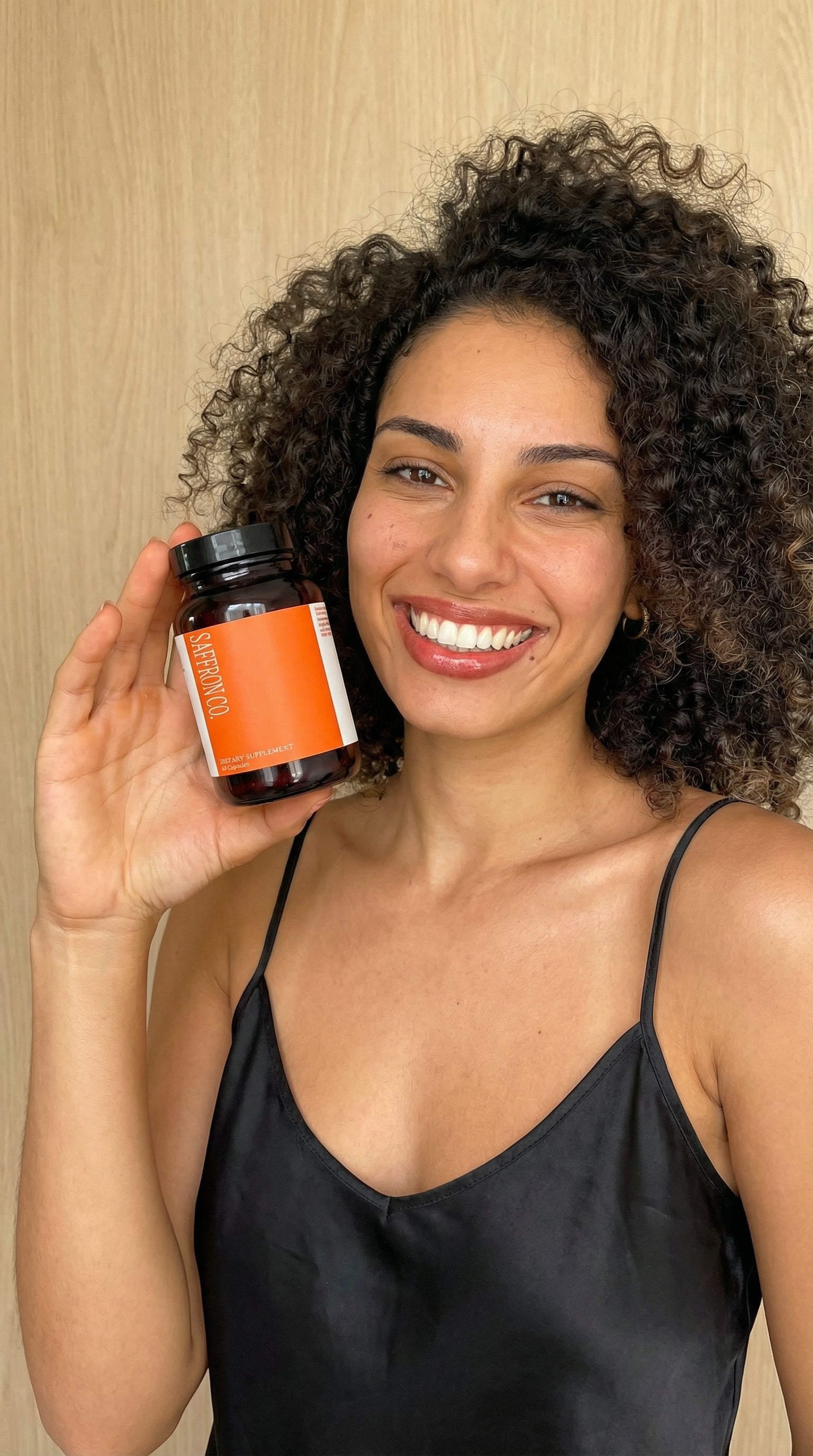
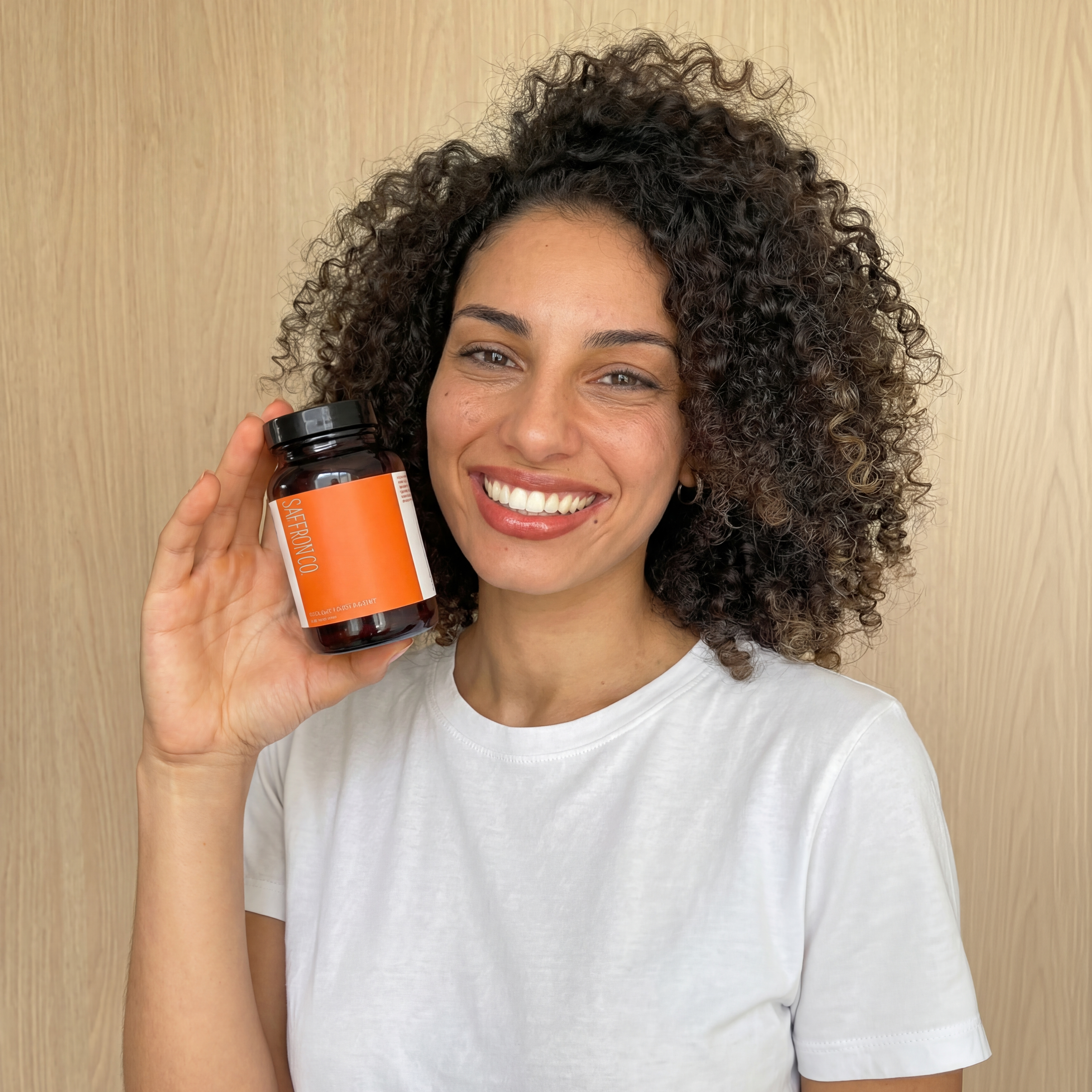
Saffron Co Mood and Vitality Capsules are a strong fit for women who want more than saffron alone. The formula uses 30 mg per day of Spanish saffron extract standardized to at least 3.0% trans-crocin and about 1.2% safranal, which aligns with the clinically studied dose range. It then adds Rhodiola rosea for stress adaptation, magnesium glycinate for nervous-system support, vitamin B6 in its active P5P form for neurotransmitter activation, and a Bacillus coagulans probiotic for the gut-brain axis.
That formulation logic is the main differentiator. If you want to understand why each ingredient is there, the brand explains it clearly in this breakdown of the formula. For women dealing with emotional flatness, stress, low motivation, or midlife mood shifts that do not feel isolated to one symptom, that broader stack makes sense.
A second differentiator is the 90-day money-back guarantee. That matters because saffron is not an overnight ingredient, and because Saffron Co is still a newer brand with less long-term independent brand history than some established competitors. The guarantee lowers the risk of trying a more complete formula when you need enough time to judge it fairly.
Buy Saffron Co if you want a clinically dosed saffron stack with broader support built in. Consider a simpler saffron-only product instead if you prefer minimal formulas or already take magnesium, probiotics, and stress-support ingredients separately.
Best pure saffron supplement options
If you want a pure saffron supplement, look for one that stays close to the clinical research rather than adding filler ingredients. Life Extension's saffron products are often worth considering for readers who want a more established supplement brand and a simpler formulation philosophy. This type of product suits someone who wants saffron itself, not a broader mood-support stack.
The tradeoff is straightforward. Simplicity is cleaner, but it also means less built-in support for stress adaptation, nervous-system strain, or gut-brain factors.
Established saffron brands worth considering
BrainMD is one of the better-known names in this category. Its formulation philosophy is different from Saffron Co's. Rather than building a five-ingredient stack around saffron, BrainMD combines saffron with ingredients like curcumin and zinc. That may appeal to readers who value the brand's established public profile and broader brain-health framing.
Life Extension suits readers who trust legacy supplement brands and prefer a more straightforward ingredient strategy.
NOW Foods and similar mass-market brands may appeal more to budget-conscious shoppers. The upside is accessibility. The downside is that mass-market saffron supplements are more variable on standardization details and formulation depth, so label scrutiny matters even more.
A quick note on search intent around the best saffron supplement for ADHD: saffron is being explored in research for focus and attention support, but supplements should not be positioned as treating ADHD. If your interest is focus and mental clarity in a general wellness sense, saffron may be worth exploring. If you are dealing with diagnosed ADHD, that is a clinical conversation.
Best saffron supplement reviews by priority
For mood support: Look first at dose and standardization. Saffron Co and stronger pure saffron formulas both fit here depending on whether you want added support.
For libido support: Saffron is one of the more interesting ingredients in this category, especially for women. A saffron-centered formula may be worth considering, but set expectations realistically and give it time.
For stress support: A stack with Rhodiola and magnesium makes more sense than saffron alone.
For focus and mental clarity: Look for clinically dosed saffron and honest positioning. Supportive, not treatment-level.
For budget-conscious shoppers: Compare cost per clinical daily dose, not just bottle price.
Safety, side effects, interactions, and smart buying advice
Saffron is generally well tolerated, but natural does not automatically mean risk-free. Some people report mild digestive upset, headache, dizziness, or changes in appetite. That does not mean most people will have issues, but it does mean the "no side effects" framing you sometimes see online is not credible.
If you are taking prescription medication for mood, sleep, or any other condition, or if you are pregnant or nursing, speak with your healthcare provider before starting a new supplement. The same caution applies if you use HRT or other hormone-related medications and want help thinking through combinations. This article is informational, not medical advice.
Can you take saffron every day?
Yes, daily use is the pattern used in clinical research. That is also why consistency matters more than taking it sporadically. The caveat is that long-term data is still more limited than short-term trial data, so it is reasonable to reassess periodically rather than assume any supplement should be taken forever without review.
Can you take saffron with antidepressants or other medications?
That is a conversation for your healthcare provider. Saffron is not positioned as a replacement for antidepressants, and combining supplements with prescription medications is not something to decide from a product review alone. The same caution applies to combining saffron with other mood-related supplements.
Final verdict: how to choose the right saffron supplement for you
Choose based on fit, not hype. If you want a complete formula for mood balance, stress resilience, and broader system support, Saffron Co is a compelling option, especially if the 90-day guarantee matters to you. If you want a pure saffron supplement with fewer moving parts, an established saffron-only brand may be the better fit. If budget is the priority, focus on whether the product still delivers the clinically studied dose and transparent standardization.
There is no single best answer. There is only the best fit for what you are actually trying to support.
FAQ
Do saffron supplement reviews actually reflect how well saffron works?
Sometimes, but only partially. Reviews reflect individual experience, expectations, and how long someone used the product. They do not replace clinical evidence or careful label evaluation.
What is the best saffron supplement for mood support?
It depends on whether you want saffron alone or a broader stack. For a more complete formula, Saffron Co stands out. For a simpler approach, a well-standardized pure saffron product may be enough.
How long does a saffron supplement take to work?
The most realistic expectation is 4 to 8 weeks of consistent daily use. That matches the timing used in most clinical studies.
What are the main saffron supplement benefits?
Saffron has been clinically studied for mood support and may help support mood balance, emotional well-being, libido, focus, mental clarity, and stress adaptation.
Is a pure saffron supplement better than a multi-ingredient formula?
Not always. A pure saffron supplement is better for simplicity. A multi-ingredient formula may be better if you also want support for stress, nervous-system strain, or the gut-brain axis.
Can I take a saffron supplement every day?
Daily use is the studied pattern in the research. Consistency matters, though long-term data is still less developed than short-term trial data.
Can I take saffron with antidepressants or HRT?
Speak with your healthcare provider before combining saffron with antidepressants, HRT, or other prescription medications. That decision should be personalized.
What should I look for in the best saffron supplement?
Look for a 30 mg daily dose, clear extract standardization, transparent labeling, strong ingredient forms, third-party testing where available, and a formula that matches your actual use case.