
Perimenopause Libido: Why Desire Changes & Natural Ways to Support It
What perimenopause libido changes can actually feel like
Changes in libido during perimenopause are common. They are also deeply personal. For some women, it feels like desire has gone quiet. For others, sex still sounds good in theory, but the body is slower to respond. Some feel mentally disconnected from sex altogether, as if that part of themselves has gone dim for a while. And some notice the opposite, with periods of stronger desire that seem to come out of nowhere.
That range matters. Libido is not one single thing. It can include interest, arousal, physical comfort, emotional closeness, mental space, and basic energy. When women say their libido has changed, they may mean any combination of those.
The short answer to the search behind this topic is yes, decreased libido in perimenopause is normal. It is one of the most common shifts women notice in this stage of life. It is also not necessarily permanent. Desire often changes as hormones, sleep, stress, health, and relationship dynamics change.
Is low libido normal in perimenopause?
Yes. Low libido in perimenopause is common because several things often overlap at once: hormonal fluctuation, poorer sleep, stress, hot flashes, body changes, mood shifts, and relationship strain. It is rarely just one cause.
Can perimenopause also increase libido?
It can. Some women notice temporary spikes in desire during perimenopause. Hormonal fluctuation can create inconsistent patterns, not just a steady decline. Less fear of pregnancy, changes in family demands, or feeling more confident and self-directed in midlife can also affect libido in a positive way. Perimenopause is often unpredictable, and desire can be too.
Why perimenopause affects libido
Perimenopause affects libido because it touches nearly every part of the system that supports sexual interest and response.
On the biological side, estrogen and progesterone start to fluctuate, and testosterone may shift as well. These changes can influence vaginal comfort, lubrication, responsiveness, sleep, mood, and energy. If your body feels tired, tense, irritated, or uncomfortable, desire often drops with it.
Then there is the indirect effect. Sleep disruption, hot flashes, dryness, pain with sex, and brain fog do not just affect sex physically. They affect whether sex feels inviting in the first place. Many women are not lacking desire in some abstract sense. They are exhausted, overstimulated, touched out, distracted, or bracing against discomfort.
The emotional and relational layer matters too. Midlife can bring a heavy mental load, stress at work, caregiving pressure, body-image shifts, resentment, or a feeling of being unseen by a partner. That dynamic shows up in a lot of real-world searches around perimenopause and husbands, and for good reason. Desire tends to respond poorly to chronic stress and emotional disconnection.
It is also worth clearing up one common misconception. Lubrication and desire are related, but they are not identical. The assumption behind searches like "perimenopause always wet" can be misleading. A woman can feel desire and still need lubricant. She can also have some physical lubrication without much desire at all.
Hormones, arousal, and vaginal comfort
Fluctuating or lower estrogen can affect vaginal tissue, lubrication, and comfort. That may mean more dryness, slower arousal, or a need for more warm-up and support than before. Not every woman will experience this the same way, but it is a common part of the picture.
Changes in testosterone may matter too, particularly for motivation, sexual interest, and responsiveness. But libido is not controlled by one hormone alone. It is the sum of several systems interacting.
Mood, stress, and the mental load of midlife
Chronic stress is not sexy. Neither is burnout.
Many women in perimenopause are carrying work pressure, family logistics, disrupted sleep, and the low-grade irritability that comes from never fully recovering. Emotional flatness can creep in. So can brain fog. When the nervous system is overloaded, desire often feels less available. Even when hormones are part of the story, stress and depletion can amplify the problem.
Desire versus lubrication: not the same thing
This distinction helps a lot of women feel less confused. You can absolutely want sex and still need lubricant. You can also notice lubrication without much emotional or mental desire. Arousal has physical and psychological components, and they do not always move in perfect sync, especially during perimenopause.
How to increase libido during perimenopause naturally
Natural support works best when it starts with foundations, not quick fixes. That means looking at the conditions that make desire more possible in the first place.
Sleep matters. So does movement, especially strength training or regular exercise that supports mood, blood sugar stability, and body confidence. Stress regulation matters too. A depleted nervous system rarely feels erotic. Alcohol is worth reviewing honestly, since it can reduce inhibition in the short term but worsen sleep, dryness, mood, and energy overall.
It also helps to stop treating sex like one more task on an already crowded list. For many women, desire responds better when intimacy has space around it rather than pressure.
Practical comfort support can make a real difference. Lubricants, vaginal moisturizers, slower arousal, and more time for physical and emotional transition into sex are not signs that something is wrong. They are often smart adjustments to a changing body.
Communication matters too. If desire feels mismatched, if resentment has built up, or if a woman feels unseen by her partner, that needs attention. Many libido struggles are not only hormonal. They are relational, emotional, and logistical.
Lifestyle changes that support desire
A few basics tend to help more than most women are told:
- Prioritize sleep quality, not just hours in bed
- Eat in a way that supports steady blood sugar
- Move regularly, including strength training if possible
- Reduce chronic stress where you can, and build in actual recovery time
- Limit habits that worsen sleep or dryness, including excess alcohol
- Make room for pleasure, rest, and connection outside of sex too
These steps are not glamorous, but they support the biology underneath desire.
Support intimacy without forcing it
For some couples, scheduling intimacy helps. Not because sex should feel mechanical, but because midlife rarely leaves much open space by accident. It can also help to take performance pressure off the table. Intimacy does not have to mean intercourse every time. Touch, closeness, humor, kissing, massage, and honest conversation all count.
If desire has changed, naming that directly can lower shame. Many women feel relieved when they stop pretending everything is the same as it was ten years ago.
Where supplements may fit
Supplements may fit as supportive tools, especially when low desire is tied to stress, emotional flatness, poor resilience, or feeling disconnected from yourself. They are not instant, and they tend to work best alongside lifestyle support and, when needed, medical care.
If you want a broader look at saffron and midlife support, this related guide on saffron for menopause support is a useful next read.
What the evidence says about libido support, including saffron
The evidence on natural libido support is mixed. Some ingredients have encouraging research for mood, stress resilience, and libido support, but outcomes vary and many studies are still small or early. That is especially true in perimenopause, where libido is rarely a single-symptom issue.
For many women, supporting libido means supporting mood, stress response, sleep, and nervous-system load alongside sexual comfort. This is one reason some supplements may help indirectly rather than working like a fast-on, fast-off libido product.
Saffron is one of the better-studied ingredients in this category for mood support. Clinical research has examined saffron at the 28 to 30mg daily range across multiple trials, mostly over 6 to 8 weeks. The strongest reading of that research is that saffron may help support mood balance and emotional well-being for some people with consistent use. A smaller body of research also suggests it may help support libido for some women. It is not a treatment for sexual dysfunction or menopause.
Why mood support can matter for libido
Libido is influenced by mood, stress response, energy, and mental clarity. When a woman feels flat, overloaded, or chronically tense, desire often fades into the background. That does not mean the issue is "all in her head." It means sexual desire is connected to the rest of her physiology.
A supplement that supports emotional well-being, stress resilience, and mental clarity may indirectly support libido for some women because it improves the broader conditions desire depends on.
A realistic use case for Saffron Co
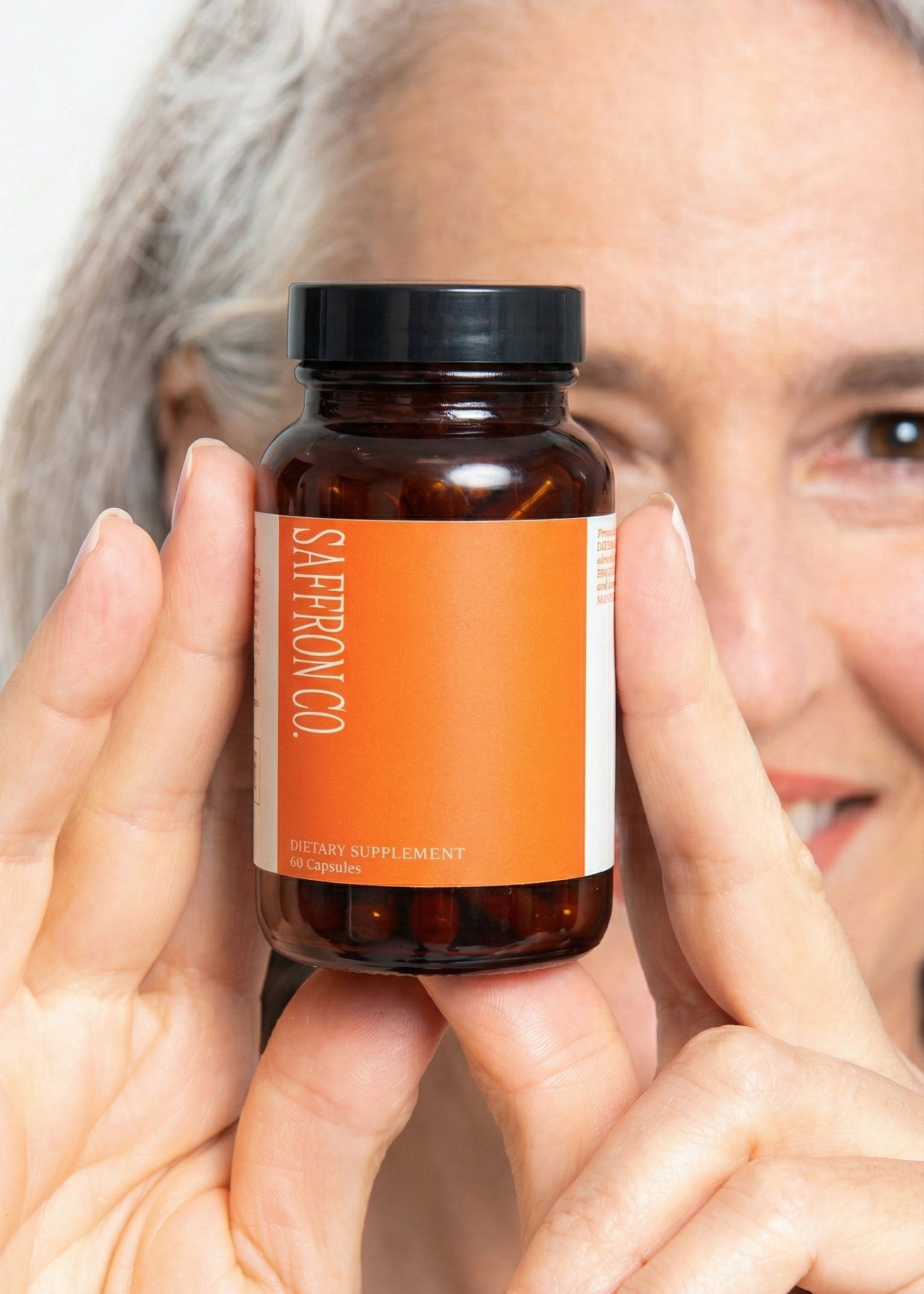
For women who feel emotionally flat, stressed, or disconnected from themselves during perimenopause, Saffron Co Mood and Vitality Capsules are a reasonable formula to consider.
The formulation logic is specific. It uses clinical-grade Spanish saffron at 30mg daily, standardized to ≥3.0% trans-crocin and ~1.2% safranal, then supports it with Rhodiola for stress adaptation, magnesium glycinate for nervous-system support, vitamin B6 in its active P5P form for neurotransmitter activation, and a probiotic for the gut-brain axis. The product is vegan, third-party tested, and backed by a 90-day money-back guarantee.
As a newer brand, Saffron Co has less long-term independent brand history than some established competitors. The guarantee is the honest answer to that. Buy it if you want a complete saffron-based formula rather than saffron alone, and your libido changes seem tied to mood, stress, and feeling out of sync. Consider other routes first if pain, severe dryness, or relationship distress are the main drivers.
You can explore the full formula and guarantee details on the Saffron Co product page, and read more about the formulation approach on why this formula.
What supplements cannot do
Supplements cannot replace relationship work, pelvic pain care, hormone evaluation, therapy, or medical treatment when symptoms are severe or persistent. They also cannot override ongoing sleep deprivation, significant vaginal pain, or major emotional distress on their own.
When to talk with a clinician about perimenopause libido
Low libido during perimenopause is common, but that does not mean women have to simply tolerate symptoms that feel painful, sudden, or disruptive.
It is a good idea to seek medical support when low desire is tied to pain with sex, significant dryness, bleeding, severe mood changes, sudden symptom shifts, or distress in daily life or relationships. A clinician can help sort out what is hormonal, what is mechanical, what is emotional, and what may be related to medication or broader health issues.
Evaluation may include hormones, current medications, sleep, pelvic health, thyroid issues, and mental-health factors. That is not overmedicalizing the issue. It is just a practical way to understand what is driving it.
There are also several legitimate treatment options depending on the cause, including lubricants, vaginal moisturizers, pelvic floor therapy, counseling, and menopause-focused care such as HRT or MHT when appropriate.
If you take prescription medication for mood, sleep, or any other condition, speak with your healthcare provider before adding supplements. The same applies if you are pregnant or nursing. This article is for informational purposes and is not medical advice.
Signs it is time to get support
Consider talking with a clinician if you notice:
- Pain with sex
- Severe vaginal dryness
- Persistent emotional distress
- Relationship strain tied to sexual changes
- Loss of interest that feels sudden or deeply disruptive
- Bleeding, unusual symptoms, or major changes in how your body responds
What a clinician may help you explore
A clinician may help you look at:
- Vaginal and vulvar health
- Medication side effects
- Hormone changes across perimenopause
- Sleep issues and fatigue
- Thyroid or other broader health contributors
- Pelvic floor function
- Mood and stress-related factors
FAQ
Is decreased libido in perimenopause normal?
Yes. Decreased libido in perimenopause is very common. Hormonal fluctuation, stress, sleep disruption, vaginal dryness, mood changes, and relationship context can all contribute.
How can I increase libido during perimenopause naturally?
Start with foundations: better sleep, regular movement, blood sugar stability, stress reduction, and making space for intimacy without pressure. Lubricants, moisturizers, slower arousal, and honest communication with a partner can also help. Supplements may play a supportive role for some women, especially when mood and stress are part of the picture.
Can perimenopause cause dryness even if I still feel turned on?
Yes. Desire and lubrication are not the same thing. A woman can feel mentally and emotionally interested in sex and still need lubricant or more time for physical arousal during perimenopause.
Does libido come back after perimenopause?
Often, yes, though not always in exactly the same way as before. For some women, libido improves once hormonal swings settle, sleep improves, or pain and dryness are addressed. For others, it takes more intentional support. It is not automatically gone for good.
Can saffron help support libido during perimenopause?
It may help support libido for some women, particularly when low desire is tied to stress, emotional flatness, or reduced sense of well-being. The evidence is more established for saffron's role in mood support than for libido specifically, so it is best framed as a supportive tool rather than a direct fix.
When should I talk to a doctor about low libido in perimenopause?
Talk with a clinician if low libido comes with pain, severe dryness, bleeding, sudden changes, persistent distress, or relationship disruption. It also makes sense to get support if symptoms are affecting daily life or if you suspect medications, hormones, sleep, or another health issue may be involved.