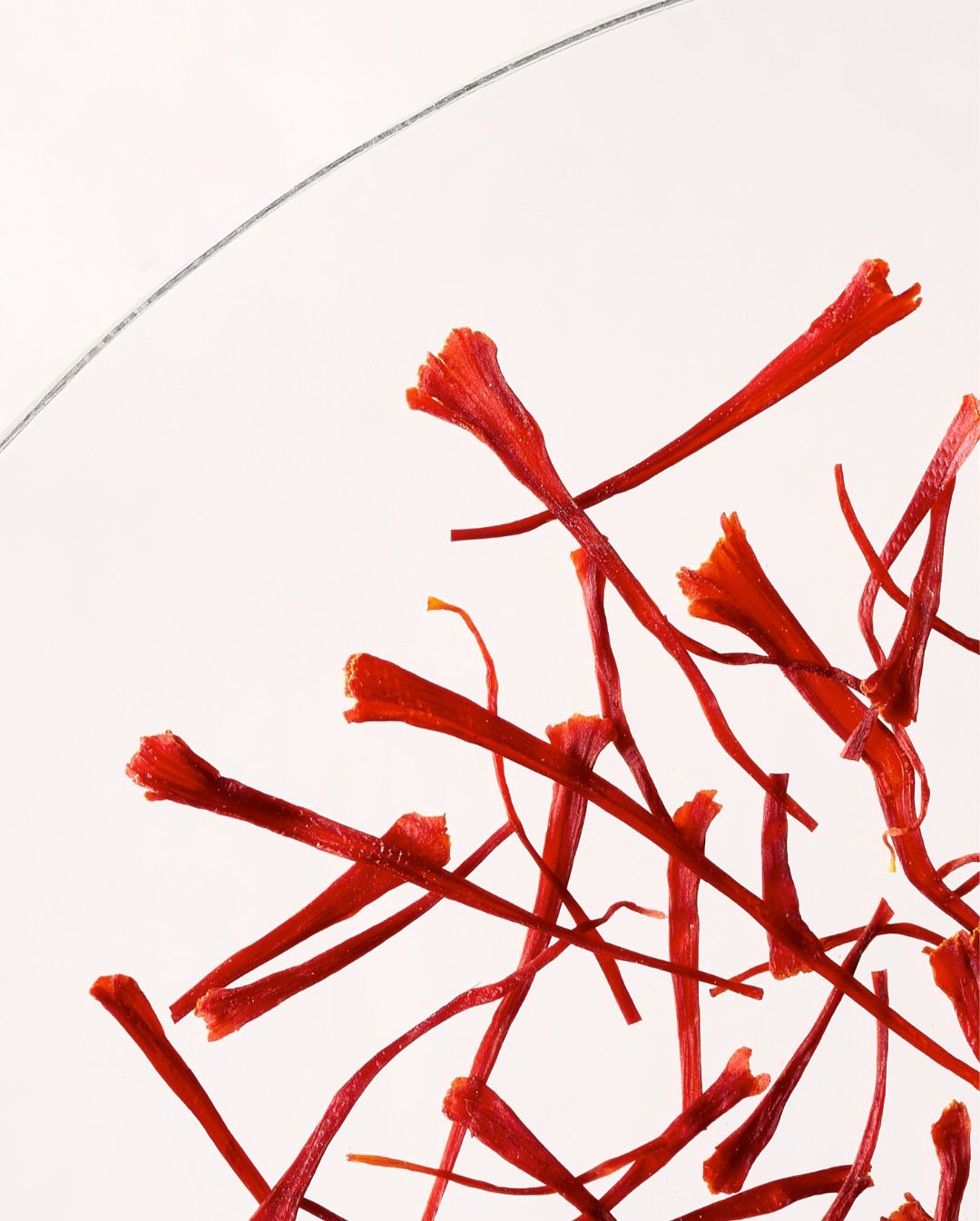

Saffron for perimenopause may support mood, stress resilience, and libido during the years when you feel less like yourself. Here is what the research actually shows, where saffron fits and where it does not, and how three saffron-based formulas compare for different perimenopause patterns.
Why saffron for perimenopause is getting so much attention
Saffron is getting attention in perimenopause for a simple reason: it is one of the few supplements with real clinical research behind the complaints women actually bring to this stage, mood shifts, emotional flatness, stress reactivity, and lower desire. That does not make it a cure. It does not make it hormone therapy either. And it is not a replacement for medical care when symptoms are severe or clearly hormone-driven.
Perimenopause, the transition before menopause, often does not arrive as one obvious event. It shows up as a stretch of time where you feel a little less like yourself. Maybe more emotionally reactive. More tired. More mentally foggy. Less resilient than you used to be. For many women, it is not dramatic enough to call a crisis, but it is significant enough to affect daily life. That middle ground is exactly the territory the saffron research covers.
Still, for women dealing with low-grade flatness, mood shifts, and that sense that their inner steadiness has gone missing, saffron is one of the more credible supplements in the conversation. If you want to understand the formulation logic behind a complete saffron-based approach, Saffron Co.'s Why This Formula page gives a useful overview early on.
How this guide is organized: evidence first, then how saffron may work during perimenopause, then dosing and label quality, then three saffron-based formulas compared by which perimenopause pattern each one actually fits. No product is the answer to everything perimenopause brings, and the comparison is built around that honesty.
What perimenopause can feel like in real life
Perimenopause can begin years earlier than many women expect, and fluctuating estrogen and progesterone can affect sleep, stress tolerance, mood, and mental clarity.
In real life, that often looks like:
- feeling flat or muted rather than deeply sad
- mood swings that seem out of proportion to the moment
- brain fog and slower recall
- getting overwhelmed more easily
- lighter sleep or waking during the night
- lower desire or less responsiveness sexually
None of this means something is necessarily wrong in a clinical sense. But it does mean something has shifted, and many women want support that feels measured and evidence-aware.
Where saffron may fit, and where it does not
Saffron may fit best as daily support for mood balance, emotional well-being, stress resilience, and libido support. That is where the evidence is most promising.
Where saffron is less compelling: symptoms that are strongly hormone-driven, such as hot flashes, night sweats, or vaginal dryness. Those concerns may need a different approach, whether that means lifestyle changes, menopause hormone therapy, or clinician-guided care. Saffron can be part of a broader support plan. It should not be framed as the answer to everything perimenopause brings.
What the research actually says about saffron for perimenopause
Saffron has 24+ peer-reviewed clinical studies behind it for mood support, most using doses around 28 to 30 mg per day over 4 to 8 weeks. The research specifically in perimenopausal women is smaller: it exists, but it is more targeted and still developing.
So the honest read is this: saffron has a meaningful body of evidence for mood support in general, and that gives it relevance in perimenopause, but not every perimenopausal symptom has equally strong data behind it. The 4-to-8-week trial window also matters in practice, because saffron is not an overnight ingredient.
Saffron for perimenopause mood: the strongest case
This is where saffron looks most convincing. Across clinical research, saffron has been studied for supporting mood balance and emotional well-being, especially in people dealing with mild low mood or emotional flatness.
For women in perimenopause, that matters because the complaint is often not "I have a diagnosable mood disorder." It is more often, "I do not feel like myself anymore." Saffron may help support that middle ground. With consistent use, some women report feeling less emotionally blunted, less on edge, or more steady day to day.
That does not mean dramatic transformation. It means the strongest case for saffron is helping support mood in a way that feels subtle but meaningful over time.
Saffron for sleep, stress, and brain fog: promising but not equally proven
Sleep, stress, and brain fog are all common in perimenopause, but saffron's direct evidence here is less robust than it is for mood. In practice, saffron may support these areas indirectly by helping regulate mood and stress response.
If someone sleeps poorly because they feel keyed up, emotionally depleted, or mentally overstimulated, improving that underlying state may help sleep feel easier. The same logic can apply to mental clarity. Sometimes brain fog is partly worsened by chronic stress, low mood, and poor sleep cycling into each other.
But it is still important to be precise. Saffron is better understood as a mood-support ingredient with secondary relevance to stress and mental clarity, not as a primary sleep supplement or cognitive enhancer.
Saffron for libido in perimenopause: meaningful but nuanced
There is also research suggesting saffron may help support libido in some women. That makes it especially interesting in perimenopause, when desire can drop for multiple reasons at once.
Still, low libido in midlife is rarely just one thing. Hormonal shifts matter. So do poor sleep, stress, relationship dynamics, body discomfort, and pain during sex. Saffron may support libido for some women, but it is not likely to override those deeper drivers on its own.
That is why this is a meaningful area, but a nuanced one. If low desire is part of a wider pattern of feeling flat, stressed, and emotionally disconnected, saffron may be worth considering. If the issue is mainly pain, dryness, or major hormonal symptoms, a more targeted clinical approach may be the better fit.
Does saffron help with hot flashes and night sweats?
Probably not much, based on current evidence. Hot flashes, night sweats, vaginal dryness, and other symptoms tied directly to hormonal change are where saffron's data is weakest, and this is the part many articles blur.
That does not make saffron useless in perimenopause. It just means it belongs in the mood, stress, and emotional well-being category more than the direct hormone-symptom category. If hot flashes and night sweats are your main issue, saffron is probably not the first tool to reach for.
How saffron may work in the body during perimenopause
Saffron contains compounds such as crocin and safranal that have been studied for their effects on serotonin, dopamine, stress signaling, antioxidant activity, and brain-derived neurotrophic factor, or BDNF. In simple terms, researchers think saffron may help support some of the chemical pathways involved in mood regulation, resilience, and mental energy.
Why this matters in perimenopause specifically: fluctuating estrogen and progesterone do more than affect cycles. They can also influence neurotransmitters, sleep quality, and how reactive the body feels under stress. That is part of why women often describe perimenopause as feeling emotionally unfamiliar. The biology underneath really is shifting, and saffron's proposed mechanisms sit on the neurotransmitter side of that shift, not the hormone side.
Does saffron increase estrogen?
No. Current evidence does not support describing saffron as an estrogen booster or a form of hormone replacement. Saffron is better understood as supporting neurotransmitter activity and stress response, not directly increasing estrogen.
Why this matters for women who feel off but not clinically unwell
A lot of women in perimenopause live in the middle ground. They are functioning. They are getting through work, family, and life. But they feel off. Less motivated. Less steady. Less like themselves.
That is where saffron may make the most sense. Not as treatment for a medical condition, and not as a substitute for hormone care when that is needed, but as support for mood balance, emotional steadiness, and day-to-day resilience.
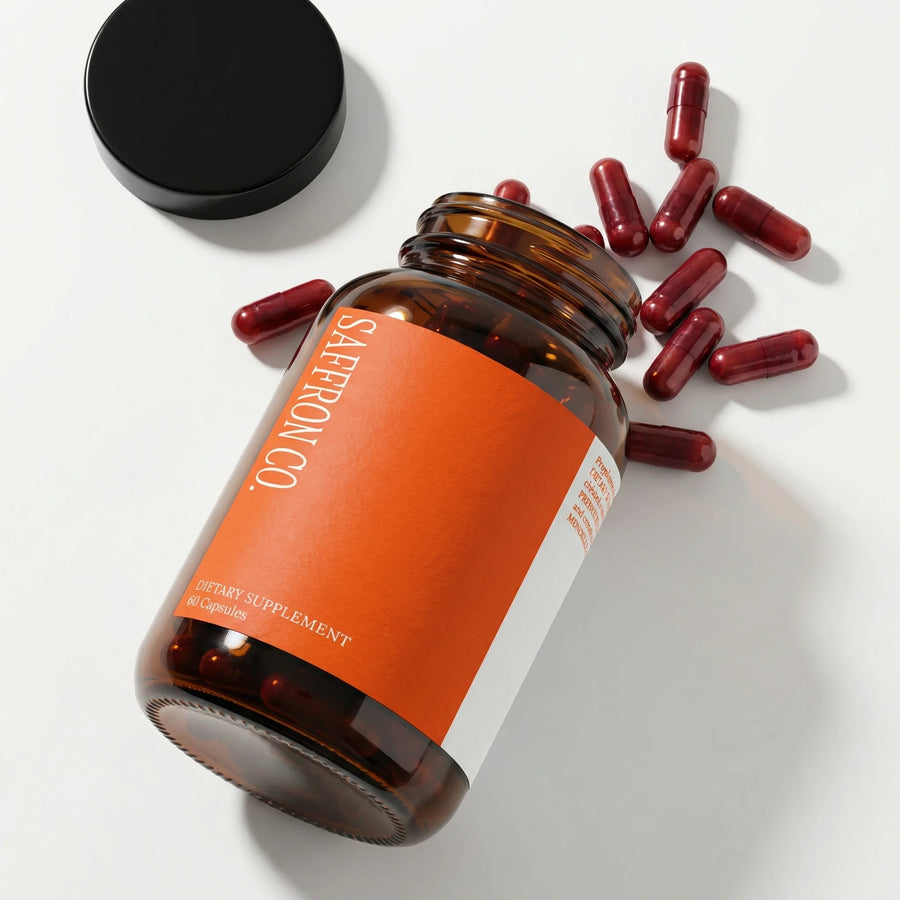
For the years when you feel less like yourself.
Saffron Co. pairs the studied 30 mg daily saffron dose with Rhodiola for stress adaptation, magnesium glycinate for nervous-system support, ProbioMood® NU-10 for the gut-brain axis, and active vitamin B6 (P5P), built around the way perimenopause symptoms actually travel together.
How to take saffron for perimenopause, what to look for, and how to set expectations
The clinically studied range for saffron is generally 28 to 30 mg per day. More is not better. Consistency matters much more than taking a higher dose.
When you look at a supplement label, the basic questions are simple:
- Does it use a clinically aligned dose?
- Is the extract standardized?
- Is it third-party tested?
- If it includes other ingredients, do they serve a clear purpose?
Underdosed or unstandardized saffron is one reason some people conclude the ingredient does not work, when the real issue may be product quality.
How long does saffron take to work?
Most saffron research measures benefits after 4 to 8 weeks of daily use. It is not usually something people judge accurately within a few days. If you try saffron, the fair test is consistency over several weeks.
How to choose a quality saffron supplement
Look for saffron extract that clearly states the dose and standardization markers, especially trans-crocin and safranal. Those details matter because they tell you the extract is aligned with how saffron has been studied.
It also helps to choose brands that are third-party tested and transparent about what is in the bottle. A vague "proprietary blend" or an underdosed formula can make a legitimately useful ingredient seem ineffective.
The label checklist, in one line: a named saffron dose near 28-30 mg per day, visible standardization markers, third-party testing, supporting ingredients with a stated job, and a guarantee window long enough to cover the 4-8 week evaluation period the research actually uses.
Three Saffron-Based Formulas for Perimenopause, Compared
Some women prefer a saffron-only product. Others want a more complete formula built around the same use case. The three products below all use Affron®-grade or standardized saffron, but they take different bets on which perimenopause pattern matters most, and one of them is only available in Australia and New Zealand, which is worth knowing before you fall for the formula.
| Product | Best For | Saffron Dose | Price | Other Key Actives |
|---|---|---|---|---|
 Solaray Her Life Stages Perimenopause Solaray Her Life Stages Perimenopause
|
Cycle & hormone-driven symptoms | affron® included; mg not surfaced on PDP | $34.79 / 60 VegCaps (2/day) | Black cohosh + chasteberry (vitex) + maca + iodine + Chromax® chromium |
 Saffron Co. Mood & Vitality Saffron Co. Mood & Vitality
|
Mood, stress & emotional steadiness | 30 mg/day Spanish saffron (≥3.0% trans-crocin, ~1.2% safranal) | $69.90 one-time / $59.90 monthly sub / $119.92 90-day sub | Rhodiola + magnesium glycinate + ProbioMood® NU-10 + B6 (P5P) |
 Biolae Meno Essential+ Biolae Meno Essential+
|
Night-time use, hot flushes & sleep (AU/NZ only) | Affron® 14 mg per cap (28 mg/day at 2 caps nightly) | AUD $68 one-time / $54 monthly sub / $48 at 3-month plan | Lifenol® hops + chasteberry (vitex) + B6 (P5P) |
Reading the table. The three formulas split cleanly along the symptom map this article laid out. Solaray bets on the hormone-symptom side: black cohosh, vitex, and maca are the classic botanicals for hot flashes, night sweats, and cycle symptoms, with affron® saffron as a mood layer (though the saffron mg is not surfaced). Saffron Co. bets on the mood-stress-steadiness side, where the saffron evidence is strongest, with the full 30 mg studied dose plus stress and gut-brain support. Biolae splits the difference for night-time use, pairing a research-range 28 mg of Affron® with Lifenol® hops for hot flushes, but it only ships to Australia and New Zealand.
Best for Cycle and Hormone-Driven Symptoms: Solaray Her Life Stages Perimenopause
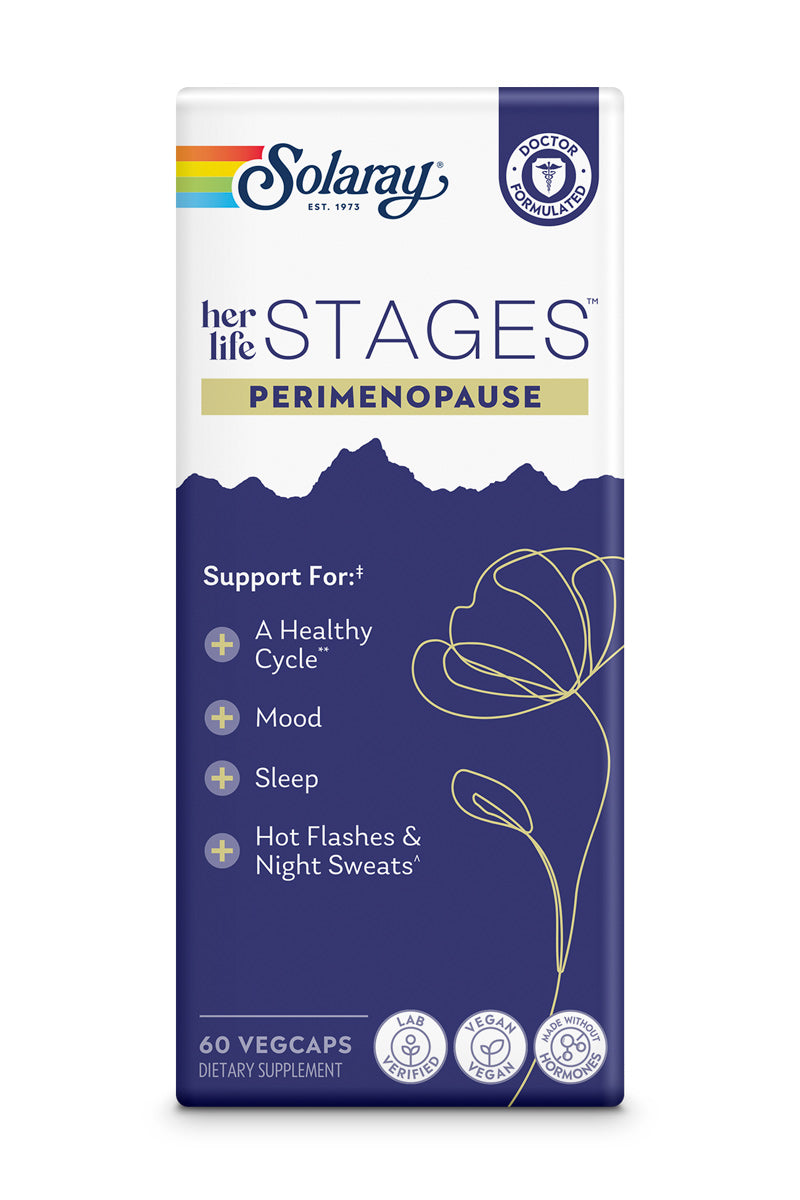
Solaray Her Life Stages Perimenopause
$34.79 · 60 VegCaps · 2 capsules daily with water
If your perimenopause experience is dominated by the hormone-symptom side this article flagged as saffron's weaker territory, hot flashes, night sweats, breast tenderness, and cycle irregularity, Solaray's formula is the most directly matched of the three. It leads with the classic botanical trio for those symptoms: black cohosh, chasteberry (vitex), and maca, then adds affron® branded saffron as the mood layer, plus kelp-sourced iodine and Chromax® chromium. The brand's quality story is solid: NSF-certified GMP facility, lab-verified, triple-tested, with a 60-day money-back guarantee. The transparency gap is the ingredient amounts, including the affron® dose, which are not surfaced on the product page, so you cannot check the saffron against the 28-30 mg research range without contacting the brand.
- Black cohosh + vitex + maca for hot flashes, night sweats, and cycle symptoms
- affron® branded saffron included for the mood layer (mg not surfaced)
- Vegan, gluten-free, no hormones or soy
- NSF-certified GMP facility, lab-verified, triple-tested
- 60-day money-back guarantee; free shipping over $50
Best for Mood, Stress, and Emotional Steadiness: Saffron Co. Mood and Vitality
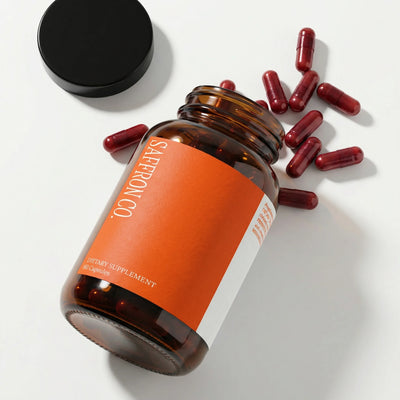
Saffron Co. Mood and Vitality Capsules
$69.90 one-time / $59.90 monthly sub (15% off) / $119.92 on the 90-Day Supply sub (43% off) · 60 capsules per jar · 1-2 capsules in the morning
If your perimenopause pattern is the one this article spent most of its time on, feeling flat, emotionally reactive, foggy, overwhelmed, and less like yourself, Saffron Co. is the formula built for that exact middle ground. It delivers the full studied dose: 30 mg per day of Spanish saffron extract standardized to ≥3.0% trans-crocin and ~1.2% safranal, the strongest-evidence lane for saffron in perimenopause. The four supporting ingredients each map to a piece of the midlife pattern: Rhodiola rosea 100 mg for stress adaptation, magnesium glycinate 140 mg (Albion TRAACS®) for nervous-system support, vitamin B6 5 mg as P5P for neurotransmitter activation, and ProbioMood® NU-10 at 2 billion CFU for the gut-brain axis. It is vegan, gluten-free, zero-filler, and third-party tested by ISO-accredited labs. The honest limitation: it is not built for hot flashes or night sweats, and as a newer brand it has less independently published history than legacy names, which is what the 90-day money-back guarantee answers. That window covers the full 4-8 week evaluation period the saffron research uses, plus margin.
- Full studied saffron dose: 30 mg/day, ≥3.0% trans-crocin / ~1.2% safranal
- Rhodiola + magnesium glycinate + ProbioMood® NU-10 + B6 (P5P), each mapped to a midlife symptom lane
- 1-2 capsules in the morning; vegan, gluten-free, zero-filler
- Third-party tested by ISO-accredited labs
- 90-day money-back guarantee, the longest written window in this comparison
Best for Night-Time Use and Hot Flushes (AU/NZ): Biolae Meno Essential+
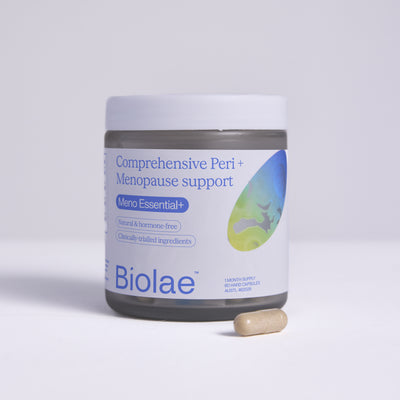
Biolae Meno Essential+
AUD $68 one-time / $54 monthly subscription (20% off) / $48 per month on the 3-month plan (30% off) · 2 capsules nightly before bed
Biolae takes the night-time route. The practitioner-formulated, TGA-listed Australian formula is dosed as 2 capsules before bed and pairs Affron® saffron at 14 mg per capsule, which lands the daily intake at 28 mg, squarely in the research range, with 100 mg of Lifenol®, a branded hops extract studied for menopausal hot flushes, plus 50 mg chasteberry and vitamin B6 in its active P5P form. That combination targets the evening-and-night cluster: hot flushes, disrupted sleep, and mood. Quality signals are strong: GMP-certified manufacturing, third-party tested, vegan, no hormones or soy, with two peer-reviewed studies cited on the product page. The hard limitation for most readers of this article: Biolae ships only to Australia and New Zealand. The refund policy also covers unopened bottles only, which is a meaningfully narrower promise than a money-back guarantee you can use after actually trying the product.
- Affron® 14 mg per capsule; 28 mg/day at the nightly 2-capsule dose (research range)
- Lifenol® branded hops extract 100 mg for hot flushes; chasteberry 50 mg; B6 as P5P
- Night-time dosing built around the evening symptom cluster
- TGA-listed, GMP-certified, third-party tested; vegan, hormone-free
- Ships to Australia and New Zealand only; refunds limited to unopened bottles
Which formula fits which perimenopause pattern
- Hot flashes, night sweats, and cycle symptoms lead: Solaray's black cohosh + vitex + maca blend is the most directly matched, with saffron as a secondary mood layer
- Feeling flat, reactive, foggy, and unlike yourself leads: Saffron Co. is built around that exact pattern, with the full 30 mg studied saffron dose where the evidence is strongest
- Evening symptoms and disrupted sleep lead, and you live in Australia or New Zealand: Biolae's nightly Affron® + Lifenol® combination targets that cluster
- You want saffron alone: a single-ingredient standardized saffron product at 28-30 mg/day is the cleaner test; just verify the dose and markers on the label
That said, the fit matters more than the brand. As a newer brand, Saffron Co. has less long-term independently published brand history than some established competitors, and the 90-day money-back guarantee is the practical way it answers that honestly.
Saffron side effects, interactions, and when to consider something else
Saffron is generally well tolerated, but that does not mean it is effect-free or right for everyone. Individual sensitivity still matters.
If you are currently taking prescription medication for mood, anxiety, sleep, or any other condition, talk with your healthcare provider before introducing a new supplement. If you are pregnant or nursing, the same caution applies. This article is for informational purposes and is not medical advice.
Common saffron side effects and safety questions
The most commonly discussed saffron side effects are usually mild and may include digestive upset, headache, dizziness, or changes in appetite. Some people notice nothing at all. Others are more sensitive.
The key point is simple: more is not better. The research tends to center on 28 to 30 mg per day. Going beyond that does not appear to improve results and may increase the chance of side effects.
Can you take saffron with antidepressants, HRT, or other supplements?
This is an area where general articles can only go so far. Interaction questions deserve personalized guidance.
If you take antidepressants, hormone therapy, sleep medication, or a broader supplement stack, review saffron with your clinician or pharmacist first. The same applies if you are considering combining saffron with multiple mood-related supplements. The goal is not fear. It is simply to avoid guessing where individualized medication review is the safer route.
When saffron is worth trying, and when it is not the right tool
Saffron may be worth trying if your perimenopause experience looks like emotional flatness, mood shifts, stress reactivity, lower resilience, or low libido that seems connected to feeling unlike yourself. It may also make sense if you want a daily ritual that supports mood balance without jumping straight to a more aggressive intervention.
When something else is the more honest answer: severe hot flashes, persistent insomnia, major pain with sex, pronounced vaginal dryness, or low mood that is interfering significantly with daily function. In those cases, the better next step may be menopause hormone therapy, therapy, sleep evaluation, or clinician-guided care. Saffron does not need to do everything to be useful. It just needs to fit the problem you are actually trying to solve.
Birthed by nature. Backed by science.
Try Saffron Co. for a full 4 to 8 week evaluation window, the timeline the saffron research actually uses. If you do not feel the difference, get your money back. No questions asked.
FAQ: Saffron for Perimenopause
Does saffron help perimenopause mood swings?
It may help support mood balance and emotional well-being during perimenopause, especially when mood swings feel more like emotional reactivity, flatness, or stress sensitivity than a severe mental-health condition. Mood is the strongest evidence-backed use case for saffron.
How long does saffron take to work for perimenopause?
Most research looks at results after 4 to 8 weeks of daily use. It is not typically an overnight supplement, and a few days is usually too soon to judge it fairly.
Does saffron increase estrogen?
No. Saffron is not best understood as increasing estrogen, and it should not be described as a hormone replacement. Its likely role is in neurotransmitter and stress-response support.
What is the best dose of saffron for perimenopause?
The clinically studied range is generally 28 to 30 mg daily. That is the dose range most often used in saffron research for mood support.
What are the most common saffron side effects?
The most commonly discussed side effects are mild and may include digestive upset, headache, dizziness, or appetite changes. Not everyone experiences them, but individual response varies.
Can you take saffron with antidepressants or HRT?
Possibly, but that is a question for your healthcare provider or pharmacist rather than a general article. If you take prescription medication or hormone therapy, it is worth getting personalized guidance before adding saffron.
Product prices and specifications verified against each brand's product page at time of writing and may move; Biolae Meno Essential+ is priced in AUD and ships only to Australia and New Zealand. Read the label on the bottle you actually buy, since formulas get reformulated. This article is for informational purposes and is not medical advice. Saffron supplements do not treat perimenopause, menopause, or any hormonal condition, and they are not a substitute for menopause hormone therapy or clinician-guided care where those are needed. If you take prescription medication or hormone therapy, are pregnant or nursing, or are managing a clinical condition, talk with a qualified healthcare provider before starting a new supplement. These statements have not been evaluated by the Food and Drug Administration. These products are not intended to diagnose, treat, cure, or prevent any disease.