
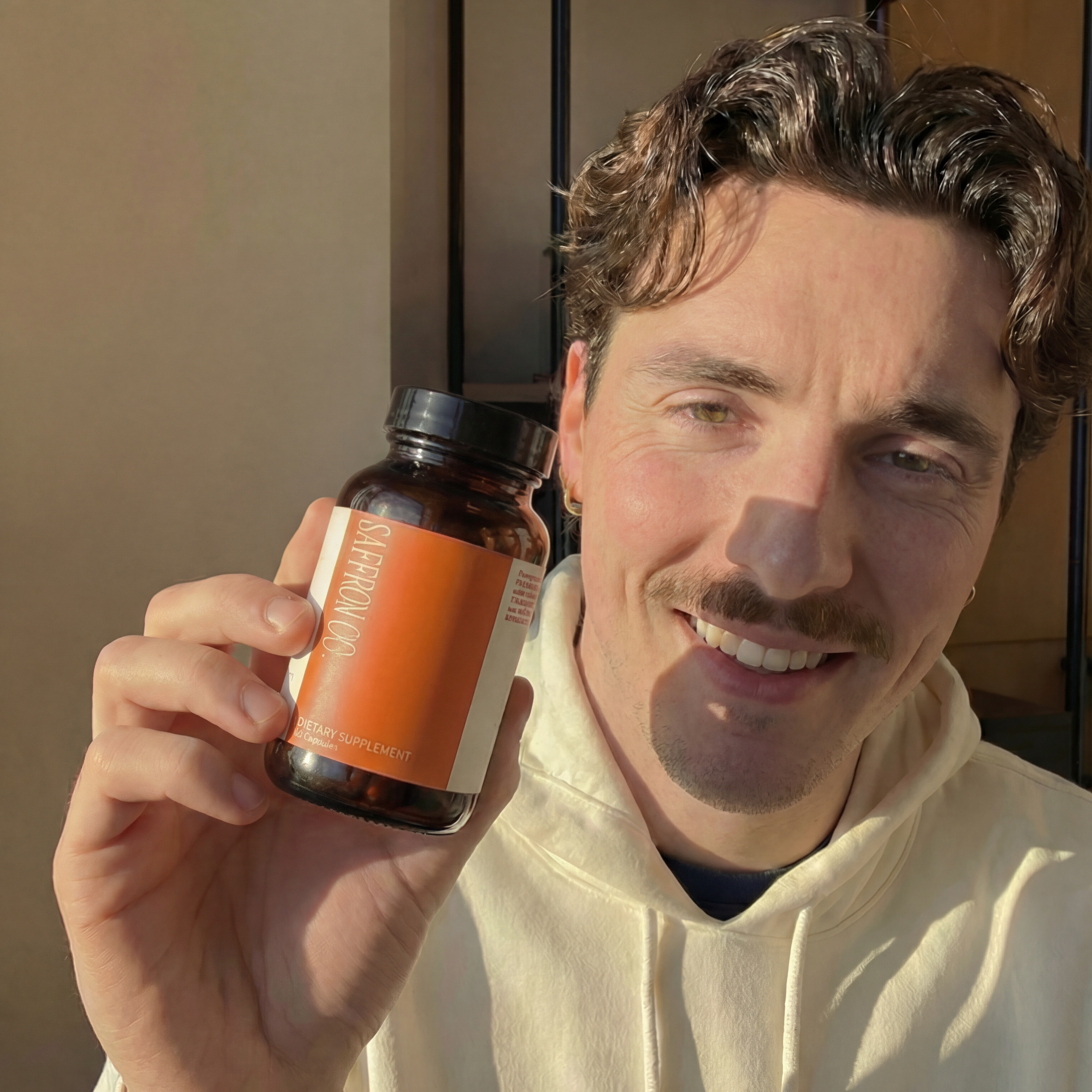
Saffron Side Effects: Safety, Dosage, Interactions & What to Watch For
What are the real saffron side effects, and how common are they?
Saffron gets a lot of attention for mood support, emotional well-being, and other potential benefits. That attention is deserved. But safety matters just as much as efficacy.
The encouraging part is that saffron appears to be well tolerated for many adults at commonly studied supplemental doses. The more careful truth is that "well tolerated" does not mean side-effect free. Some people do fine. Some notice mild symptoms. And certain groups should not start a saffron supplement without medical guidance.
It also helps to clear up a common confusion right away: saffron used in cooking is not the same thing as a concentrated saffron supplement. A few threads in a recipe will not expose you to the same amount of active compounds as a daily capsule standardized for crocin and safranal content.
This article covers the known side effects of saffron supplements, who should use caution, and where the research still has limits. If you want the broader evidence on how saffron has been studied, Saffron Co's guides to saffron clinical studies and saffron extract are useful places to start.
Cooking spice vs saffron supplement
A pinch of saffron in rice, tea, or broth is culinary use. A saffron supplement is different. It is typically a concentrated extract, taken daily, and often standardized to specific compounds linked to the research.
That distinction matters because side effects are dose-related. Cooking with saffron occasionally is not the same as taking a measured capsule every day for weeks.
What the clinical research can and cannot tell us
Most human saffron studies are short-term and use about 28 to 30 mg per day. That is why safety at that dose range looks encouraging, but not unlimited. We have useful short-term data. We do not have endless long-term data across every population, medication status, and health condition.
So the balanced takeaway is simple: saffron appears reasonably well tolerated in the studied range, but caution still makes sense, especially if you are pregnant, taking medication, or managing a health condition.
Common saffron side effects at normal doses
At standard supplement doses, many people notice no obvious side effects at all. Others are more sensitive. Dose, timing, other supplements, medications, and baseline health can all affect how someone responds.
Search behavior around saffron side effects usually centers on energy, appetite, mood, sleep, digestion, headache, and dizziness. Those are the right questions to ask.
It is also worth noting that searches for "saffron side effects on face" usually reflect confusion with topical skincare, allergy concerns, or general skin reactions. That is not a typical oral saffron supplement effect.
Mild side effects some people notice
Reported side effects at normal doses are usually mild when they happen. These may include:
- digestive upset
- nausea
- headache
- dizziness or lightheadedness
- dry mouth
- appetite changes
- feeling a bit sleepy
- feeling a bit more alert or stimulated than expected
None of those automatically mean saffron is unsafe. They do mean your body may be sensitive to the ingredient, the dose, the timing, or the broader formula.
For example, a single-ingredient saffron extract may feel different from a multi-ingredient formula that also includes Rhodiola, magnesium, vitamin B6, or a probiotic. The total experience depends on the full label, not just the saffron. If you want to understand the thinking behind a multi-ingredient formula, that context is worth reading before you choose a product.
How long side effects usually last
When mild side effects happen, they often show up early. Sometimes that means within the first few days of use. They may settle after stopping the supplement or adjusting when you take it.
If symptoms are persistent, worsening, or clearly disruptive, do not push through just because a supplement is marketed as natural. That is the point to stop and get medical guidance.
Can saffron make you sleepy or affect mood too strongly?
Yes, it can affect people differently. Some users report a calmer, slightly drowsy feeling. Others notice a lift in mood or more mental brightness. Individual response varies.
That does not necessarily mean something is wrong. It means saffron is active, and not everyone responds in the same direction.
Who should avoid saffron or talk to a healthcare provider first?
This is where caution matters more than enthusiasm. If you are taking prescription medication for mood, sleep, blood pressure, blood thinning, or any other ongoing condition, talk with your healthcare provider before adding saffron. The same applies if you are pregnant, nursing, trying to conceive, or managing a known medical condition.
For many women, saffron is interesting because of its research around mood support, emotional balance, libido, and the low-grade flatness that often shows up in perimenopause or menopause. That interest is understandable. It does not remove the need for basic safety screening first.
Pregnancy, breastfeeding, and trying to conceive
Pregnancy deserves extra caution. Saffron supplements should not be self-started during pregnancy without medical guidance. Breastfeeding safety is also not well established, so the same caution applies.
If you are trying to conceive, it is reasonable to ask your clinician before starting any new supplement with mood-active effects.
People with medication or interaction concerns
Common concern areas include:
- antidepressants and other mood-related medications
- sedatives or sleep medications
- blood pressure medications
- blood thinners
- other mood-oriented supplements taken in the same stack
This does not mean every combination is dangerous. It means interactions are possible, and individualized advice belongs with a qualified clinician who knows your history.
People with bipolar-spectrum symptoms, bleeding risk, or upcoming surgery
People with bipolar-spectrum symptoms are commonly flagged for caution with mood-active supplements in general. Anyone with a bleeding disorder, elevated bleeding risk, or scheduled surgery should also disclose saffron use to their healthcare team.
Pre-surgery disclosure matters because supplements can affect more than one body system, and your clinician needs the full picture.
Saffron interactions, overdose risk, and warning signs to take seriously
Most side-effect discussions focus on mild symptoms. That is useful, but it is not the whole picture. Higher-risk situations usually involve interactions, very high doses, poor-quality products, or ignoring red-flag symptoms.
More is not better with saffron. The fact that saffron has been studied at around 30 mg per day is not a reason to increase the dose on your own in search of faster results.
Quality matters too. Standardization, sourcing, and third-party testing affect both efficacy and safety. A vague label gives you less confidence in what you are actually taking.
Can you take saffron every day safely?
For many adults, daily use in the studied dose range appears reasonable. But "safe every day" depends on the person, the dose, the full formula, and medication status.
A transparent product matters here. Saffron Co Mood and Vitality Capsules, for example, provide 30 mg per day of Spanish saffron extract standardized to at least 3.0% trans-crocin and about 1.2% safranal, alongside clearly labeled supporting ingredients. That kind of labeling is more useful than proprietary blends or vague saffron claims. It does not make the product right for everyone. It simply makes assessment easier.
Signs a saffron dose may be too high
Suspected excessive intake or poisoning needs urgent medical attention. Warning signs may include severe nausea, vomiting, marked dizziness, unusual bleeding, or other intense symptoms that feel clearly beyond a mild supplement reaction.
Do not try to self-manage a suspected overdose at home.
Why supplement quality affects side-effect risk
Poor-quality supplements increase uncertainty. If a saffron extract is not standardized, not transparently labeled, or not third-party tested, you have less assurance around potency and purity.
A better product should tell you:
- the saffron dose
- the extract standardization
- the full ingredient list
- whether it has been third-party tested
That does not eliminate all risk, but it reduces the chances of inconsistent potency or contamination.
How to use saffron more safely and set realistic expectations
If you decide to try saffron, the safest approach is usually the least exciting one. Follow the label directions. Do not stack impulsively. Do not increase the dose because you want quicker effects. Give your body time to respond.
Saffron may help support mood balance and emotional well-being for some people with consistent use. It is not risk-free, and it is not a replacement for medical care.
A well-formulated saffron supplement should stay close to the studied dose range and disclose its ingredient details clearly. That matters for safety just as much as it does for performance.
A simple checklist before starting saffron
Before you start, take five minutes and run through this list:
- Review your medications and existing supplements
- Check the saffron dose on the label
- Choose a brand with transparent labeling and third-party testing
- Watch for early symptoms like headache, dizziness, digestive upset, or unusual sedation
- Stop use and seek guidance if something feels clearly off
When saffron is not the right tool
Supplements have a ceiling. Persistent low mood, severe anxiety, suicidal thoughts, or a noticeable decline in daily functioning call for professional care, not self-treatment with saffron.
Saffron may fit as part of a wider wellness routine. It is not the right tool for crisis situations, diagnosable mental-health conditions, or symptoms that are escalating and interfering with normal life.
If you are currently taking prescription medication for mood, sleep, blood pressure, or blood thinning, talk with your healthcare provider before introducing saffron. If you are pregnant or nursing, the same caution applies. This article is for informational purposes and is not medical advice.
FAQ
What are the most common saffron side effects?
The most commonly discussed saffron side effects are mild digestive upset, nausea, headache, dizziness, dry mouth, appetite changes, and sometimes feeling sleepy or unusually alert.
Is it safe to take a saffron supplement every day?
Daily use has been studied, usually at around 28 to 30 mg per day. For many adults, that appears to be reasonably well tolerated. Suitability still depends on the person, their medications, the exact formula, and the quality of the product.
Who should not take saffron supplements?
People who are pregnant, breastfeeding, trying to conceive, taking prescription medications, managing bleeding risk, preparing for surgery, or dealing with bipolar-spectrum symptoms should talk to a healthcare provider before using saffron.
Can saffron interact with antidepressants or blood pressure medicine?
It may. That is why anyone taking antidepressants, blood pressure medication, sedatives, blood thinners, or other mood-related supplements should speak with their healthcare provider before adding saffron.
How much saffron is too much?
The clinically studied supplemental range is usually around 28 to 30 mg per day. Taking more is not a shortcut to better results. Very high intake raises safety concerns and suspected overdose should be treated as an urgent medical issue.
Can saffron make you sleepy or dizzy?
Yes. Some people report calm, drowsiness, or lightheadedness, while others feel more mentally lifted or alert. Individual response varies, especially in the first days of use.
Read more
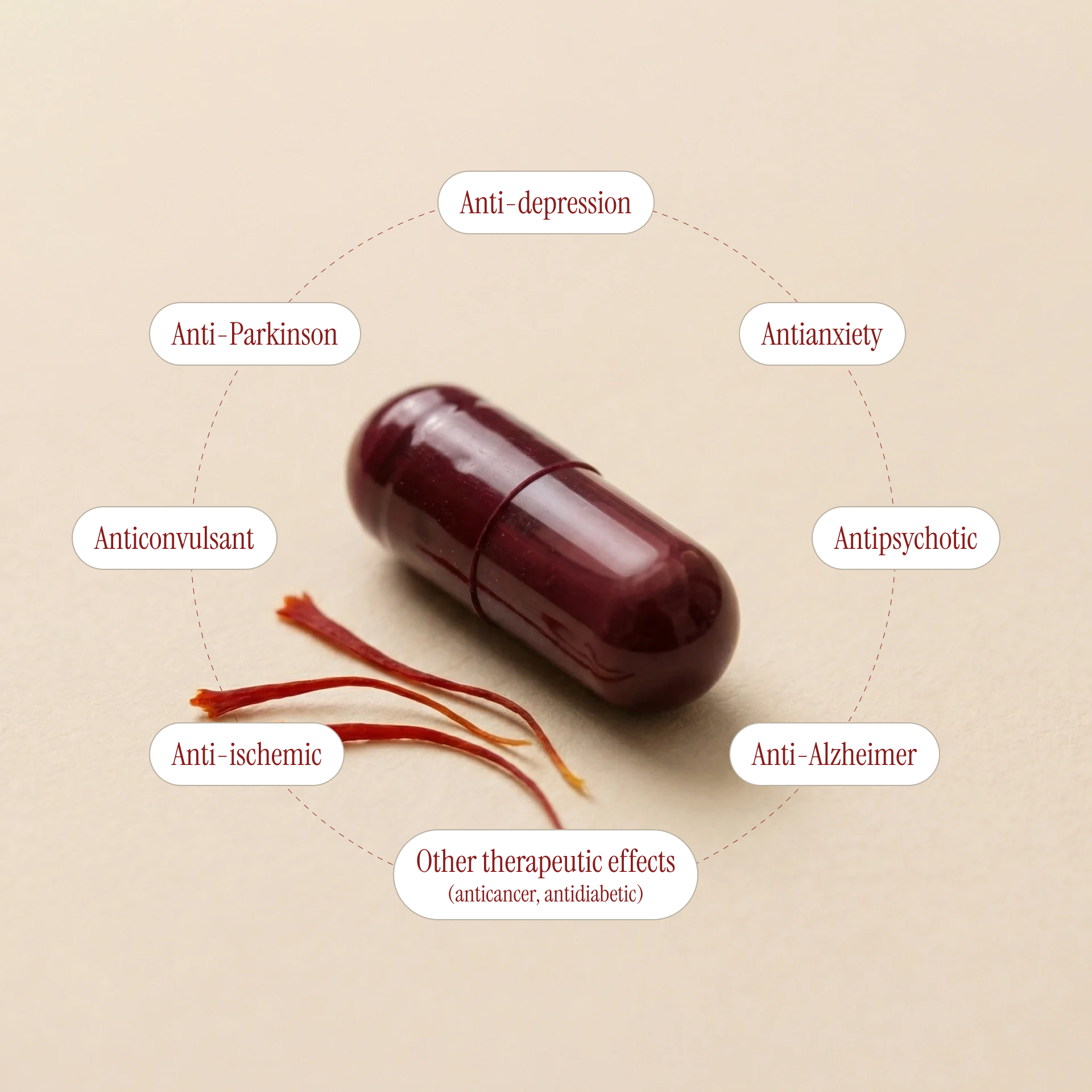
Discover the science behind saffron extract, including mood support benefits, dosage, side effects, safety, libido, stress resilience, and how to choose a high-quality saffron supplement. ...
Learn the ideal saffron dosage for mood support, stress, focus, libido, and appetite control. Discover the clinically studied 30 mg daily range, safety guidelines, timing tips, and what to...