
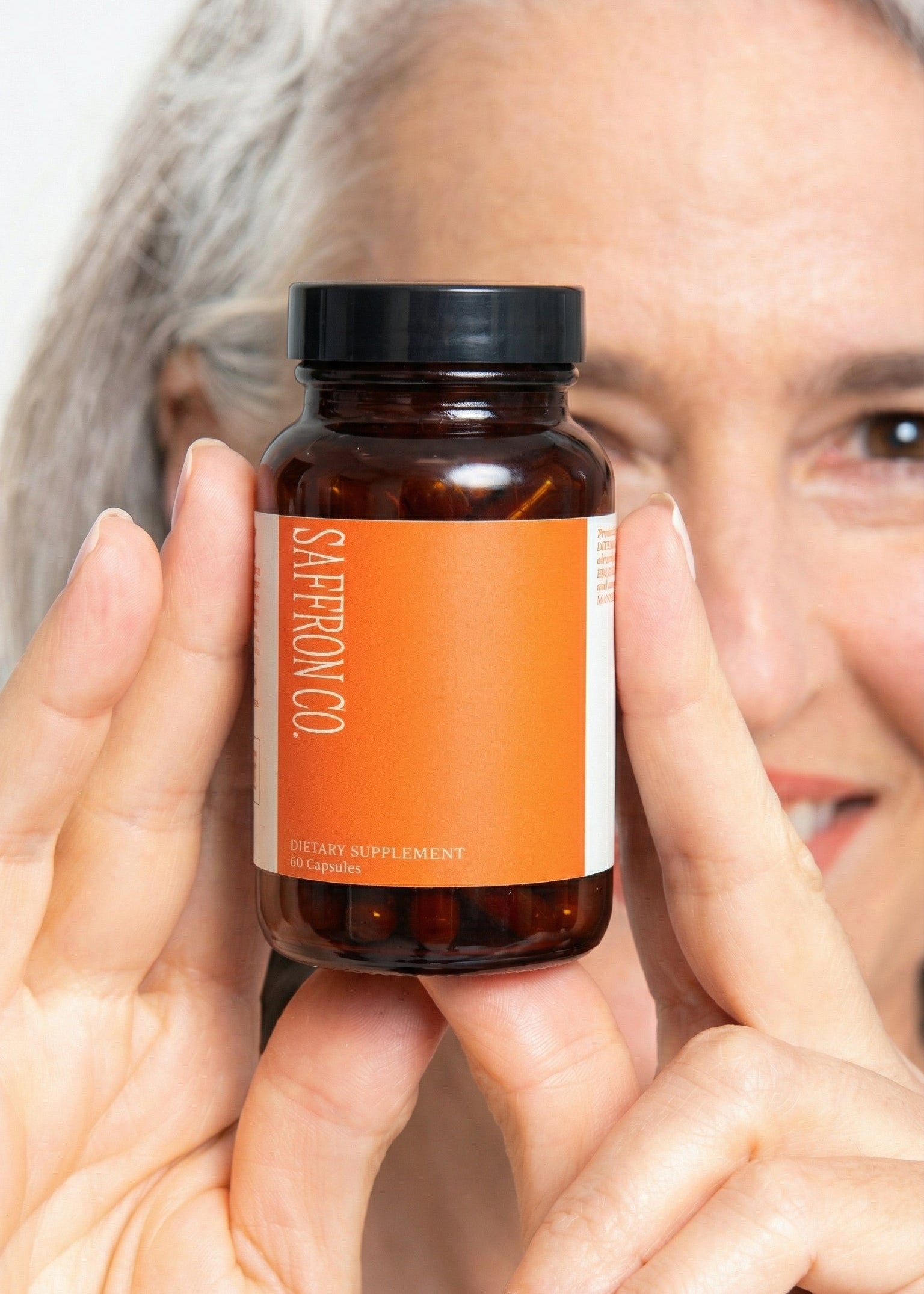
Saffron Supplement Ingredients: What to Look For in a Formula That Actually Works
What saffron supplement ingredients actually matter
Most saffron supplements look similar from the front of the bottle. They use the same mood-support language, similar colors, and the same promise that this one capsule will help you feel more like yourself again.
But once you turn the bottle around, the differences get much clearer.
Some formulas use a clinically aligned saffron dose with clear standardization markers. Some use saffron in name only, with little detail on potency. Some pair saffron with genuinely useful support ingredients. Others just stretch the label with ingredients that sound impressive but do not add much in practice.
That is why the goal is not to find the longest ingredient list. It is to understand which saffron supplement ingredients are clinically relevant and which are mostly marketing filler.
A smarter evaluation framework usually comes down to six things:
- saffron dose
- saffron standardization
- supporting ingredients
- bioavailable forms
- safety and transparency
- whether the formula fits your actual use case
If you want a stronger explanation of how Saffron Co builds around these principles, the brand's Why This Formula page is the best place to start.
Why the ingredient list matters more than branding
Branding can tell you how a product wants to be perceived. The ingredient panel tells you what it actually is.
Packaging, influencer endorsements, and vague claims like "premium mood complex" do not tell you whether a supplement is built around research. A supplement facts panel does. That is where you find the saffron dose, whether the extract is standardized, whether the magnesium amount is meaningful, and whether the probiotic is a named strain or just a generic add-on.
For saffron in particular, those details matter. A label that simply says "saffron" is not enough.
This guide can help you choose a better-formulated saffron supplement for mood support, emotional well-being, stress resilience, focus, and libido support.
It cannot diagnose low mood, anxiety, hormone issues, or any medical condition. It also cannot tell you whether a supplement should replace clinical care. If symptoms are persistent, worsening, or interfering with daily life, that is a separate conversation best had with a qualified healthcare provider.
The complete saffron supplement ingredients table
Below is the complete formula table, using the exact ingredient details provided.
| Ingredient | Form & Standardization | Per Day (2 caps) | Per Capsule |
|---|---|---|---|
| Saffron Extract | ≥3.0% trans-crocin, ~1.2% safranal | 30 mg | 15 mg |
| Rhodiola rosea Extract | Root & rhizome: 3% rosavins / 1% salidroside | 100 mg | 50 mg |
| Magnesium (as Glycinate) | Albion TRAACS® or equivalent | 140 mg elemental (~990 mg chelate) | 70 mg elemental |
| ProbioMood® (NU-10) | Bacillus coagulans 100B (spore-based, vegan) | 2 billion CFU | 1 billion CFU |
| Vitamin B6 (P5P) | Active form | 5 mg | 2.5 mg |
A few things matter here more than the front label ever will.
First, the saffron includes named standardization markers. Second, the magnesium amount is given as elemental magnesium, which is the number that actually matters. Third, the probiotic is not just "a probiotic." It is a named strain with a specific CFU count.
If you want to review the broader clinical context, the PubMed saffron research database, the NIH Office of Dietary Supplements magnesium fact sheet, and peer-reviewed work on saffron in journals such as Phytomedicine are useful starting points.
How to read a supplement facts panel without getting misled
Standardization means the extract is measured for the compounds most associated with its activity. For saffron, trans-crocin and safranal matter far more than the word saffron on its own. Without standardization, you do not really know how potent the extract is.
Elemental magnesium is the actual magnesium you get. Many labels make a chelated mineral look larger than it is by listing the total compound weight. "140 mg elemental magnesium" is clearer and more useful than a vague large number.
Probiotic specificity matters too. A label should name the strain and the CFU amount. "Probiotic blend" without details is not very informative. With probiotics, survivability and strain identity matter more than hype.
A closer look at each ingredient in the formula
A good saffron formula should work like a stack, not a junk drawer. Saffron should be the hero ingredient. The rest should support stress adaptation, nervous-system function, neurotransmitter pathways, or the gut-brain axis in a way that makes sense.
Saffron extract: the hero ingredient
Saffron is the reason most people buy this kind of supplement in the first place, so it should be the center of the formula.
The clinically studied range is usually around 28 to 30 mg per day, which is why 30 mg is a meaningful benchmark. Research has focused especially on compounds such as crocin, crocetin, and safranal, which appear to be involved in saffron's mood-related effects and broader neuroprotective activity. The evidence suggests saffron may help support mood balance, emotional well-being, and libido support in some people with consistent use.
That said, the research picture should be framed honestly. It is encouraging, but many saffron trials are still small and short-term, often in the 6 to 8 week range. That is enough to take the ingredient seriously, but not enough to justify exaggerated claims. A useful research overview is available through PubMed.
Rhodiola rosea extract: support for stress resilience
Rhodiola is not there to do the same job as saffron. It is there to support stress resilience and mental fatigue.
This herb is usually classified as an adaptogen, meaning it may help the body adapt to physical and mental stress. In a mood-focused formula, that matters. Many people who feel flat or mentally drained are not dealing with one isolated issue. They are dealing with chronic stress layered on top of low motivation, poor focus, or emotional overload.
The standardization markers matter here too. 3% rosavins and 1% salidroside are the markers many readers look for because they help distinguish a more serious Rhodiola extract from a generic one. Rhodiola is also often experienced as more energizing than calming, which helps explain why it fits better in a daytime mood-and-focus formula than in a sleep formula. Examine's evidence summary on Rhodiola rosea gives helpful context.
Magnesium glycinate: nervous-system support in a usable form
Magnesium glycinate has a strong reputation for a reason. It is one of the more bioavailable and generally well-tolerated forms of magnesium, and it is commonly used for nervous-system support.
That does not mean it is a magic ingredient. It does mean it is a sensible one.
A daily amount of 140 mg elemental magnesium is a meaningful supportive dose. It can help round out a formula aimed at mood support and stress resilience, especially since many women are not getting enough magnesium through diet alone. But it is not the same thing as medically treating a confirmed magnesium deficiency.
This is also where form matters. Cheap formulas often use magnesium oxide because it is inexpensive, but oxide is less absorbable and less compelling in a mood-focused supplement. The NIH magnesium fact sheet is helpful if you want a deeper look at dose and forms.
ProbioMood® (NU-10): the gut-brain axis piece
At first glance, a probiotic can look out of place in a saffron formula. It is not.
The reason is the gut-brain axis, the ongoing communication between the digestive system, immune system, and brain. That connection is now taken seriously enough that it shows up across both clinical research and mainstream neuroscience discussions. A spore-based Bacillus coagulans strain stands out because it tends to be more stable and more likely to survive the trip through the digestive tract than more fragile probiotic formats.
That does not mean a probiotic directly "fixes mood." That would be too strong. What it can do is support the gut environment involved in signaling processes that influence how the brain and body communicate. For a formula centered on mood balance and emotional well-being, that is a defensible reason for including it. Research on the gut-brain axis is broad, and PubMed's psychobiotic literature is a good place to explore it.
Vitamin B6 (P5P): the activation cofactor
Vitamin B6 is easy to overlook on a label, but in the right form it plays an important support role.
P5P, or pyridoxal-5-phosphate, is the active form of vitamin B6. That matters because it is already in the form the body can use, unlike standard pyridoxine HCl, which has to be converted first. B6 acts as a cofactor in neurotransmitter pathways, including those involved in serotonin, dopamine, and GABA production.
In plain English, it helps the body do chemistry that the rest of the formula is trying to support.
At 5 mg per day, this is a modest dose and well within the normal supplemental range. It is not a megadose, and it is not being used as a headline ingredient. That is exactly how it should be used here. The NIH vitamin B6 fact sheet offers a solid overview.
How to judge whether saffron supplement ingredients are well formulated
Once you understand the ingredients, buying decisions get simpler.
A well-formulated saffron supplement usually includes:
- a saffron dose that aligns with the research range
- named crocin and safranal standardization
- support ingredients with a clear purpose
- bioavailable forms, not bargain-bin substitutes
- transparent labeling
- quality signals such as vegan, non-GMO, GMP-certified, and third-party tested
If you want to compare that logic against a real product page, Saffron Co Mood and Vitality Capsules are built around this exact formulation approach.
Green flags on a saffron supplement label
Look for:
- 30 mg daily saffron dose or something close to it
- clear trans-crocin and safranal standardization
- support ingredients that solve a real formulation problem
- named mineral and probiotic forms
- transparent amounts with no hidden blends
- quality markers that are easy to verify
Red flags to watch for
Be more cautious with:
- proprietary blends that hide ingredient amounts
- generic saffron powder with no standardization
- long formulas padded with filler ingredients
- underdosed actives dressed up with marketing language
- unclear magnesium forms
- probiotics with no strain name or vague CFU claims
Single-ingredient saffron vs multi-ingredient formulas
A single-ingredient saffron supplement may suit someone who wants the most minimal approach possible, already takes magnesium or probiotics separately, or prefers to test one variable at a time.
A multi-ingredient formula may make more sense if you want a more complete stack for mood support, stress resilience, nervous-system support, and gut-brain support in one place. That is especially relevant for readers who do not want to manage four separate bottles.
Neither approach is automatically better. It depends on what you are actually trying to support.
What these ingredients can realistically help with, and where the limits are
A well-built saffron supplement may help support:
- mood balance
- emotional well-being
- stress resilience
- focus and mental clarity
- libido support
That is the realistic ceiling. It is not a cure. It is not a replacement for therapy, prescribed medication, or medical care when those are needed.
How long saffron supplement ingredients usually take to feel noticeable
Most saffron research measures outcomes over 4 to 8 weeks, not a few days. That is the timeline readers should expect. Some people notice changes sooner. Some need longer. Some do not respond much at all.
Supportive ingredients may work on a different timeline. Rhodiola can feel more immediate for some users, especially around stress and mental fatigue. Magnesium may be noticed more subtly. Saffron itself is usually the slower, steadier part of the formula.
What a supplement cannot do
No saffron supplement should be framed as treating depression, anxiety, ADHD, insomnia, menopause, or sexual dysfunction. It should also not be positioned as a replacement for antidepressants or other prescription medication.
If low mood is persistent, severe, or interfering with normal life, professional support matters more than better label-reading.
When it makes sense to talk to your healthcare provider first
If you take prescription medication for mood, sleep, blood pressure, or any other ongoing condition, talk with your healthcare provider before adding a new supplement. The same applies if you are pregnant or nursing.
This article is for informational purposes and is not medical advice.
FAQ
What ingredients should I look for in a saffron supplement?
Start with a clinically aligned saffron dose, ideally around 30 mg per day, plus clear standardization markers such as trans-crocin and safranal. Then look for support ingredients that have a real job to do, such as Rhodiola for stress adaptation, magnesium glycinate for nervous-system support, P5P vitamin B6 for neurotransmitter pathways, and a named probiotic strain for gut-brain support.
Does saffron need to be standardized to work?
Standardization is not the only thing that matters, but it is one of the most useful quality signals. It tells you the extract has been measured for active compounds rather than just labeled as generic saffron. In practice, a standardized extract is easier to evaluate and usually more trustworthy than a formula that gives no potency details.
How long do saffron supplement ingredients take to work for mood support?
The most realistic expectation is 4 to 8 weeks of daily use. That matches the timeline used in much of the clinical research on saffron. Some support ingredients may feel different on a shorter timeline, but saffron itself is generally not an overnight ingredient.
Is it better to take saffron alone or in a formula with magnesium and Rhodiola?
It depends on your goal. Saffron alone may suit someone who wants simplicity or already has a supplement routine in place. A formula with magnesium and Rhodiola may make more sense if you want broader support for stress resilience, nervous-system function, and mood support in one product. The better option is the one that matches your actual use case.
Can I take a saffron supplement with antidepressants or other medications?
Do not assume yes without checking. If you are taking antidepressants or any prescription medication, speak with your healthcare provider before adding a saffron supplement. That is the safest and most appropriate approach.
What does P5P vitamin B6 do in a saffron supplement?
P5P is the active form of vitamin B6. In a saffron formula, it acts as a support nutrient for neurotransmitter pathways rather than as the main attraction. It helps the body carry out chemical processes involved in serotonin, dopamine, and GABA activity, which is why it makes sense as a cofactor alongside saffron rather than as a standalone headline ingredient.
Read more
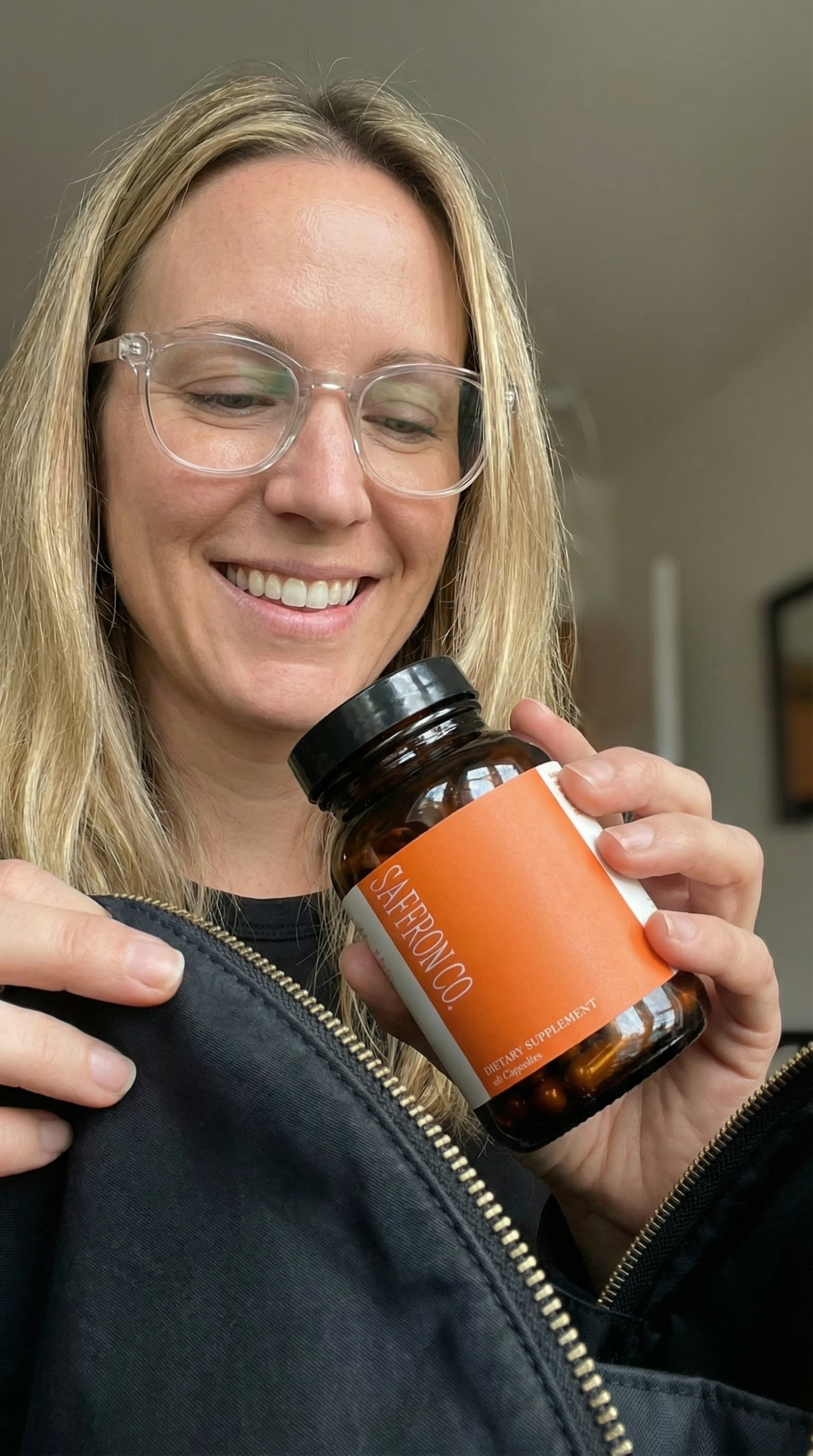
Explore what saffron clinical studies actually reveal about mood support, stress, sleep quality, dosage, safety, and supplement effectiveness. A science-backed review of the current human ...
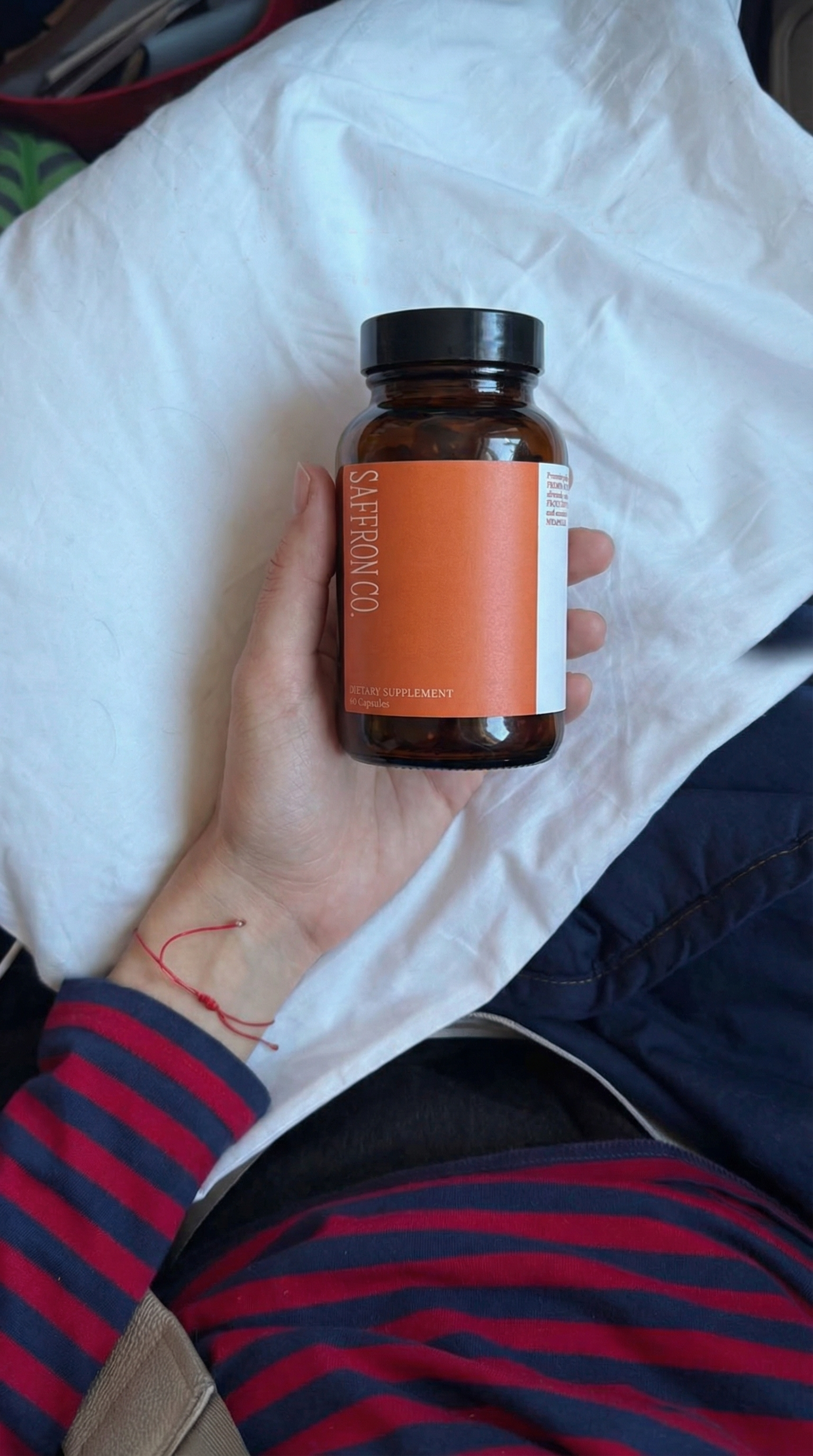
Explore the latest saffron statistics for 2026, including global market size, production trends, supplement demand, pricing, trade data, clinical research growth, and what drives the premi...