
Best Perimenopause Supplements in 2026: What Helps for Mood, Sleep & Weight
What perimenopause supplements can and cannot do
Perimenopause often does not arrive as one clear symptom. It shows up as mood shifts that feel unlike you. Brain fog that makes simple tasks harder than they should be. Sleep that breaks apart at 3 a.m. Low libido. A body composition change that seems to happen even when your habits have not changed much. For many women, the hardest part is not one symptom. It is the feeling that your usual settings no longer apply.
Perimenopause is the transition leading up to menopause, when estrogen and progesterone begin to fluctuate more unpredictably. It can start years before periods fully stop, and the symptom pattern varies widely from person to person. That is why no single supplement can simply "balance hormones" in a neat, universal way. Hormones are not static. They shift across the month, across the transition, and in response to sleep, stress, nutrition, and health conditions that may have nothing to do with perimenopause itself.
That matters when you look at perimenopause supplements. Some can help support a specific symptom or correct a nutrient gap. Some may support mood balance, sleep quality, stress resilience, or muscle retention. But supplements do not replace medical evaluation, conversations about menopause hormone therapy, or the basics that still matter: protein, movement, sleep hygiene, blood sugar stability, and stress reduction where possible.
A more useful way to approach this category is symptom-first, not hype-first. Instead of asking for the single best perimenopause supplement, ask what you are actually trying to support.
Why perimenopause feels so different from person to person
Two women can both be in perimenopause and have completely different experiences. One may deal mostly with anxiety-like agitation and insomnia. Another may notice low mood, brain fog, and low libido. Another may be more affected by hot flashes and changing weight.
Part of that comes down to fluctuating estrogen and progesterone, which influence serotonin, GABA, sleep, temperature regulation, and more. But symptom patterns are also shaped by stress load, sleep debt, age-related changes in body composition, thyroid function, iron status, medication use, and baseline nutrient status. A woman who is magnesium deficient, under-eating protein, and sleeping poorly may feel very different from someone with the same hormone stage but better recovery and fewer stressors.
A better question than "What are the best perimenopause supplements?"
A better question is: What are the best perimenopause supplements for my main symptom?
That could mean:
- mood, stress reactivity, or emotional flatness
- sleep disruption
- hot flashes and night sweats
- brain fog and focus
- low libido
- weight-related concerns
- long-term bone and muscle support
That framing leads to better decisions and fewer expensive bottles that do not match your actual problem.
The most evidence-aware perimenopause supplements by symptom
The best hormone balancing supplements for perimenopause are usually not the flashiest blends. They are often the nutrients and botanicals that match a real symptom pattern, use meaningful doses, and fit the rest of your health picture.
For mood, stress resilience, and emotional flatness
Mood changes are one of the most common and least clearly discussed parts of perimenopause. Some women feel more reactive. Others feel flat, muted, or unlike themselves.
The most commonly considered supplements here include saffron, magnesium glycinate, omega-3s, and Rhodiola.
Saffron is one of the more interesting options because it has been clinically studied for mood support, most often at 28 to 30 mg daily. The evidence is encouraging, especially over 6 to 8 weeks, though the studies are generally small and not a reason to overstate what it can do. The right framing is that saffron may help support mood balance, emotional well-being, and mental clarity with consistent use.
Magnesium glycinate is often useful when stress, tension, poor sleep, and nervous-system overload are all part of the picture. Omega-3s are worth considering for broader brain and inflammatory support. Rhodiola may help the body adapt to stress and can be a reasonable fit when fatigue and overwhelm sit alongside low motivation.
If mood symptoms are persistent, severe, or start interfering with daily functioning, this is also the point where a clinician conversation matters. Perimenopause can affect mood. So can thyroid issues, iron deficiency, and major depression. It is important not to blur those together.
For sleep disruption and nervous system support
For many women, sleep is where perimenopause becomes impossible to ignore.
Magnesium glycinate is often the first place to start because it is well tolerated and supports the nervous system. Glycine may also be helpful for some people as part of a wind-down routine. Melatonin can be useful, but timing matters more than many people realize. It works best as a circadian signal, not as a blunt sedative.
Calming herbs can sometimes help, but they work best when paired with the unglamorous basics: eating enough during the day, stabilizing blood sugar at dinner, keeping caffeine early, limiting alcohol if it worsens wake-ups, and maintaining consistent sleep timing.
For hot flashes, night sweats, and hormone-related discomfort
This is the area where many menopause blends make the biggest promises and often deliver the most mixed results.
Commonly discussed options include soy isoflavones, black cohosh, and evening primrose oil. Soy isoflavones have some evidence for supporting hot flashes in certain women, particularly because of their phytoestrogen activity. Black cohosh is widely used, but the evidence is inconsistent. Evening primrose oil is popular, though support for hot flashes remains mixed.
These are not automatic yes-or-no options. They are "may help some people" options. If hot flashes, night sweats, or hormone-related discomfort are prominent and disruptive, that is often a good time to discuss menopause hormone therapy with a qualified clinician rather than endlessly testing supplements.
For brain fog, focus, and mental clarity
Brain fog in perimenopause is real, and it is rarely caused by one thing alone.
Supplements that may be worth considering include magnesium, omega-3s, creatine, and B vitamins when deficiency is relevant. Saffron or Rhodiola may also fit when brain fog overlaps with low mood, stress, and mental fatigue.
Creatine is especially worth more attention than it gets. It is usually discussed for performance, but it can also support training capacity and muscle preservation, both of which matter in midlife. B vitamins are not a cure-all, but if there is a meaningful deficiency or poor intake, correcting that can help.
Still, brain fog is often multi-causal. Sleep disruption, blood sugar swings, stress, thyroid changes, iron issues, and perimenopausal hormone changes can all contribute. One capsule rarely solves that on its own.
For low libido and feeling disconnected from yourself
Low libido in perimenopause is rarely just about sex hormones. It is often a mix of hormonal fluctuation, stress, fatigue, sleep loss, relationship context, body-image changes, and sometimes medication effects.
Saffron has also been clinically studied as a supportive option for libido in some women, which makes it more interesting than many generic "female vitality" blends. Realistically, this is still not a magic fix. It may help support libido for some people, especially when low desire is part of a wider picture of emotional flatness and stress overload.
For bone, muscle, and long-term health support
Not all of the best perimenopause supplements are about symptom relief this week.
Protein, creatine, vitamin D, calcium when appropriate, and omega-3s are often more valuable over the long run than another trendy blend promising immediate hormone balance. Preserving muscle, supporting bone health, and maintaining resilience through the transition may matter just as much as reducing one symptom.
Best supplements for perimenopause weight gain and weight loss support
Searches for the best supplements for perimenopause weight gain and perimenopause supplements for weight loss are understandable. Weight changes can feel abrupt and discouraging in this phase.
The problem is that perimenopause weight change is usually driven by several factors at once: poorer sleep, changing insulin sensitivity, higher stress load, appetite shifts, reduced muscle mass, and often less daily movement than before. Supplements can support some of these systems. They do not override them.
What may actually help with perimenopause weight changes
The most useful options are usually the least glamorous:
- Protein for muscle retention and satiety
- Creatine for training capacity, recovery, and lean mass support
- Fiber for satiety, digestion, and blood sugar support
- Magnesium when stress, sleep, or blood sugar regulation are part of the picture
- Probiotics in targeted cases, especially if digestion is off
- Omega-3s for broader metabolic and inflammatory support
- Berberine in some contexts, with caution, especially if blood sugar concerns are relevant
These support body composition, recovery, digestion, satiety, or blood sugar regulation. They are not direct fat-loss tools.
What to be careful with in weight-loss supplement marketing
Be careful with stimulant-heavy blends, harsh thermogenics, and vague products claiming to "balance hormones" without telling you exactly what is in them and at what dose. If a label hides behind proprietary blends or leans on marketing language more than meaningful ingredient disclosure, that is usually enough reason to skip it.
How to choose perimenopause supplements without wasting money
Most perimenopause supplement reviews are hard to trust because they rank products before teaching you how to evaluate them. A better framework is simpler:
- does it match your main symptom?
- is the ingredient form meaningful?
- is the dose transparent and in a studied range?
- is the product third-party tested?
- does it overlap with supplements or medications you already take?
What a strong formula looks like
A strong formula uses standardized extracts, bioavailable mineral forms, active vitamin forms, transparent dosing, and quality testing. Magnesium glycinate is more useful than cheap oxide. P5P is a more thoughtful B6 form than basic pyridoxine HCl. Standardized saffron extract tells you more than a vague "saffron powder" label.
When a targeted blend makes more sense than buying five separate bottles
Single-ingredient supplements can make sense when your concern is narrow, like vitamin D, creatine, or magnesium alone.
But a targeted blend can be more practical when perimenopause symptoms overlap. Mood changes, stress reactivity, mental fog, and low libido often travel together. In that case, a thoughtful stack may be easier to stick with than managing several separate bottles.
A useful example for mood-heavy perimenopause symptoms
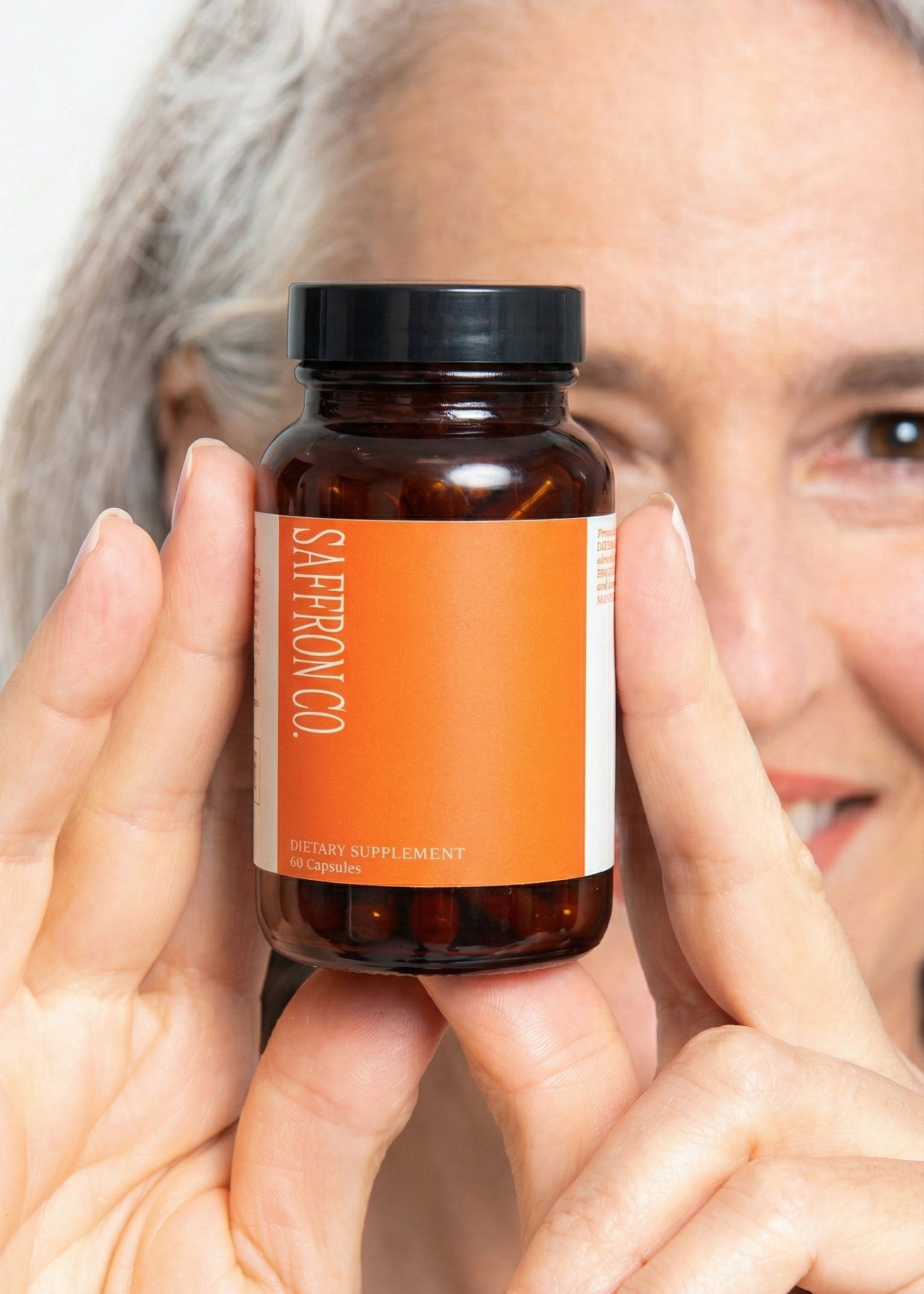
If your perimenopause experience is centered more on emotional flatness, stress reactivity, low libido, and mental fog than on hot flashes alone, Saffron Co's formula is a reasonable product to look at.
The logic is specific. It uses clinical-grade Spanish saffron at 30 mg daily, standardized to clinically relevant markers, then supports that with Rhodiola for stress adaptation, magnesium glycinate for nervous-system support, active B6 for neurotransmitter activation, and a probiotic for the gut-brain axis. You can read more about the formulation approach on why this formula exists.
That makes it a strong fit for women who want a mood-and-vitality stack in one formula rather than saffron alone. As a newer brand, Saffron Co has less long-term independent market history than some established competitors. The brand answers that honestly with a 90-day money-back guarantee, which reduces the risk of trying it.
Buy it if you want a complete saffron-based formula for mood, stress, focus, and libido support in one place. Consider something else if your main concern is hot flashes, bone health, or a pure single-ingredient approach.
Safety, interactions, and when supplements are not enough
Supplements can support perimenopause. They cannot do the whole job when symptoms are severe, sudden, or disruptive.
"Natural" does not automatically mean risk-free. Ingredients can interact with medications. Multi-ingredient blends can create overlap with what you already take. A menopause blend plus a magnesium powder plus a sleep capsule plus a multivitamin can add up fast.
If you are dealing with ongoing symptoms, it may make more sense to speak with a clinician about labs, thyroid function, iron status, sleep disorders, or menopause hormone therapy than to keep cycling through supplements.
If you are currently taking prescription medication for mood, sleep, thyroid function, blood thinning, or any other ongoing condition, talk with your healthcare provider before introducing a new supplement. The same applies if pregnancy is possible or if you are using HRT or MHT. This article is for informational purposes and is not medical advice.
How long perimenopause supplements usually take to evaluate
Timelines vary by category.
Nutrients only help quickly when a deficiency or low intake is part of the issue. Botanicals and mood-supportive ingredients often need several weeks of consistent use before you can judge them fairly. Saffron research, for example, most often looks at a 4 to 8 week window. That makes consistency more important than chasing immediate effects.
When to ask your clinician before trying anything new
Use extra caution if you are taking:
- antidepressants
- blood thinners
- thyroid medication
- HRT or MHT
- prescription sleep medication
Also check in with your clinician if pregnancy is possible, if your sleep issues are severe, or if mood changes feel significant rather than mild and manageable.
Signs you may need more than supplements
Seek medical care if you are dealing with:
- symptoms that meaningfully interfere with daily life
- heavy or unusual bleeding
- severe insomnia
- persistent low mood
- rapid symptom escalation
- symptoms that make you wonder whether something else, such as thyroid dysfunction or iron deficiency, may be going on
Supplements are best used as support, not as a way to delay needed care.
FAQ
What are the best perimenopause supplements?
The best perimenopause supplements depend on your main symptom. Magnesium glycinate, omega-3s, protein, creatine, vitamin D, soy isoflavones, Rhodiola, and saffron are among the more evidence-aware options depending on whether you are trying to support sleep, mood, hot flashes, brain fog, or long-term muscle and bone health.
Which perimenopause supplements help with weight gain?
The most useful supplements for perimenopause weight gain are usually protein, creatine, fiber, magnesium, omega-3s, and sometimes probiotics or berberine, depending on the situation. These support satiety, muscle retention, blood sugar regulation, digestion, and recovery. They do not directly cause weight loss.
What are the best hormone balancing supplements for perimenopause?
There is no single supplement that simply balances hormones across the board. The phrase is often used too loosely. A better approach is choosing supplements based on the symptom you want to support, such as mood, sleep, hot flashes, libido, or body composition.
Do perimenopause supplements actually work?
Some do, for some women, when the supplement fits the symptom and the dose is meaningful. The effect is usually supportive, not dramatic. Supplements can help, but they work best alongside sleep, nutrition, movement, and medical care when needed.
How long do perimenopause supplements take to work?
It depends on the category. Some nutrients help only if deficiency is present. Mood-supportive botanicals and nervous-system support ingredients often need several weeks of daily use. A fair trial is usually 4 to 8 weeks, unless side effects or other concerns appear sooner.
Can I take perimenopause supplements with HRT or prescription medication?
Sometimes yes, but do not assume. Interactions and ingredient overlap matter. If you take HRT, antidepressants, blood thinners, thyroid medication, or other prescriptions, it is smart to review any new supplement with your clinician or pharmacist before starting.