
Saffron for Women: Benefits for Mood, Stress, Libido & Menopause Support
Why saffron for women is the next big thing
Skepticism around mood and wellness supplements is healthy. Most products in this category promise too much, explain too little, and rely on vague language instead of meaningful formulation details. Saffron stands out because it has a more serious research base than many ingredients marketed for emotional well-being.
Saffron comes from the dried stigmas of Crocus sativus, a flowering plant long used in cooking and traditional medicine. But when people search for saffron for women, they are usually not talking about adding more of the spice to dinner. They are talking about standardized saffron extract used in supplements. That distinction matters. Culinary saffron and a clinical-grade extract are not interchangeable in dose, consistency, or research relevance.
Much of the interest comes from very familiar concerns. Feeling emotionally flat. Carrying too much stress for too long. Brain fog that makes simple tasks feel harder than they should. Libido shifts that seem to appear out of nowhere. Mood changes during perimenopause or menopause that leave women feeling unlike themselves.
The research here is promising, but it needs to be framed correctly. Saffron is not a cure. It is not a replacement for therapy, hormone care, or prescribed treatment when those are needed. What it may offer is support for mood balance, stress resilience, and emotional well-being when used consistently and in the right context.
What makes saffron different from most wellness ingredients
What makes saffron different is not hype. It is the fact that saffron has been studied in multiple peer-reviewed clinical trials, most often in the 28 to 30 mg daily range. That is more meaningful than the evidence behind many trend-driven mood supplements. The research is still limited by small sample sizes and short study duration, but it is substantial enough to take seriously.
Who this topic is really for
This article is for women who feel flat, drained, less resilient, or less like themselves than they used to. It is especially relevant for women in the 35 to 65+ range, where chronic stress, sleep disruption, and hormonal shifts often overlap. It is not written to diagnose anyone. It is written for women trying to understand whether saffron may be a useful tool.
Saffron benefits for female health: where the evidence is strongest
When people ask about saffron benefits for female health, the strongest evidence does not start with skin or metabolism. It starts with mood support. That remains the most studied and most credible area.
Even there, restraint matters. Benefits vary by person. Most saffron studies are relatively small and short, often lasting 6 to 8 weeks. That means the right takeaway is encouraging, not absolute.
Mood balance, emotional well-being, and feeling less flat
This is where saffron has the best support. Clinical research suggests saffron may help support mood balance and emotional well-being, particularly in women dealing with mild low mood, stress-related flatness, or the mood shifts that can show up in midlife.
The mechanism is not fully settled, but several pathways are plausible. Saffron appears to influence serotonin and dopamine activity, has antioxidant effects in nerve tissue, and may support BDNF, a protein involved in brain health and adaptability. In plain terms, that means saffron may help support some of the chemistry involved in emotional steadiness, motivation, and feeling more engaged with life.
Stress resilience, mental clarity, and brain fog
Some women also look to saffron for better focus and less brain fog. The evidence here is lighter than it is for mood, but still relevant. Saffron may help support mental clarity for some people, especially when stress overload and poor sleep are part of the picture.
That said, saffron is not a stimulant, and it is not a treatment for ADHD. Brain fog is rarely caused by one thing alone. Sleep debt, hormone shifts, blood sugar swings, burnout, and medication effects can all contribute. A supplement may help support the edges of the problem, but it does not replace sorting out the bigger drivers.
Libido and sexual well-being
There is also a smaller but notable body of research on saffron and female sexual well-being. Some studies suggest saffron may help support libido and aspects of sexual function in women. The evidence is not strong enough for sweeping claims, but it is enough to explain why this topic keeps coming up.
This area needs careful framing because libido changes are almost always multi-factorial. Hormones matter. Stress matters. Sleep matters. Relationship context matters. Medication effects matter too, especially for women taking certain mood-related prescriptions. Saffron may be one supportive piece, not the whole answer.
Perimenopause and menopause support
Saffron often enters the conversation during perimenopause and menopause for a simple reason. These transitions can affect mood, irritability, sleep, motivation, and emotional resilience all at once. Women often describe it less as a single symptom and more as not feeling like themselves.
Saffron does not treat menopause. But it may help support mood and stress response during this life stage, which is why many women explore it as part of a broader routine.
Other areas women ask about, including saffron benefits for skin
Search interest also includes saffron benefits for skin, appetite, and general vitality. These topics are understandable, but the evidence is weaker and more speculative than the mood data. Saffron contains antioxidant compounds, which partly explains the interest in skin health, but that is not where the clinical case is strongest. If mood and emotional well-being are the main goal, that is where the research is most useful.
How saffron works in the body, and why women may respond differently at different life stages
The biology behind saffron is interesting, but it does not need to be explained like a textbook. What matters is that mood, stress response, motivation, sleep, and emotional steadiness are connected systems. Women do not experience them in isolation, especially in midlife.
The key compounds in saffron
The most-studied compounds in saffron are crocin, crocetin, and safranal. These are the components most often linked to saffron's mood-supporting effects. That is why standardized extracts matter more than loose spice when you are evaluating a supplement. Standardization helps show that the product contains measurable amounts of the compounds that have actually been studied.
Mood pathways: serotonin, dopamine, and stress regulation
Saffron appears to influence neurotransmitter pathways involving serotonin and dopamine, while also showing antioxidant activity and possible effects on stress regulation. That does not mean it forces mood upward. It means it may help support the systems involved in emotional steadiness, reward, and resilience under stress.
Why perimenopause changes the conversation
Perimenopause changes the conversation because shifting estrogen and progesterone can affect serotonin, GABA, sleep quality, stress tolerance, and libido. That overlap helps explain why saffron for women is so often a midlife search term. The question is usually not just mood. It is mood plus sleep plus stress plus a sense of disconnection from self.
Why saffron is not one-size-fits-all
Not every woman will respond the same way. Sleep quality, baseline stress, medication use, gut health, overall nutrient status, and hormone changes all influence what a person notices. This is one reason to be cautious of dramatic promises. Some women feel a clear difference. Some feel a subtle shift. Some do not respond much at all.
How to use saffron well: dosage, timing, product quality, and what to look for
A lot of articles stay vague here, which is a mistake. If you are comparing saffron supplements, the basics matter more than marketing language.
What dose of saffron has actually been studied
Most of the mood-support research on saffron uses 28 to 30 mg per day. That is the range with the most clinical relevance. More is not automatically better. Higher doses have not clearly shown better outcomes, and the studied range is already enough to evaluate whether saffron is a fit.
How long saffron takes to work
Saffron is not an overnight ingredient. In research, changes are usually measured over 4 to 8 weeks of daily use. Some people notice shifts sooner. Some take longer. Some do not notice much. Daily consistency matters more than taking extra.
What to look for on a saffron supplement label
Look for a clearly stated dose, not a vague proprietary blend. Look for standardization markers if they are provided. Look for third-party testing and basic quality signals such as GMP manufacturing. Then consider whether you want saffron alone or a broader stack built around a specific use case. For a deeper look at how different products compare, best saffron supplement for mood covers what to look for and which formulas are worth considering.
When a multi-ingredient formula may make sense
For some women, saffron alone is enough. For others, a more complete formula makes sense, especially when the picture includes stress overload, nervous system strain, weak stress recovery, or gut-related factors. In those cases, a stack that supports stress adaptation, neurotransmitter pathways, and the gut-brain axis may be more useful than saffron by itself.
Where Saffron Co may fit for some women
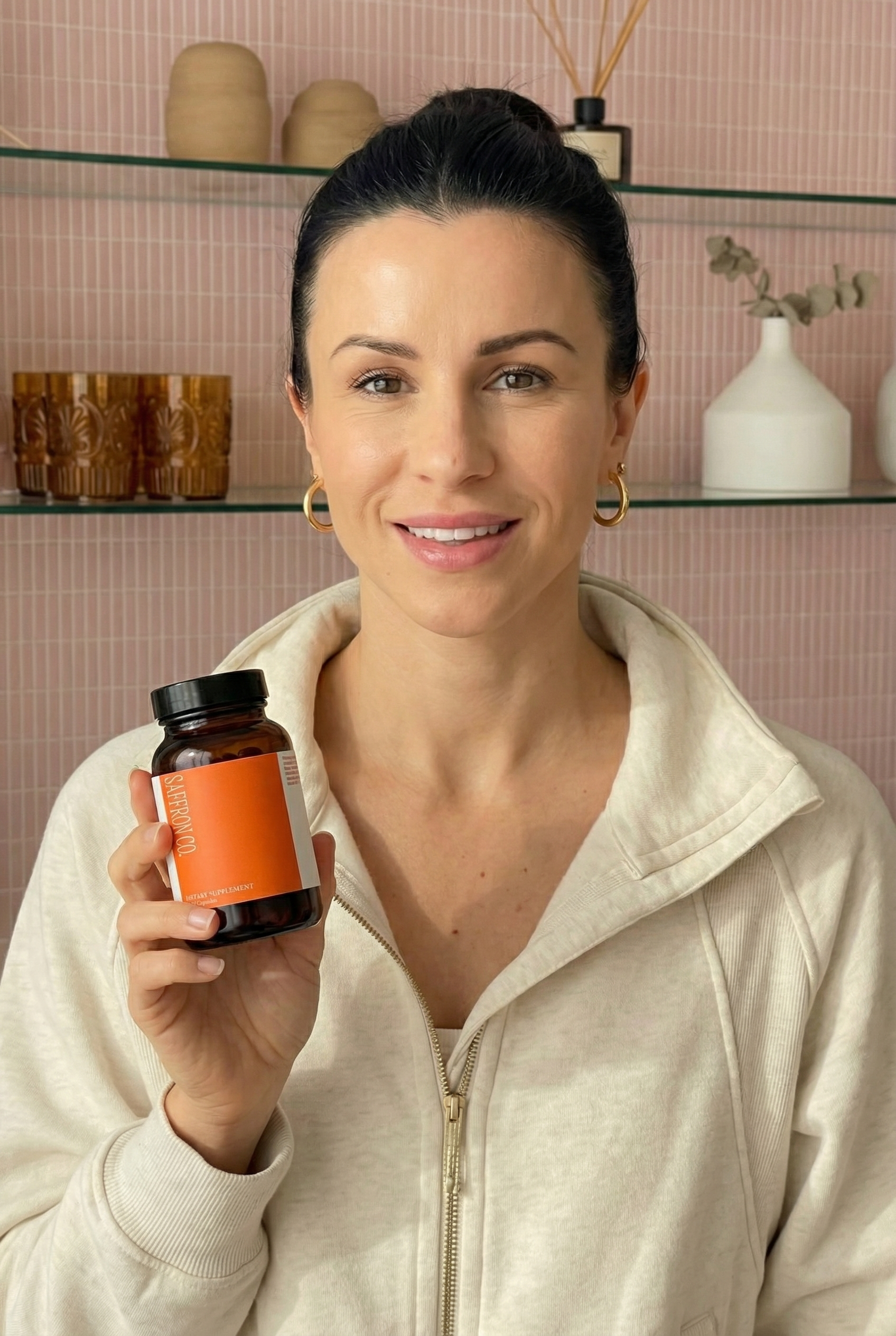
If that broader approach is what you want, Saffron Co may fit. Its Mood and Vitality Capsules use Spanish saffron extract at the clinically studied 30 mg per day dose, standardized to at least 3.0% trans-crocin and around 1.2% safranal. The formula then adds Rhodiola rosea for stress adaptation, magnesium glycinate for nervous-system support, active vitamin B6 for neurotransmitter activation, and a probiotic to support the gut-brain axis.
That makes it a strong fit for women who want a complete saffron-based stack rather than saffron alone. The 90-day money-back guarantee also matters. As a newer brand, Saffron Co has less long-term independent market history than older competitors. The guarantee is a practical way the brand reduces that risk for the customer.
Side effects, limitations, and when saffron is not the right tool
This is the section many articles soften. It should not be softened.
Saffron side effects for female readers: what to know
At studied doses, saffron is generally considered well tolerated. But generally well tolerated does not mean risk-free or side-effect-free. Some people may experience sensitivity, digestive upset, headache, dizziness, or simply feel that it does not suit them. Individual response matters.
Who should be cautious with saffron
If you are pregnant, nursing, or taking prescription medication for mood, sleep, or any other condition, talk with your healthcare provider before starting saffron or any new supplement. The same applies if you have a significant medical condition or are using multiple supplements at once. This article is for informational purposes and is not medical advice.
What saffron cannot do
Saffron does not treat depression, anxiety disorders, ADHD, menopause, or sexual dysfunction. It should not be framed as a replacement for medication, therapy, or proper medical care. It may help support mood balance, libido, and stress response for some women. That is a meaningful claim. It is also a limited one.
When to seek professional support instead of self-experimenting
If your symptoms are worsening, interfering with daily function, lasting for weeks without relief, or causing severe distress, professional support is the better next step. The same is true if you suspect a hormone issue, medication side effect, thyroid problem, sleep disorder, or anything more complex than a supplement can reasonably address.
Is saffron worth trying for women who want natural mood and vitality support?
For the right person, yes. The strongest case for saffron is mood support, with smaller but relevant interest around stress resilience, mental clarity, libido, and midlife emotional steadiness. The timeline is measured in weeks, not days, and product quality matters.
Who saffron may be a good fit for
Saffron may be a good fit for women dealing with emotional flatness, stress-heavy seasons, midlife mood shifts, or a general sense of feeling less like themselves. It makes the most sense for women who want a gentle daily ritual, not a dramatic intervention, and who are willing to give it 4 to 8 weeks.
Buy Saffron Co if you want a clinically dosed saffron formula with Rhodiola, magnesium glycinate, active B6, and a probiotic in one product, and the 90-day guarantee matters to you.
Who may want a different approach first
A different approach may matter more if your main issue is severe sleep disruption, obvious hormone imbalance, medication side effects, persistent low mood that affects daily function, or unresolved medical symptoms. In those cases, sleep support, hormone evaluation, therapy, medication review, or a fuller medical workup may be more important than adding another supplement.
FAQ
What does saffron do for women?
Saffron has been clinically studied for mood support and may help support emotional well-being, stress resilience, and, for some women, libido and mental clarity. The strongest evidence is for mood balance rather than skin, weight, or general wellness claims.
How long does saffron take to work for mood support?
Most research looks at 4 to 8 weeks of daily use. Some women notice shifts sooner, but saffron is not usually a quick-fix ingredient.
What is the right saffron dose for women?
The most studied dose range is 28 to 30 mg per day. That is the range most often used in clinical research on mood support.
Is it safe to take saffron every day?
For many healthy adults, saffron appears to be well tolerated at studied daily doses. But anyone who is pregnant, nursing, or taking prescription medication should check with a healthcare provider before using it regularly.
What are the saffron side effects for female users?
Possible side effects may include digestive upset, headache, dizziness, or individual sensitivity. Many people tolerate saffron well, but it should not be described as having no side effects.
Can saffron help with perimenopause mood swings?
It may help support mood and stress response during perimenopause, which is one reason it is often explored in midlife. It does not treat perimenopause or replace hormone care when that is needed.
Does saffron help female libido?
Some early research suggests saffron may help support female sexual well-being and libido, but the evidence is smaller than it is for mood. Libido changes are usually influenced by hormones, stress, sleep, relationship dynamics, and medication effects too.
Can women take saffron with antidepressants or HRT?
This is a discussion to have with your healthcare provider. If you are taking antidepressants, HRT, or any prescription medication, get individualized guidance before introducing saffron.
Read more
Explore the latest saffron statistics for 2026, including global market size, production trends, supplement demand, pricing, trade data, clinical research growth, and what drives the premi...
Does saffron increase serotonin? Learn what clinical research suggests, how saffron may work in the brain, timing, dose, safety, and key limits.