
Saffron Statistics 2026: Market Size, Supplement Demand & Industry Trends
What the 2026 saffron industry actually looks like
The saffron industry in 2026 is not one market. It is several overlapping ones.
There is culinary saffron sold as a premium spice. There is saffron extract used in ingredient manufacturing. And there is a growing saffron supplement category built around mood support, emotional well-being, stress resilience, libido, and focus. When people search for saffron statistics, those categories often get blended together. That is where confusion starts.
This report separates them on purpose.
If you are reading as a shopper, researcher, or brand evaluator, the useful question is not just how big saffron is. It is which part of the saffron economy the number is actually measuring. A customs database may track raw saffron threads by weight and country of origin. A market research report may estimate global retail revenue across food, cosmetics, and supplements. A supplement brand may cite clinical studies on standardized extract at 28 to 30 mg per day. Those are related, but they are not interchangeable.
That is also why saffron statistics often look inconsistent across sources. Methodologies differ. Some reports define the market narrowly as saffron spice. Others include extract ingredients, finished wellness products, or even saffron used in fragrance and personal care. Trade data may reflect export routing through intermediary countries rather than original cultivation. Retail estimates may combine online and offline channels unevenly.
So this is not a hype piece. It is a practical industry snapshot meant to help you interpret the numbers with a little more discipline.
If you want to understand how formulation quality fits into the finished-supplement side of the market, Saffron Co's guide to why this formula is a useful companion resource.
How to read saffron statistics without getting misled
A few categories matter:
- Market size estimates tell you what analysts think the category is worth in revenue terms
- Customs trade data tells you what moved across borders, in what quantities, and from where
- Retail sales trends show what consumers are actually buying in finished form
- Supplement category growth tracks demand for mood and wellness products containing saffron
- Clinical research volume tells you how much the ingredient has been studied, not how large the market is
A rising market estimate does not prove product quality. A growing number of supplement listings does not mean those products match clinical-dose research. And a strong ingredient study does not automatically validate every capsule on the shelf.
What counts as the saffron industry in 2026
In practical terms, the 2026 saffron industry includes:
- cultivation and hand-harvesting
- bulk export and global trade
- ingredient processing and extract standardization
- finished supplements, capsules, and wellness blends
- consumer demand across food, beauty, and health categories
That full chain matters because quality can weaken at every step between farm and finished bottle.
Saffron statistics by market size, production, and global trade
At a high level, saffron remains a small but premium global agricultural category with unusually high value density. It is expensive, labor-intensive, geographically concentrated, and sensitive to both quality variation and trade opacity.
Global saffron market size and growth estimates
Depending on the source, global saffron market estimates for 2026 usually land somewhere in the high hundreds of millions of dollars, with many forecasts projecting continued mid-single-digit to low-double-digit annual growth over the next several years. The exact number varies because analysts do not all count the same things.
Some reports track saffron as a spice and food ingredient only. Others include nutraceuticals, cosmetics, and extracts. That is why one firm may present a much smaller global market than another while both appear credible on the surface.
The broad directional takeaway is more reliable than the exact figure: saffron remains niche by volume, premium by price, and attractive to growth-oriented supplement brands because even modest consumer demand can support a meaningful finished-product market.
Which countries produce and export the most saffron
Production remains heavily concentrated. Iran continues to dominate global saffron cultivation by a wide margin and is widely understood to account for most of the world's raw saffron output. Other producing countries include Afghanistan, India, Greece, Morocco, and Spain, though at far smaller scale.
That concentration creates obvious supply risk. Weather, labor availability, political conditions, sanctions, and export routing can all affect downstream availability and pricing.
Export statistics are more complicated than production statistics. A country may appear prominent in export data because it processes, repackages, or re-exports saffron rather than growing most of it domestically. Spain is the clearest example. It has long played an important role in premium saffron trading and processing, which is one reason Spanish origin still carries weight in supplement quality perception.
Origin matters because buyers often associate it with consistency, processing standards, and fraud risk. That perception is not everything, but it does shape pricing.
Import demand, trade routes, and where supplement brands source from
Major importing markets include parts of Europe, the United States, the Gulf region, and East Asia. In the supplement supply chain, raw saffron may move from growers to exporters, then to extract manufacturers, then to finished-product formulators. That means the country listed on a supplement label may reflect extract sourcing or finished manufacturing rather than field origin alone.
For supplement brands, this matters in two ways. First, ingredient costs are affected by trade concentration and premium sourcing. Second, quality consistency depends on extraction and standardization, not just geography.
A cheaper raw input can still become an expensive finished product once extraction, testing, encapsulation, and quality assurance are added. The opposite is also true. A premium-looking supplement can still underdeliver if the saffron extract is weak, unstandardized, or used below clinically studied levels.
Why saffron is expensive: quality grades, adulteration, and standardization statistics that matter
Saffron is expensive for a simple reason first: it is intensely labor-heavy. The stigmas must be harvested by hand from Crocus sativus flowers, and it takes a very large number of flowers to produce a small amount of finished saffron. That labor economics is the foundation of saffron pricing.
But supplement buyers need to go one step further. Raw saffron price alone does not tell you whether a saffron capsule is worth considering.
ISO grades, stigma quality, and why raw saffron statistics do not tell the full supplement story
For culinary saffron, ISO grading focuses on measures such as coloring strength and characteristics linked to crocin, picrocrocin, and safranal. Those standards are useful for spice grading, but they do not fully answer the questions supplement buyers should ask.
A high-grade culinary saffron thread is not the same thing as a well-standardized extract. Supplements live or die on extraction quality, concentration, and consistency from batch to batch.
So when you see raw saffron pricing statistics or export tonnage, treat them as upstream indicators, not proof of supplement effectiveness.
The standardization numbers supplement buyers should know
The clinical literature on saffron for mood support is concentrated around 28 to 30 mg per day. That is the most important practical dosage statistic in the category.
Beyond dose, standardization matters. Clinically relevant saffron extracts are often described by markers such as trans-crocin and safranal, the compounds most commonly used to signal extract quality and consistency. If a brand does not disclose standardization at all, comparison gets harder.
This is where not all capsules are meaningfully comparable. A product can say "saffron" on the front and still use an unclear extract, a low daily dose, or minimal supporting formulation logic. If you want to understand what to look for in a saffron supplement ingredients label before you buy, that breakdown covers the key signals worth checking.
Adulteration, traceability, and third-party testing
Adulteration is a real issue in the saffron world, especially in bulk spice and ingredient channels. Because saffron is expensive, it has long been vulnerable to dilution, substitution, and quality inflation.
For finished supplements, the practical safeguards are traceability, GMP manufacturing, and third-party testing. Those controls do not make a product perfect, but they do reduce the odds that a consumer is buying a saffron label rather than a saffron-standardized ingredient.
Saffron supplement statistics in 2026: demand, formulation trends, and consumer behavior
The finished supplement category is where saffron has changed most visibly over the past few years.
Consumer interest is being driven less by culinary curiosity and more by wellness use cases, especially mood support, emotional well-being, stress resilience, focus, and libido support. That is where search behavior and product innovation are now converging.
A large share of that demand appears to come from women in midlife who feel flat, mentally tired, more stress-reactive than usual, or not quite like themselves. That does not mean saffron is a treatment for any condition. It means the category is increasingly being shaped by consumers looking for a natural daily ritual that feels gentler than heavier interventions.
What consumers are actually searching for
Search behavior tends to cluster around a few recurring questions:
- does saffron actually work for mood support
- how long does saffron take to work
- what dose of saffron is used in studies
- is saffron safe to take daily
- can saffron interact with medications
- what is the best saffron supplement
That pattern tells you something important. Buyers are not just looking for buzzwords. They are trying to verify dose, timeline, and safety.
If you are exploring the evidence side, Saffron Co's overview of saffron clinical studies summarizes the research base in a consumer-friendly way.
Single-ingredient saffron vs multi-ingredient formulas
The market currently splits into two dominant strategies.
Single-ingredient saffron supplements aim for simplicity. They appeal to buyers who want a clean formula, fewer variables, and easier stacking with other products.
Multi-ingredient formulas try to solve a broader problem set. Instead of relying on saffron alone, they pair it with ingredients chosen for stress adaptation, nervous-system support, neurotransmitter pathways, or the gut-brain axis.
Neither approach is automatically better. It depends on the use case.
A formulation-first product like Saffron Co is designed for people who want the clinically studied 30 mg saffron dose plus supporting ingredients: Rhodiola rosea for stress adaptation, magnesium glycinate for nervous-system support, vitamin B6 in active P5P form for neurotransmitter activation, and a probiotic for gut-brain axis support. For some buyers, that logic is more useful than saffron alone. For others, a simpler product may feel easier to evaluate.
What makes a saffron supplement worth considering
A saffron supplement is generally worth closer attention when it checks most of these boxes:
- standardized saffron extract
- clinically studied daily dose alignment
- clear label transparency
- sensible supporting ingredients, if included
- GMP manufacturing and third-party testing
- a fair money-back guarantee
That last point matters more than many brands admit. Individual response varies. A credible guarantee shifts some of the risk back to the company. If you want to see how that should work in practice, Saffron Co's 90-day money-back guarantee and saffron supplement reviews offer a useful example of risk reduction and buyer transparency.
What the clinical and market data can tell you, and what it cannot
This is where restraint matters.
Saffron has a meaningful evidence base for a botanical supplement. There are 24+ peer-reviewed clinical studies, and many of the better-known trials cluster around 28 to 30 mg per day. That is more than most mood-support ingredients can say.
But it is still easy to oversell.
What the saffron clinical studies do suggest
The most defensible read of the research is this: saffron appears to support mood balance and emotional well-being for some people when taken consistently, with effects usually assessed over 4 to 8 weeks. There is also emerging research on stress-related symptoms, libido, and cognitive or focus-related outcomes, though those areas are less developed than mood support.
That is encouraging. It is also not the same as saying every saffron supplement works equally well.
Where the evidence is still limited or easy to oversell
Most saffron studies are relatively short and often involve small sample sizes. Population diversity can be limited. Extract quality varies. And ingredient-level evidence does not automatically transfer to finished-product evidence unless the product meaningfully matches the dose and standardization used in research.
Market growth statistics can also mislead people here. A growing category only proves demand. It does not prove efficacy or quality consistency.
If you are currently taking prescription medication for mood, anxiety, sleep, or any other condition, talk with your healthcare provider before adding a new supplement. The same caution applies during pregnancy or nursing. This article is for informational purposes only and is not medical advice.
How to use this report if you are comparing supplements
Use it as a filter.
Start with clinical-dose alignment. Then look at standardization. Then look at formulation logic, manufacturing quality, and whether the brand makes it easy to verify what you are buying.
If you want a broader formula built around saffron rather than saffron alone, Saffron Co may be worth considering because the product follows a clear five-ingredient logic and backs it with a 90-day guarantee. If you prefer a simpler or more established option, a single-ingredient saffron product from a long-running brand may fit better.
There is no single best answer. There is only the best fit for what you are actually trying to support.
FAQ
What are the most important saffron statistics in 2026?
The most useful saffron statistics in 2026 are not just market size numbers. They include production concentration by country, trade flows, clinically studied dose ranges, extract standardization markers, and supplement-quality signals like third-party testing. Those numbers tell you more than a headline growth forecast alone.
Why is saffron so expensive compared with other supplement ingredients?
Saffron is expensive because it is labor-intensive to harvest, low-yield by weight, and produced in relatively concentrated regions. On the supplement side, costs also reflect extraction, standardization, testing, and manufacturing quality controls.
Which countries produce most of the world's saffron?
Iran is widely recognized as the dominant global producer. Other producing countries include Afghanistan, India, Greece, Morocco, and Spain, though at much smaller scale. Spain remains especially significant in processing, trade, and premium quality perception.
How fast is the saffron supplement market growing?
Exact growth rates vary by report because analysts define the category differently. Broadly, the market appears to be growing steadily, supported by rising interest in mood support, stress resilience, and premium botanical supplements. The strongest signal is continued consumer demand, not one exact forecast number.
What dose of saffron is most commonly used in clinical studies?
Most saffron clinical studies for mood support cluster around 28 to 30 mg per day. That is the dose range buyers should know when comparing finished supplements to published research.
How can you tell if a saffron supplement is high quality?
Look for a standardized saffron extract, a daily dose aligned with clinical research, transparent labeling, GMP manufacturing, third-party testing, and a reasonable money-back guarantee. If a formula includes added ingredients, they should have a clear purpose rather than just filling label space. If you want to hear from people who have actually tried the product, what our customers say offers real-world perspectives alongside the research.
Read more
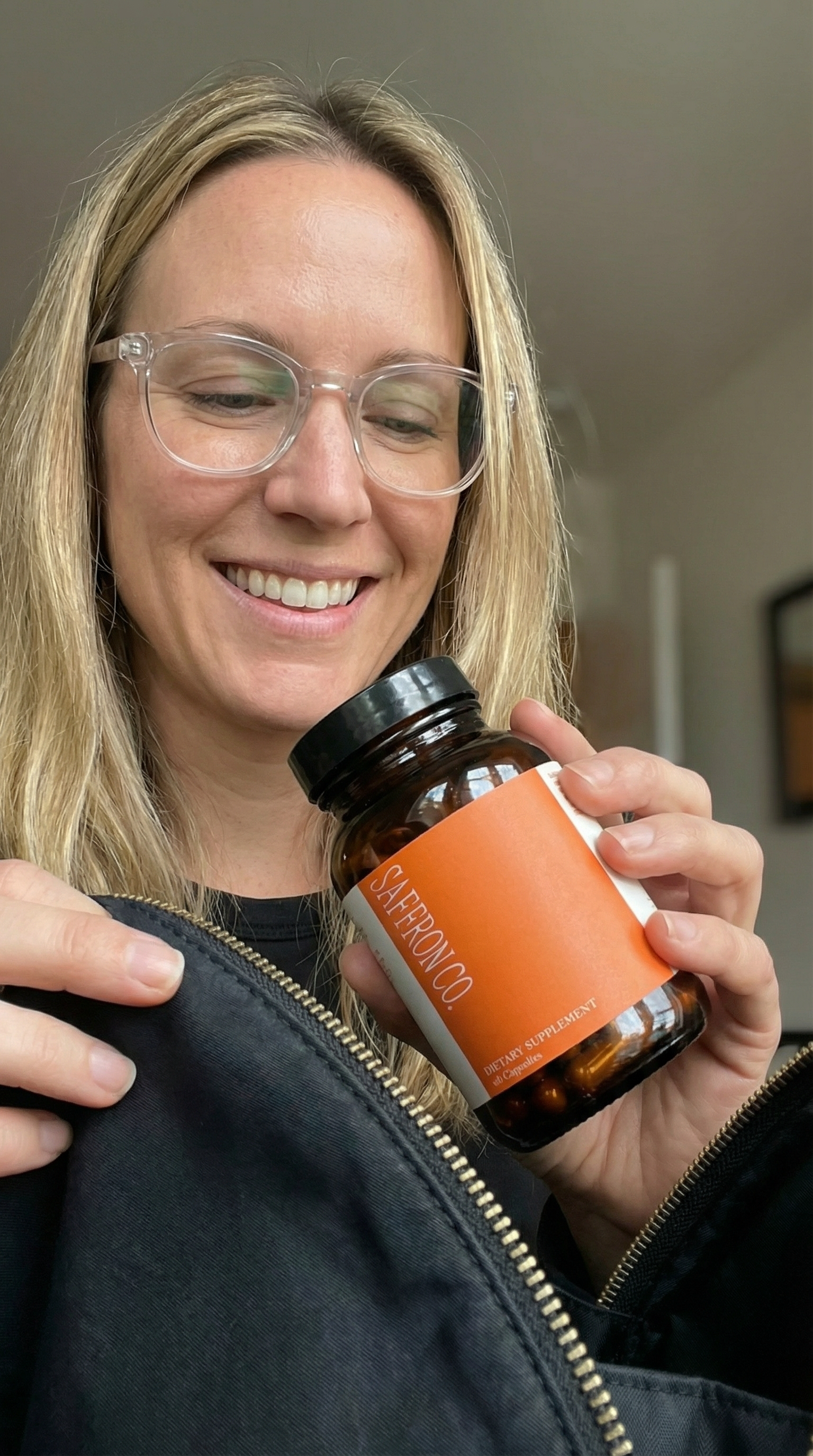
Explore what saffron clinical studies actually reveal about mood support, stress, sleep quality, dosage, safety, and supplement effectiveness. A science-backed review of the current human ...
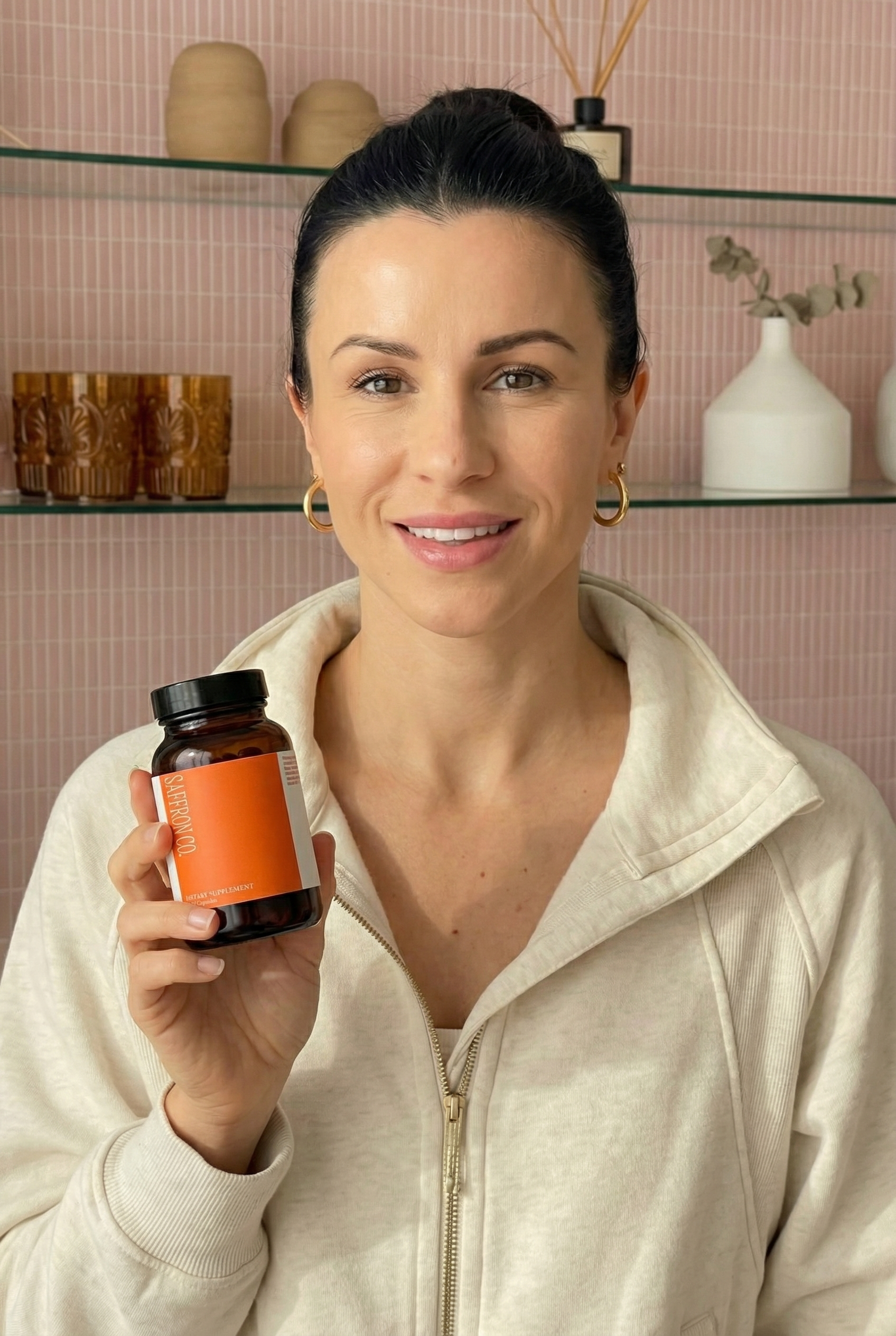
Discover the research-backed benefits of saffron for women, including mood support, stress resilience, libido, brain fog, and perimenopause wellness.