
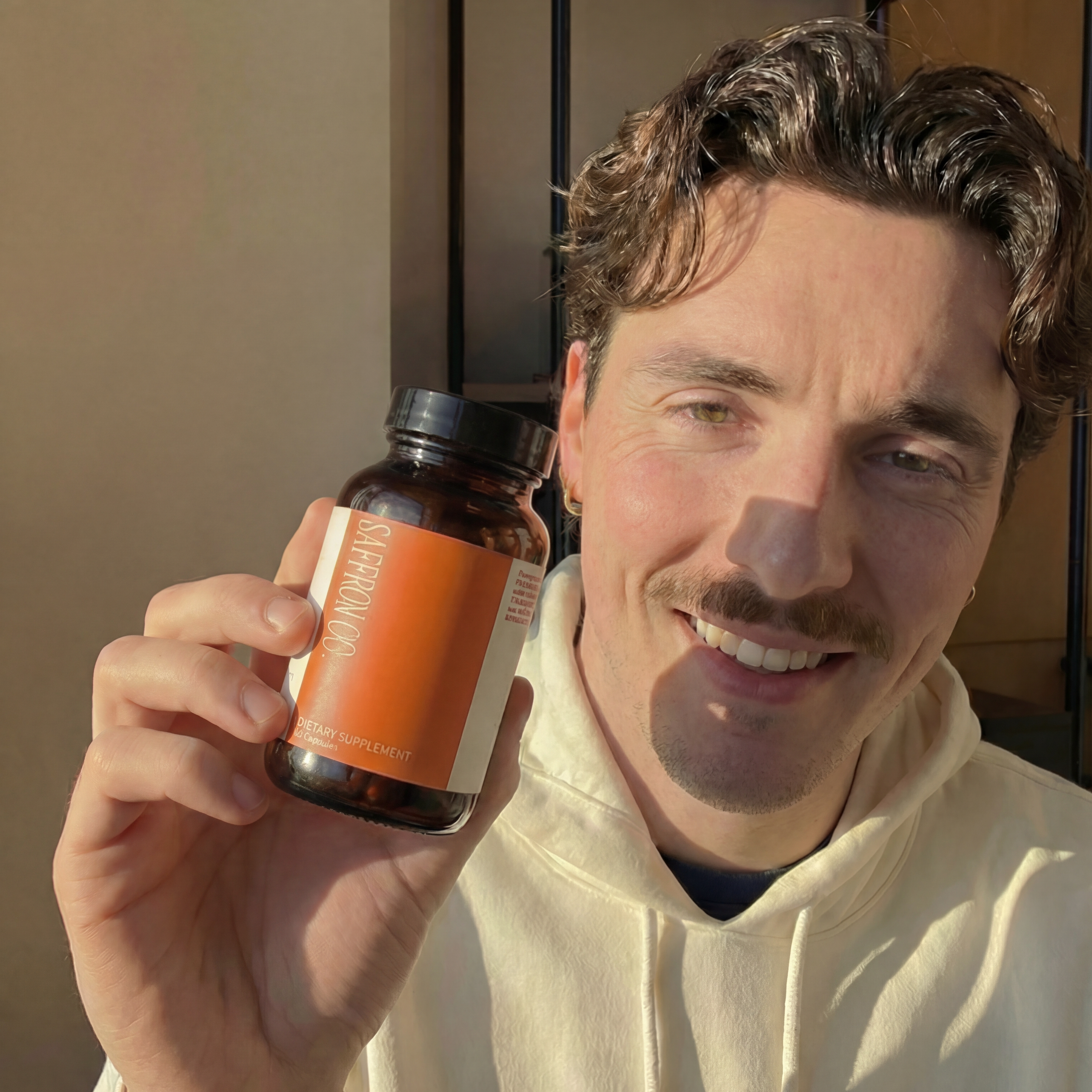
Saffron may help support some ADHD-related symptoms in some people, based on a small body of early human research. This guide covers what the studies actually show, how saffron may work, dosing and quality standards, the differences between adults and kids, and where a supplement realistically fits alongside prescribed care.
What to know about saffron for ADHD before you try it
Does saffron for ADHD actually help, or is it just another supplement trend with more enthusiasm than evidence? The honest answer sits somewhere in the middle. Saffron is being studied for attention, impulsivity, sleep, and emotional regulation, and some early human research is genuinely interesting, but the research base is still small and short-term, which rules out sweeping claims.
That matters because ADHD is not just "trouble focusing." It is a diagnosable neurodevelopmental condition that can affect school, work, relationships, emotional regulation, reward processing, and daily functioning. A supplement is not the same thing as a proven treatment plan, and saffron should not be presented as a replacement for prescribed ADHD care.
Interest has grown for understandable reasons. A handful of trials in children, adolescents, and adults suggest saffron may help support certain ADHD-related symptoms in some people, especially when taken consistently over several weeks. Researchers have also become more interested in saffron because its active compounds appear to interact with neurotransmitter and oxidative-stress pathways that may be relevant to attention and self-regulation.
Quick answer: can saffron help with ADHD symptoms?
Saffron may help support some ADHD-related symptoms in some people, but the evidence base is still small and short-term, with mixed results across studies. The most reasonable conclusion right now is promising, but not definitive. Some studies suggest benefits for attention, hyperactivity, sleep, or emotional symptoms, while others are too small or too short to support a confident clinical takeaway, and individual response likely varies.
Scope and safety note. If you take ADHD medication, antidepressants, sleep medication, or any other prescription drug, talk with a qualified healthcare professional before adding saffron. The same caution applies if you are pregnant, nursing, choosing for a child, or managing coexisting mental health conditions. This article is for informational purposes only and is not medical advice.
Jump to what the research shows →
How saffron may work for ADHD
Saffron comes from Crocus sativus, and its most studied bioactive compounds include crocin, crocetin, and safranal. Clinical research suggests these compounds may influence neurotransmitter systems, oxidative stress, and neuroplasticity pathways relevant to brain function and mood.
In practical terms, that is why saffron keeps showing up in conversations about focus and self-regulation. Researchers think it may affect dopamine and serotonin signaling, while also exerting antioxidant and neuroprotective effects. Some papers also discuss effects on glutamate, BDNF, and stress-related pathways, though these areas are still developing.
That does not mean saffron "works for ADHD" in the same way medication does. Mechanistic plausibility is not the same thing as real-world clinical benefit, but it does explain why saffron is being investigated in the first place. For readers, the relevant question is simpler: could those pathways matter for symptoms such as distractibility, impulsivity, mood swings, irritability, poor sleep, and stress reactivity? Possibly, and that is the signal researchers are trying to clarify.
Neurotransmitters, executive function, and why ADHD is more than inattention
ADHD involves more than trouble paying attention. It often includes impaired executive function, reward dysregulation, restlessness, impulsivity, low frustration tolerance, and difficulty with self-monitoring or task initiation. The neurobiology is complex, but dopamine and norepinephrine are central to the current medical understanding of ADHD.
That is one reason stimulant and non-stimulant ADHD medications focus so heavily on catecholamine pathways. Saffron is different. Research on saffron often discusses serotonin in addition to dopamine-related effects, which may be more relevant to emotional symptoms, sleep, irritability, and mood spillover than to classic attentional symptoms alone.
So if someone is searching "saffron for ADHD," what they may actually mean is broader than attention. They may be dealing with focus issues plus emotional volatility, poor sleep, stress sensitivity, or the drained, flat feeling that makes executive function even harder.
Could saffron help sleep and emotional regulation too?
Possibly, and this is one of the more interesting angles. For some people, especially children and women, sleep quality and irritability shape how severe ADHD symptoms feel day to day. A child who sleeps badly may look more impulsive, and an adult who is emotionally fried and sleeping poorly may feel far less focused than usual.
Some saffron studies suggest benefits beyond attention alone, including emotional symptoms and sleep-related outcomes. That does not prove saffron is an ADHD solution. It does suggest that if someone's symptom picture includes stress, low mood, irritability, or poor sleep alongside attentional challenges, saffron may be worth discussing as part of a broader support plan.
What the clinical research on saffron for ADHD actually shows
There is human research on saffron and ADHD-related symptoms, including randomized trials, adjunctive studies, and observational work, but most of it is short (often 6 to 8 weeks) and uses modest sample sizes, which limits certainty. The best-known studies come from pediatric populations, where several trials have compared saffron with methylphenidate or evaluated saffron as an adjunct to standard treatment. The adult literature exists but is thinner and less settled.
Research in children and adolescents
One small randomized pilot trial published in the Journal of Child and Adolescent Psychopharmacology set a standardized saffron extract against methylphenidate over 6 weeks in children and adolescents. Both groups improved on ADHD rating scales, and the researchers reported no statistically significant difference between them, but a 6-week pilot in a few dozen children cannot establish that saffron matches a stimulant, and nothing in that trial makes saffron a substitute for prescribed ADHD medication. A later clinical-effectivity study using the Saffr'Activ extract suggested saffron may be worth further study for hyperactivity symptoms and sleep in younger patients, though it too was small and used alongside standard care.
That sounds impressive at first glance, but the limitations matter:
- sample sizes were small
- trial durations were short
- extracts and dosing approaches were not always identical across studies
- symptom scales depend heavily on parent, teacher, or clinician ratings
- longer-term follow-up is limited
So the honest summary is this: some pediatric studies suggest saffron may support attention, hyperactivity, sleep, or emotional symptoms in certain children and teens over several weeks. But pediatric use deserves a high standard of caution, because evidence is still limited and supervision is essential.
Research in adults with ADHD
The adult evidence base is smaller than the pediatric one, with fewer robust trials and less consistency in outcomes. There are early adult data, including an adjunctive trial suggesting saffron may add benefit alongside standard treatment in adults, especially where mood or sleep overlap is present. But no broad conclusion is justified yet. At most, saffron looks like an interesting area of early research for adults with ADHD-related symptoms, not a settled intervention.
What the studies get right and where they fall short. The trials measure outcomes people actually care about: attention, hyperactivity, impulsivity, sleep, irritability, and tolerability. The weaknesses are equally consistent: short durations, small samples, different extracts and dose ranges, inconsistent outcome measures, and limited long-term safety data. There is not yet a large, long-term evidence base for saffron that comes close to the evidence supporting established ADHD medications.
Saffron for ADHD in women, men, and kids: what may be different
ADHD does not look identical across life stages or sexes. That does not mean saffron is proven to work differently in each group. It means what counts as "helpful" may differ based on symptom pattern, context, and what else is going on.
Women with ADHD: mood, cyclical changes, and the mental load factor
Women with ADHD are often more likely to present with inattentive symptoms, emotional overwhelm, mental fatigue, internalized stress, and the feeling that their brain is never quite caught up. Hormonal shifts can complicate that picture further. Symptoms may worsen around the menstrual cycle, during perimenopause and menopause, or during periods of poor sleep and high stress.
This is part of why saffron attracts interest among adult women. The overlap is real: brain fog, emotional flatness, irritability, low frustration tolerance, poor stress resilience, and sleep disruption can all amplify ADHD symptoms. That does not mean saffron treats perimenopause, PMDD, or depression. It does mean it may be worth a conversation if ADHD symptoms sit alongside low mood, emotional flatness, or poor stress resilience, especially for someone looking for a gentle daily ritual rather than a single-symptom solution.
A broader formula can make more sense here than saffron alone. For example, Saffron Co. Mood and Vitality Capsules use clinical-grade Spanish saffron at 30 mg per day, paired with Rhodiola for stress adaptation, magnesium glycinate for nervous-system support, vitamin B6 in active P5P form for neurotransmitter activation, and a probiotic to support the gut-brain axis. That is not an ADHD treatment claim. It is a formulation logic that may fit women whose focus challenges overlap with mood, sleep, or stress strain. The fuller rationale is explained on why this formula was built this way.
Men with ADHD: focus, motivation, and impulsivity
Men may be more likely to search for support around restlessness, motivation, impulsivity, frustration tolerance, and task follow-through, though presentation varies widely.
Some men are drawn to saffron because the idea feels less sedating or less flattening than some interventions. That perception is understandable, but it is not evidence. The better framing is that saffron may appeal most when the goal is supportive, non-prescription help around mild symptom burden, emotional regulation, or stress-linked focus problems. It should not be treated as a substitute for evidence-based ADHD care.
Children and teens: why the standard for caution is higher
Pediatric ADHD should be managed with a clinician, without exception. Diagnosis quality matters, dose matters, school impact matters, and coexisting anxiety, learning differences, autism-spectrum traits, sleep problems, and family context all matter too. Even though saffron has been studied in younger populations, and even though institutions like the Children's Hospital of Philadelphia have written about the early findings, parents should not self-experiment based on anecdotes, influencer content, or "saffron for ADHD reddit" threads.
Early pediatric research is interesting. It is not enough to justify casual at-home trial and error without professional oversight.
Best saffron for ADHD: dosage, standardization, timing, and what to look for
Most saffron research uses standardized extract, not culinary saffron threads. The studied amount is usually around 20 to 30 mg per day, with 28 to 30 mg showing up often across mood research and some ADHD-related studies. If you are comparing products, those basics matter more than branding.
What dose of saffron for ADHD has actually been studied?
Clinical research commonly uses 20 to 30 mg per day, and the 28 to 30 mg range appears frequently across the broader saffron literature. Do not assume a higher dose means better results. More is not automatically more effective, and pushing above studied ranges does not improve the evidence.
Why standardization and percentages matter
A label that just says "saffron" tells you very little, because the useful information lives in whether the extract is standardized to active compounds such as crocin (or trans-crocin) and safranal. Those markers give you a better sense of whether the product resembles the kinds of extracts used in research.
Common quality signals include:
- a clearly stated daily saffron dose
- standardized extract rather than raw powder
- active compound markers such as trans-crocin or safranal
- third-party testing
- a transparent full label
For example, Saffron Co. uses Spanish saffron extract standardized to at least 3.0% trans-crocin and about 1.2% safranal at 30 mg per day. That does not make it "the ADHD supplement." It does mean the saffron piece of the formula aligns with what evidence-aware buyers should look for in a serious saffron product. Products without clear standardization are simply harder to judge, even if the packaging looks polished.
Best time to take saffron and how long to judge it fairly
Studies usually assess outcomes over several weeks, not several days, so expecting overnight focus improvement is unrealistic.
Many people take saffron in the morning, which often makes sense in formulas aimed at mood, stress resilience, or daytime clarity. But timing can depend on the full formula and on how the individual responds. If a formula includes energizing adaptogens, morning is the obvious choice, and someone who is unusually sensitive may prefer splitting doses. The bigger point is consistency: if you are judging saffron fairly, think in weeks, not hours.
Single-ingredient saffron vs multi-ingredient support formulas
The tradeoff is clean-signal testing versus broader coverage. A single-ingredient saffron extract makes it easier to isolate response, and if you want to know how saffron itself affects you, that is the cleanest design.
A broader formula may make more sense if your focus issues overlap with stress, poor sleep, low mood, or nervous-system strain. Magnesium glycinate, Rhodiola, B vitamins, and gut-brain support each address a different part of that picture. That is where a multi-ingredient option like Saffron Co. can be a sensible fit for the right use case, especially adult women dealing with more than attention alone. As a newer brand, it does have less long-term independently published clinical history than more established supplement companies, and the 90-day money-back guarantee is how the brand answers that honestly.
Buy a complete formula if your symptom picture includes stress, emotional flatness, or sleep-adjacent strain. Consider a pure saffron product instead if you want to test saffron alone before trying a broader stack.
How saffron compares with ADHD medication and other supplements
Saffron should not be framed as a replacement for stimulant or non-stimulant ADHD medication in people with diagnosed ADHD who are under medical care. There is no need to overreach in either direction: this is not an anti-medication conversation, and it is not a supplement-can-do-everything conversation either.
Saffron vs stimulant medication
Stimulant medications have a much larger and stronger evidence base for ADHD symptom management than saffron. That does not mean everyone tolerates medication equally well. It does mean these are different tools with different goals, different evidence standards, and different levels of medical oversight. Saffron is an early-stage supplement option being studied for supportive benefit, while prescription ADHD medication is an established treatment category for diagnosed ADHD.
Saffron vs other supplements often used for ADHD-adjacent support
Different supplements fit different use cases, and the differences are easier to see side by side.
| Supplement | Typical role | Where it fits best | Main caution |
|---|---|---|---|
| Omega-3s | Foundational nutritional support | Long-term brain support with modest symptom-level evidence | Slow timeline; not a targeted focus tool |
| Magnesium | Nervous-system and sleep support | Calm, tension, and sleep more than direct attention effects | Form matters; glycinate is the better-tolerated choice |
| L-theanine | Same-day calm focus | Short-term mental noise and caffeine-jitter smoothing | Situational; does little for long-term symptom patterns |
| Rhodiola | Stress adaptation | Stress-related fatigue and mental endurance under pressure | Can feel energizing; morning use usually preferred |
| Saffron | Mood-attention overlap support | Focus problems that travel with mood, irritability, or sleep strain | Evidence early and small; 4-8 week timeline; not a treatment |
| St. John's Wort | Traditional mood herb | Rarely a good casual choice in this context | Substantial medication-interaction risk |
| 5-HTP | Serotonin precursor | Rarely a good casual choice in this context | Serotonin-related interaction concerns with psychiatric medication |
Reading the table. Saffron's lane is the mood-attention overlap: the person whose focus problems arrive together with irritability, emotional flatness, or disrupted sleep. If the need is same-day calm focus, L-theanine is the more direct tool. If the need is foundational, omega-3s are the safer long-term bet. The two bottom rows carry real interaction risk with psychiatric medication and deserve clinician input before any experimentation.
What to make of "saffron for ADHD reddit" discussions
Forum discussions are useful for understanding real-world questions: what people worry about, what side effects they notice, what they compare, and how skeptical they are. What they do not provide is evidence of efficacy or safety. Treat anecdotal reports as prompts for better questions, not as answers.
Who might consider saffron, who should be careful, and what to expect
The most useful framing is not "who should take saffron?" It is "who might reasonably discuss it with a clinician?"
That profile may include someone with:
- mild symptom burden
- interest in adjunctive support
- overlap between focus problems and low mood, stress, or sleep issues
- curiosity about a gentler daily ritual alongside broader care
People who should be especially cautious include:
- children and teens
- pregnant or nursing individuals
- people taking psychiatric medication
- people with bipolar-spectrum concerns
- anyone considering replacing prescribed treatment on their own
What saffron can and cannot realistically do
Saffron may help support attention, emotional balance, and stress resilience for some people, and it is unlikely to resolve moderate to severe ADHD on its own. It also cannot override sleep deprivation, untreated anxiety, major hormonal disruption, unaddressed burnout, or a poor-fit ADHD treatment plan. Supplements can support; they do not erase context. If saffron helps, the benefit is usually gradual and modest rather than dramatic.
When to talk with a healthcare professional
Talk with a healthcare professional if ADHD symptoms are causing significant functional impairment, severe impulsivity, academic or work decline, major sleep disruption, or coexisting anxiety and depression symptoms. The same applies if you are already taking prescription medication or thinking about changing it. Medication changes should always be handled with the prescribing clinician.
How to choose a saffron supplement thoughtfully
A thoughtful buying framework beats a hype-driven list. Look at the studied dose range, standardization markers, third-party testing, transparent labeling, formula logic, and fit with your actual symptom picture.
A pure saffron extract may be best if you want to isolate response and compare against research more directly. A broader formula may be best if your focus problems travel with stress, emotional flatness, irritability, or sleep-related strain. If you want the product-by-product breakdown, our comparison of the best saffron supplements for ADHD support evaluates the leading options for adults and kids against exactly these criteria.
The checklist in one pass: about 28 to 30 mg daily saffron dose, clear standardization, a transparent ingredient list, quality testing, supporting ingredients with a stated purpose rather than label clutter, and evidence-aware claims that never promise to treat ADHD or replace medication.
Birthed by nature. Backed by science.
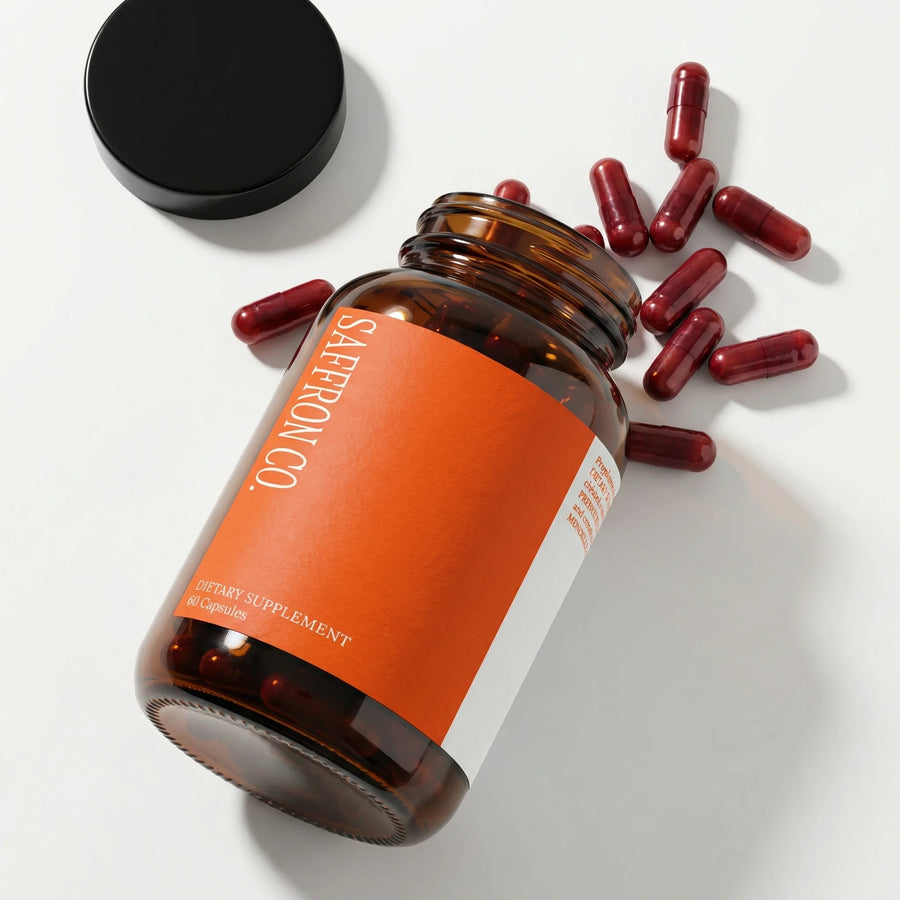
Saffron Co. is a daily mood and stress support formula, not an ADHD treatment. If your focus challenges travel with mood and stress strain, try it for the full 4 to 8 week window the saffron research uses. If you do not feel the difference, get your money back.
FAQ: saffron and ADHD
Does saffron actually help with ADHD?
It may help support some ADHD-related symptoms in some people, but the evidence is still early and limited, with mixed results. The best current summary is promising, but not definitive.
What is the best saffron supplement for ADHD?
There is no single best answer for everyone. Look for a product with a studied daily dose, clear standardization, transparent labeling, and a formula that matches your actual use case. A pure saffron extract suits people who want to isolate response, while a broader formula may suit people whose focus issues overlap with stress, mood, or sleep strain.
How much saffron should adults take for ADHD?
Human research commonly uses about 20 to 30 mg per day, with 28 to 30 mg appearing often. Higher doses are not automatically better.
Can children take saffron for ADHD?
Saffron has been studied in children and adolescents, but pediatric use should only be discussed and supervised by a qualified clinician. Parents should not self-experiment based on anecdotes or online threads.
How long does saffron take to work for ADHD?
If saffron helps, the timeline is usually measured in weeks, not days. Most saffron research looks at outcomes over roughly 6 to 8 weeks.
Can saffron replace ADHD medication?
No. Saffron should not be framed as a replacement for stimulant or non-stimulant ADHD medication in people with diagnosed ADHD who are under medical care. Any medication change should be handled with the prescribing clinician.
This article is for informational purposes only and is not medical advice. Saffron supplements are not a treatment for ADHD and are not a replacement for diagnosis, prescribed medication, behavioral support, therapy, or school accommodations. Pediatric supplement use should always be supervised by a qualified clinician. If you or your child take prescription medication, or if you are pregnant or nursing, talk with a qualified healthcare provider before starting a new supplement. These statements have not been evaluated by the Food and Drug Administration. These products are not intended to diagnose, treat, cure, or prevent any disease.