

Some perimenopause supplements have real evidence behind them, many are riding on menopause marketing, and the right choice depends on your symptom pattern. Here is what may help by symptom, what to skip, and how to read a label honestly.
If you have reached your late 30s, 40s, or early 50s and started feeling unlike yourself, you are not imagining it. Many women in perimenopause describe a strange mix of changes that do not always arrive neatly or predictably. One month it is irritability and broken sleep. The next it is brain fog, low libido, or a sense that your emotional resilience has quietly gone missing.
That is usually what sends people looking for natural perimenopause supplements. Not because they expect a miracle. Usually because they want support that feels measured, gentler, and worth trying before jumping straight to a bigger intervention.
Perimenopause is the transition leading up to menopause, when estrogen and progesterone begin fluctuating more dramatically. Those hormonal shifts can affect sleep, body temperature, cycle regularity, mood, focus, and stress tolerance. The inconsistency is part of what makes it so frustrating. You can feel mostly fine one week and completely off the next.
Supplements can have a place here, but they are only one tool. Some may help support normal mood, sleep quality, stress response, or nutrient status. Others are marketed far beyond what the evidence can support. And some symptoms deserve a medical conversation rather than another bottle of capsules.
What supplements can and cannot do: they may help support normal mood, emotional well-being, stress adaptation, sleep quality, or fill nutrient gaps (like magnesium or vitamin D). They cannot fix every symptom, replace hormone therapy when it is clearly indicated, or stand in for evaluation when something more serious is going on.
See what may help, by symptom →
Why so many women start looking for natural perimenopause supplements
Perimenopause often begins as a feeling before it becomes a label. You feel shorter-tempered. Less steady. Less interested in sex. Less able to handle the same mental load that used to feel manageable. Sometimes the harder part is not one dramatic symptom. It is the cumulative effect of many smaller ones.
Sleep gets lighter. Focus gets patchier. Stress hits harder. Motivation drops. Your body composition shifts even if your habits have not changed much. For many women, that combination creates a quiet but persistent sense of disconnection from themselves.
It makes sense that natural perimenopause supplements are appealing in that context. Many readers want something that may help support their system without feeling sedated, overcorrected, or locked into a medical path they are not ready for. That does not make supplements anti-medical. It just means they sit in the middle ground between doing nothing and pursuing more formal treatment.
What perimenopause can feel like day to day
Day to day, perimenopause can look a lot less tidy than a symptom checklist suggests. It may feel like:
- emotional flatness rather than outright sadness
- irritability that shows up faster than it used to
- poor stress tolerance and a shorter fuse
- lower libido even in a stable relationship
- disrupted sleep, especially waking in the night
- brain fog, slower recall, or difficulty concentrating
- a heavier mental load and less capacity to carry it
These experiences are common, especially when hormonal shifts overlap with work stress, caregiving, sleep debt, and the sheer pace of midlife. That does not mean every symptom should be brushed off as normal. It means the context matters.
What supplements can and cannot realistically do
This is the part worth stating early. Supplements may help support normal mood, emotional well-being, stress adaptation, sleep quality, or foundational nutrition. They may also help fill gaps that become more relevant in midlife, such as magnesium or vitamin D insufficiency.
What they cannot do is fix every perimenopause symptom, replace hormone therapy when it is clearly indicated, or stand in for evaluation when something more serious is going on. A supplement may support the system underneath a symptom. It does not override every driver behind that symptom.
Do natural perimenopause supplements actually work?
Sometimes yes. Often modestly. Not universally. That is the honest answer.
Some natural perimenopause supplements have meaningful evidence behind them. Others are mostly riding on menopause marketing, vague hormone-balance language, or proprietary blends that sound more impressive than they are. The difference usually comes down to whether the ingredient has actually been studied for the symptom in question, whether the dose matches the research, and whether the product is built with any formulation logic at all.
The best results usually come when the supplement matches the symptom pattern. A woman dealing mainly with low mood, low libido, and emotional flatness may need a different approach from someone whose biggest issue is hot flashes or fragmented sleep.
Why the evidence is mixed
Perimenopause research is messy for a few reasons. Studies are often small. They use different symptom scales. They may look at menopause and perimenopause together even though those are not exactly the same experience. Formula quality varies. Doses vary. Study length varies.
That does not make the evidence useless. It just means you should be cautious with big promises. A supplement can be genuinely helpful and still not deserve miracle language.
How long supplements usually take to show an effect
Timelines depend on the ingredient and the issue you are trying to support. Some nutrients may help sooner if you were running low to begin with. Magnesium, for example, may feel useful relatively quickly for some people, especially around sleep quality or nervous-system support.
Mood, stress, and emotional resilience support usually take longer. With saffron, the clinical research most often measures outcomes over 4 to 8 weeks of consistent daily use. That time frame is important because a lot of women give up on a potentially useful product after one week and assume it does nothing. Consistency matters more than intensity, and more is not usually better.
When a supplement is not the right level of support
There are times when continuing to experiment with natural perimenopause supplements is not the right move.
Get medical evaluation instead of another bottle if you have: severe low mood, heavy or irregular bleeding, major insomnia, sudden weight changes, or symptoms interfering with work, relationships, or daily functioning. The same applies to symptoms that are new or escalating quickly. If you take prescription medication, or are on HRT or MHT, talk with your provider before adding a supplement. This article is informational, not medical advice.
The best natural perimenopause supplements by symptom
The most useful way to think about supplements in perimenopause is by problem, not by trend. Most women are not looking for an ingredient. They are trying to solve something specific. This is the quick map; the sections below go deeper.
| If your main issue is... | What tends to help | Keep in mind |
|---|---|---|
| Mood, flatness & stress | Saffron (28-30 mg), magnesium glycinate, Rhodiola | The strongest category; give it 4 to 8 weeks of daily use. |
| Sleep & nervous-system calm | Magnesium glycinate; melatonin sparingly | Pair with a wind-down routine. More is not better. |
| Hot flashes & night sweats | Soy isoflavones (mixed results) | Overhyped category. If severe, discuss HRT. |
| Bone, muscle & nutrition | Vitamin D if low, calcium (food first), magnesium | Foundational coverage, not symptom erasers. |
| Libido & focus | Saffron; magnesium and Rhodiola via mood/stress | Usually shift alongside mood and sleep. |
| Weight & metabolism | Protein first, vitamin D, omega-3s, magnesium | No supplement burns belly fat. Support the system. |
For mood, emotional flatness, and stress resilience
This is one of the strongest categories for thoughtful supplement use.
Saffron is one of the more interesting evidence-backed options here. Clinical research has studied saffron at 28 to 30 mg per day for mood support, with multiple randomized trials suggesting it may help support mood balance and emotional well-being over several weeks of daily use. The evidence is encouraging, though most trials are still relatively small and short.
Magnesium glycinate also belongs in this conversation. It is a well-absorbed form of magnesium that may help support the nervous system, especially for women whose stress tolerance feels thinner than it used to. It is not a mood supplement in the same sense as saffron, but it is often relevant around sleep, tension, and general calm.
Rhodiola rosea is another option worth knowing. As an adaptogen, it is used to help the body adapt to stress. It tends to fit best when the picture includes mental fatigue, low resilience, and feeling wired but depleted rather than purely low mood.
For women whose perimenopause experience leans heavily toward emotional flatness, low libido, stress sensitivity, and focus issues all at once, a multi-ingredient formula can make more sense than trying to stack several separate bottles. In that use case, Saffron Co Mood and Vitality Capsules are worth considering because the formula is built around a clinically studied 30 mg daily dose of Spanish saffron, supported by Rhodiola for stress adaptation, magnesium glycinate for nervous-system support, vitamin B6 in its active P5P form for neurotransmitter activation, and a probiotic for the gut-brain axis. It is not a universal answer, but it is a strong fit when mood, stress, focus, and libido overlap.
For sleep quality and nervous-system support
Sleep problems in perimenopause rarely come from one cause alone. Hormonal fluctuation plays a role, but so do stress, blood sugar swings, alcohol, late caffeine, and the simple fact that many women are trying to recover on too little rest for too long.
Magnesium is usually one of the more reasonable starting points here, especially magnesium glycinate. It is gentle, widely used, and well suited to nervous-system support.
Sleep supplements should be approached with some restraint. Melatonin can be useful in some situations, but it is often used too casually and at doses higher than necessary. Herbs and calming blends may help some people, but they are not a fix for every kind of night waking.
The bigger point is that sleep support works best when paired with routines that respect the hormonal reality of perimenopause: a stable bedtime, protein-forward dinners if blood sugar crashes are an issue, lower evening alcohol, and some kind of wind-down that signals safety to the nervous system.
For hot flashes and vasomotor symptoms
Hot flashes and night sweats are among the most searched perimenopause complaints, and the supplement market knows it.
Soy isoflavones have some of the better evidence in this category. They may help support vasomotor symptoms for some women, though results are mixed and not everyone responds. Selected botanicals are also commonly marketed here, but the quality of evidence varies quite a bit.
This is a category where overselling is common. Some women do see meaningful relief from specific products. Many do not. If hot flashes are severe or sleep-disrupting, that is often the point where a conversation about hormone therapy becomes more relevant than continuing to chase wellness blends.
For bone, muscle, and foundational nutrition
Not every useful supplement in perimenopause is symptom-targeted. Some are simply about nutritional coverage during a life stage that places more pressure on bone, muscle, and metabolic health.
Vitamin D matters, especially if levels are low. Calcium is important too, but food first is usually the more grounded starting point where possible. Magnesium stays relevant here as well.
This is also where the best multivitamins for perimenopause can make sense, though not as symptom erasers. A multivitamin is generally more useful for foundational nutrient adequacy than for directly improving mood swings or hot flashes. Look for realistic dosing, sensible forms, and a label that is easy to understand.
For libido, focus, and feeling more like yourself again
Low libido and brain fog are often treated as separate complaints, but in real life they overlap with stress, sleep, hormones, and mood.
If you are exhausted, overstimulated, and emotionally flat, your libido usually does not disappear in isolation. The same goes for focus. Better support for mood balance, stress adaptation, and sleep quality can sometimes create improvements in both.
Saffron is relevant here again because it has been clinically studied not only for mood support but also in smaller bodies of research related to libido. Magnesium and Rhodiola may also support the broader picture when stress reactivity and fatigue are part of the pattern.
What about weight gain, belly fat, and metabolism during perimenopause?
Searches like best menopause supplements for weight loss, best supplements for perimenopause belly fat, and best supplements for perimenopause weight gain are common for a reason. Body changes during this stage can feel abrupt and unfair. It is also where supplement marketing gets the most dishonest.
No supplement selectively burns belly fat. No capsule flattens your stomach because you are in perimenopause. What some products can do is support the systems that influence body composition, including sleep quality, stress load, protein intake, blood sugar habits, and muscle maintenance.
Why perimenopause weight changes happen
Perimenopause weight changes are usually driven by several factors at once:
- shifting estrogen patterns
- poorer sleep quality
- chronic stress and higher stress reactivity
- changing insulin sensitivity
- age-related muscle loss if strength training and protein intake are not keeping up
That is why simplistic fat-burning claims miss the point. The issue is not just metabolism in the abstract. It is a whole-body shift in recovery, hunger signals, movement, and body composition.
Which supplements may support the bigger picture
Protein support is often more useful than a flashy weight-loss blend. If you are under-eating protein, fixing that may do more for body composition and appetite regulation than almost any capsule.
Magnesium may help if poor sleep and stress are part of the cycle. Vitamin D can matter if levels are low. Omega-3s may support broader metabolic and inflammatory health, though they are not a direct weight-loss tool.
Mood and stress support can also matter more than people think. If emotional eating, low energy, poor sleep, or feeling flat are part of the reason your habits have drifted, supporting those systems may indirectly help the bigger picture.
What to be cautious about
Be wary of:
- stimulant-heavy fat burners
- vague hormone-balancing blends
- products that promise rapid weight loss
- supplements marketed around flatter stomachs or targeted belly fat reduction
- proprietary blends that hide actual doses
Those are usually signs that the marketing is doing more work than the formula.
How to choose a perimenopause supplement that is actually worth trying
Good supplement decisions usually look boring on paper. They come down to labels, dosing, forms, and fit. You are looking for products that use clinically relevant amounts, standardized extracts where that matters, meaningful delivery forms, and clear reasoning for each ingredient included. Third-party testing and GMP-certified manufacturing also matter because quality control is not guaranteed by marketing language.
A simple checklist for reading the label
A good label shows: clinically relevant dosing, standardized extracts where applicable, meaningful forms (magnesium glycinate over oxide, P5P over generic B6), transparent ingredient amounts rather than hidden blends, and third-party testing or other quality signals. If a label is vague, the formula usually is too.
Single-ingredient vs multi-ingredient formulas
Single-ingredient products make sense when your goal is narrow. If you already know you want soy isoflavones for hot flashes or magnesium glycinate for sleep support, simple can be smarter.
Multi-ingredient formulas make more sense when several issues travel together. That is common in perimenopause. Mood shifts, low libido, stress sensitivity, focus issues, and sleep disruption often overlap. In those cases, a well-built stack can be more practical than managing four separate supplements, assuming the formula has a clear reason for each ingredient.
Where a saffron-based formula may fit
A saffron-based formula is not the obvious answer for every woman in perimenopause. It fits best when the dominant picture is emotional flatness, low resilience, mental fog, stress sensitivity, and reduced libido rather than hot flashes. It is a non-hormonal, mood-first approach, which is exactly what sets it apart from the phytoestrogen formulas most menopause aisles are built around. The three natural options compared near the end of this guide put that difference side by side.
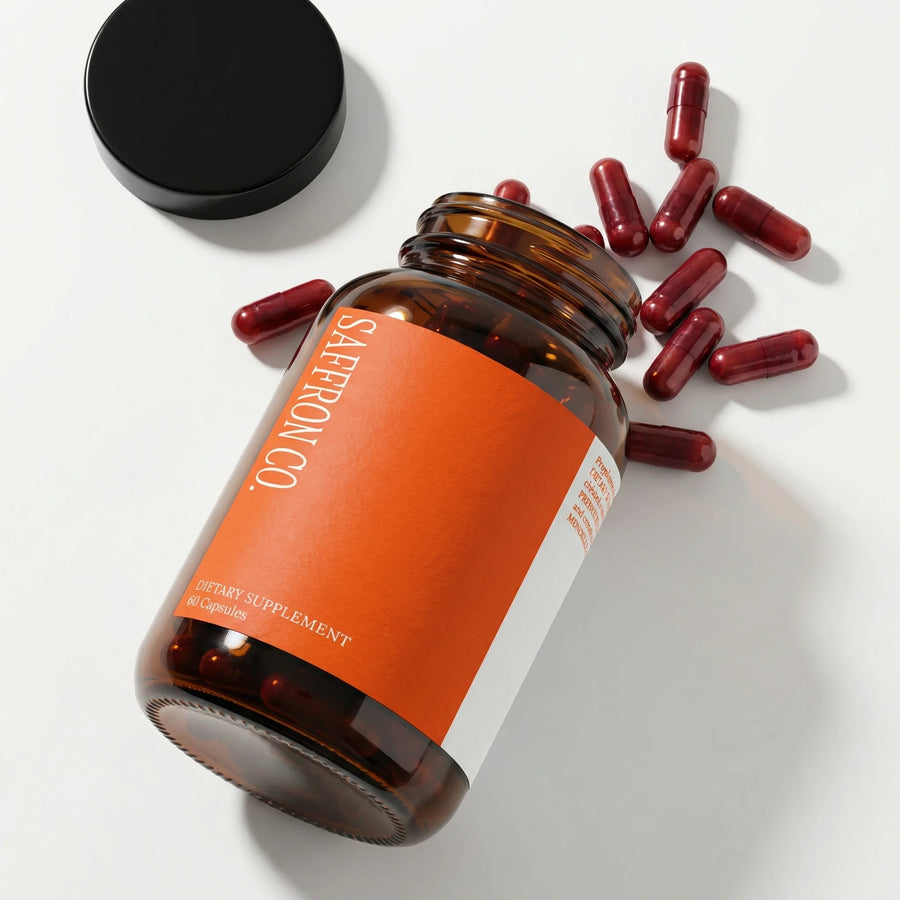
Naturally sourced. Non-hormonal. Clinically studied.
Saffron Co uses naturally sourced Spanish saffron at the clinically studied 30 mg dose, paired with Rhodiola, magnesium glycinate, active vitamin B6 (P5P), and a probiotic, a non-hormonal way to support mood, stress, and emotional steadiness through the transition.
Natural supplements that are often overhyped, underdosed, or not a good fit for everyone
This is the part many articles skip, but it matters. Some menopause products are not bad so much as overmarketed. The evidence may be modest, inconsistent, or very dependent on the individual. That is different from saying something never helps anyone. It just means it is not strong enough to recommend broadly.
Popular ingredients with mixed evidence
Black cohosh appears in many menopause formulas, especially for hot flashes, but the evidence is mixed and not as clean as its marketing suggests.
Evening primrose oil is another frequent inclusion with inconsistent support.
Wild yam creams are often marketed in ways that imply progesterone-like effects, but over-the-counter products do not justify the confidence of the claims made around them.
Proprietary menopause blends are another category to approach carefully. If you cannot see how much of each ingredient is in the formula, you cannot meaningfully judge whether it matches anything studied.
Interaction and safety notes that matter
Some botanicals and mood-related supplements can interact with medications. This matters even more if you are taking prescription treatment for mood, sleep, thyroid concerns, blood pressure, or if you are using HRT.
Natural does not mean automatically safe or automatically compatible. It means the product still deserves review before you add it in.
Three natural options, three different bets
These three share a category label, but they are really three different bets on three different symptoms. The useful move is to stop reading them as head-to-head rivals and read them by the problem each one can actually defend. Estroven leans vasomotor and body composition, Life Extension leans phytoestrogen and estrogen metabolism, and Saffron Co leans mood and vitality. Match the product to your loudest symptom and each one holds up. Expect any of them to fix the whole transition, and the weakest ingredient becomes the story.
| Product | Best for | Natural key actives | Price | Approach |
|---|---|---|---|---|
 Estroven Pre-Menopause Relief Estroven Pre-Menopause Relief
|
Hot flashes, night sweats & weight | Black cohosh 40 mg + soy isoflavones 56 mg + CQR-300® 300 mg | $19.99 / $17.09 sub | Soy for vasomotor, Cissus for body composition; black cohosh mixed |
 Saffron Co Mood & Vitality Saffron Co Mood & Vitality
|
Mood, stress & vitality (not hot flashes) | 30 mg Spanish saffron + Rhodiola + magnesium glycinate + B6 (P5P) + probiotic | $69.90 / $59.90 sub | Non-hormonal; perimenopause-specific mood evidence |
 Life Extension Estrogen for Women Life Extension Estrogen for Women
|
Phytoestrogen / estrogen support | Soy isoflavones (137.5 mg extract) + broccoli, dong quai, licorice, chaste tree | $18.00 / $16.50 autoship | Discloses genistein/daidzein; adds cycle and PMS botanicals |
Reading the table: the two phytoestrogen formulas (Estroven, Life Extension) aim at hot flashes and estrogen pathways; Saffron Co aims at mood and vitality and does not claim hot-flash relief. One nuance decides a lot for the soy options: isoflavones work best in equol producers, women whose gut bacteria convert soy into its active form, which is only a minority of women and a big reason soy results look inconsistent.
Best for hot flashes, night sweats, and weight: Estroven Pre-Menopause Relief

Estroven Pre-Menopause Relief
$19.99 one-time / $17.09 Subscribe & Save · 1 capsule daily
Estroven is really two bets in one capsule. For hot flashes it leans on 56 mg of soy isoflavones, the most trial-backed vasomotor ingredient in this group, though the effect is modest and depends on whether you are an equol producer, a gut-bacteria trait only a minority of women have, which is why soy results are so inconsistent. For the body-composition side of perimenopause it adds 300 mg of CQR-300® Cissus quadrangularis, whose evidence is about weight and waist circumference, not hot flashes or hormones. The 40 mg of black cohosh is a correct dose of a traditional vasomotor botanical with genuinely mixed evidence. It is drug-free and does not raise estrogen. Best fit if hot flashes plus midsection or weight changes are your main complaint. Caution: it contains soy, and black cohosh carries rare liver-safety reports, so skip it with liver disease or liver-stressing medication.
- Soy isoflavones 56 mg for hot flashes (modest; depends on equol-producer status)
- CQR-300® Cissus 300 mg for body composition and weight, not hormones
- Black cohosh 40 mg: correct dose, mixed evidence, rare liver caution
- Best for vasomotor and body changes, not a mood formula; contains soy
Best for mood, stress, and emotional steadiness: Saffron Co Mood and Vitality
Saffron Co Mood and Vitality Capsules
$69.90 one-time / $59.90 monthly sub (15% off) · 60 capsules · 1-2 capsules daily
Saffron Co is the only product here with a perimenopause-specific human trial behind its lead ingredient: in a randomized study of perimenopausal women, standardized saffron significantly improved psychological wellbeing versus placebo. That is its lane, mood, stress, and emotional vitality, and the honest boundary is that the same research found no significant benefit for hot flashes. So it is not competing with the phytoestrogen formulas on vasomotor symptoms; it owns the emotional side. It delivers the studied 30 mg daily dose of Spanish saffron (standardized to ≥3.0% trans-crocin, ~1.2% safranal), with Rhodiola, magnesium glycinate, active B6, and a probiotic as supporting actives rather than hero doses, sensible stack design, but the saffron is the reason to buy it. Best fit when emotional flatness, stress sensitivity, and low vitality are louder than hot flashes. Non-hormonal, with a 90-day money-back guarantee.
- 30 mg standardized saffron with perimenopause-specific mood evidence
- Honest boundary: not shown to help hot flashes; owns the mood and vitality lane
- Rhodiola + magnesium glycinate + B6 (P5P) + probiotic as support, not hero doses
- Non-hormonal; 90-day money-back guarantee; priciest of the three
Best for phytoestrogen and estrogen support: Life Extension Estrogen for Women

Life Extension Estrogen for Women
$18.00 one-time / $16.50 AutoShip · 30 vegetarian tablets
Life Extension is the disclosure leader: it breaks its 137.5 mg soybean extract out into genistein and daidzein, and the genistein level crosses the potency threshold that separates effective isoflavone products from weak ones, a genuine quality signal Estroven does not match. Around that it layers a mechanistic estrogen-metabolism story (300 mg broccoli concentrate for DIM and indole-3-carbinol) and cycle-oriented botanicals: 20 mg chaste tree, the best-evidenced botanical here for PMS-type symptoms though aimed slightly off-center for menopause proper. The weak links are honest to name: the 25 mg dong quai is a token dose with placebo-level hot-flash evidence and a blood-thinner interaction, and the calcium and phosphorus are incidental tablet base, not real bone support. Best fit if you specifically want plant-based, estrogen-pathway support with transparent isoflavone dosing. Caution: licorice can raise blood pressure with sustained use.
- Soybean isoflavones 137.5 mg, genistein/daidzein disclosed (a real potency signal)
- Broccoli 300 mg (DIM/I3C) for estrogen metabolism, mechanistic only
- Chaste tree 20 mg (PMS-oriented); token dong quai 25 mg is the weak link
- Caution: licorice (blood pressure), dong quai (blood thinners); minerals are incidental
Safety notes the labels bury: black cohosh (Estroven) has rare liver-safety reports; dong quai (Life Extension) interacts with blood thinners; licorice (Life Extension) can raise blood pressure and lower potassium with sustained use; and both phytoestrogen formulas contain soy. None of this makes them unsafe for most people, but if you take prescription medication, have liver or blood-pressure concerns, or are soy-sensitive, run the specific formula past your provider.
The honest summary: these are not three versions of the same product. Estroven is a vasomotor-and-body-composition bet, Life Extension is a phytoestrogen-and-estrogen-metabolism bet, and Saffron Co is a mood-and-vitality bet. Match the one whose lane is your loudest symptom. None of them treats the whole transition on its own, and structure-function support, helping and supporting rather than curing, is the honest ceiling for all three.
Birthed by nature. Backed by science.
If the mood-and-stress side of perimenopause is your loudest symptom, try Saffron Co across the 4 to 8 week window the research uses. Naturally sourced, non-hormonal, and backed by a 90-day money-back guarantee if it is not the right fit.
A realistic plan: how to use natural perimenopause supplements well
The most effective approach is usually the least dramatic one. Match the supplement to the symptom. Pick the most disruptive issue first. Give the product enough time. Track what changes. Change one variable at a time.
Start with one goal, not five bottles: pick your most disruptive symptom (mood, sleep, foundational nutrition, or stress and focus), add one product, and give it enough time before judging it. If something helps, you will know what helped. If something does not agree with you, you will know what caused it.
Supplements tend to work best when they are supporting an otherwise reasonable foundation: enough protein, consistent movement, better sleep habits, lower alcohol where relevant, and some kind of stress support that is not just white-knuckling your way through the week.
When to consider professional help or a different approach
Sometimes the most supportive next step is not another supplement.
If symptoms suggest iron deficiency, thyroid issues, severe sleep disruption, significant low mood, or major cycle changes, testing and medical evaluation are worth pursuing. If the symptom pattern points strongly toward hormonal fluctuation, it may be time to discuss HRT or MHT with a qualified clinician. If anxiety, grief, burnout, or persistent emotional distress are central, therapy may be a better fit than continuing to troubleshoot capsules alone. Supplements can be part of the plan. They do not need to carry the whole plan.
FAQ: natural perimenopause supplements
What are the best natural perimenopause supplements for mood and irritability?
For mood and irritability, the most promising options often include saffron, magnesium glycinate, and adaptogens such as Rhodiola rosea. Saffron has been clinically studied for mood support at 28 to 30 mg per day, while magnesium glycinate may help support the nervous system and Rhodiola may help the body adapt to stress. The best choice depends on whether your pattern is more emotional flatness, tension, fatigue, or a mix of all three.
Do natural perimenopause supplements help with weight gain or belly fat?
They may help support the systems behind weight changes, but they do not directly burn belly fat. Better sleep, stress support, protein intake, vitamin D when needed, magnesium, and omega-3s may support the bigger picture. Be cautious of any product that promises rapid weight loss or targeted fat loss during perimenopause.
What is the best multivitamin for perimenopause?
The best multivitamin for perimenopause is usually the one that provides sensible nutritional coverage with transparent doses and useful forms, not the one making the biggest symptom claims. A multivitamin can help support nutrient adequacy, but it is not usually the most targeted tool for hot flashes, mood shifts, or libido concerns.
How long do perimenopause supplements take to work?
It depends on the supplement and the issue being addressed. Some nutrient-related benefits may show up sooner, especially if you were low to begin with. Mood, sleep, and stress-supportive supplements often need several weeks of consistent use. For saffron specifically, most clinical research measures outcomes over about 4 to 8 weeks.
Are natural perimenopause supplements safe to take with HRT or prescription medication?
Not always automatically. Some supplements and botanicals can interact with prescription medications or may not be appropriate alongside HRT, thyroid treatment, or mood-related medication. If you are taking any prescription drug or hormone therapy, review new supplements with your healthcare provider before starting them.
This article is for informational purposes and is not medical advice. Supplements do not diagnose, treat, or cure perimenopause, menopause, or any condition, and they are not a substitute for hormone therapy or clinician-guided care where those are needed. If you have severe or escalating symptoms, unusual bleeding, take prescription medication or hormone therapy, or are pregnant or nursing, talk with a qualified healthcare provider before starting a new supplement. These statements have not been evaluated by the Food and Drug Administration. This product is not intended to diagnose, treat, cure, or prevent any disease.