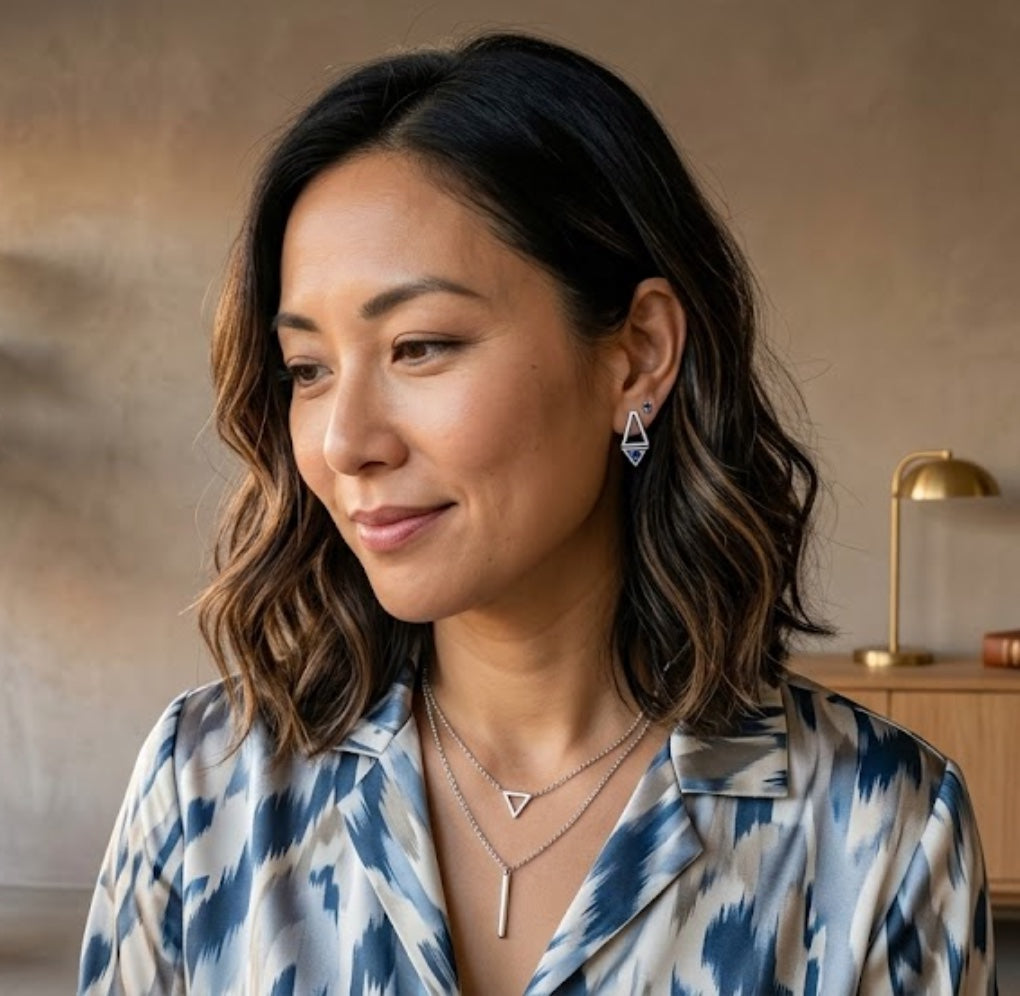

Saffron is one of the more clinically studied supplements for women's mood, stress, libido, and the hormonal transitions of midlife. Here is where the evidence is strongest, where it is thin, how to dose it, and when it is not the right tool.
Why saffron has become such a popular supplement for women
Many women do not start searching for saffron because they want a miracle. They start searching because something feels off. They feel flat. More reactive than usual. Less interested in intimacy. Foggy, tired, or emotionally unlike themselves. They want support, but not hype.
That is part of why saffron has become so popular. It sits in a category many women find appealing: clinically studied, plant-derived, and relevant to the kinds of mood and life-stage shifts that often show up between the mid-30s and mid-60s.
Saffron is the dried stigma of Crocus sativus, a plant better known in the kitchen than the supplement aisle. But culinary saffron and saffron supplements are not the same thing. For health benefits, what matters is not occasional use in food. It is a standardized extract, taken at the dose used in human studies, with clear labeling around quality and active compounds.
That evidence-aware framing matters. Saffron is clinically studied for mood support and related concerns. It is not a cure. It is not a replacement for therapy, prescribed medication, or appropriate medical care. It is best understood as one supportive tool in a broader wellness picture. If you want a broader foundation first, start with saffron for women.
Spice vs supplement: culinary saffron and a saffron supplement are not the same thing. The benefits in the research come from a standardized extract at about 28 to 30 mg per day, not a pinch in cooking. A label that just says "saffron" tells you very little; the dose and standardization are what matter.
See the benefits by evidence strength →
What makes saffron different from most wellness ingredients
Saffron is not just a colorful spice. Its most studied compounds include crocin, crocetin, and safranal. These are the parts researchers focus on when looking at mood, emotional well-being, stress response, and nervous-system support.
In plain English, these compounds appear to interact with neurotransmitter systems involved in how you feel, cope, and function day to day. That is why saffron tends to come up more often in conversations about emotional flatness, stress resilience, and libido than in generic beauty-wellness trends.
Saffron spice vs saffron supplement: not the same thing
Using saffron in food can absolutely be enjoyable, but it is not the same as taking a saffron extract standardized to the compounds used in clinical research. Most human studies on saffron and mood-related outcomes use about 28 to 30 mg per day of a standardized extract.
That distinction matters. A label that simply says "saffron" tells you very little. Dose, extract quality, and standardization are what separate a meaningful supplement from vague wellness marketing.
The main saffron benefits for women, and where the research is strongest
The strongest practical case for saffron in women is not "overall vitality" in the abstract. It is more specific than that. The benefits women most often search for are mood balance, emotional well-being, stress resilience, libido support, mental clarity, and help during hormonally turbulent phases like PMS, perimenopause, and menopause. The evidence is stronger in some of these areas than others.
| Benefit area | Evidence strength | What saffron may support |
|---|---|---|
| Mood & emotional balance | Strongest | Mood balance and emotional well-being at ~30 mg/day over 4 to 8 weeks. The best-studied use case. |
| Stress & mental clarity | Moderate | A steadier stress response and clearer focus when sleep debt and mental load stack up. |
| Libido & sexual well-being | Emerging | Desire when low libido is tied to mood, stress, or feeling flat. Not a stand-alone fix for every cause. |
| PMS-related mood | Some | Premenstrual irritability and low mood. Supporting PMS mood is not the same as treating PMDD. |
| Perimenopause & menopause quality-of-life | Moderate | The mood, stress, sleep, and libido cluster of the transition. It does not treat menopause itself. |
| Skin, weight, anti-aging | Not the case | Evidence is weak or indirect. Not an evidence-aware reason to choose saffron. |
Mood support, emotional balance, and feeling more like yourself
This is where saffron has the best-known research profile. Multiple clinical trials using around 30 mg per day suggest saffron may help support mood balance and emotional well-being, particularly over a 4 to 8 week period.
That does not mean it works dramatically for everyone. It does mean saffron has more substance behind it than many mood supplements on the market. For women dealing with low-grade flatness, irritability, or the sense that their spark has dimmed, this is usually the first reason saffron enters the conversation.
Stress resilience and mental clarity
Stress and mood do not stay neatly separated in real life. When stress builds, focus often slips with it. Saffron may help support the body's response to stress, and some women also look to it for better mental clarity when sleep debt and mental load start stacking up.
This becomes especially relevant in midlife, when work pressure, family demands, and hormonal fluctuations can all hit at once.
Libido and sexual well-being
There is a smaller but still meaningful body of research around saffron and libido. This is one reason saffron gets attention from women who feel disconnected from desire and want support that goes beyond a generic hormone pitch.
Libido is never one-variable. Hormones matter, but so do sleep, stress, relationship context, body image, and medications. Saffron may help support libido for some women, but it is not a stand-alone answer to every cause of low desire. For a deeper look, see saffron for libido.
PMS, cycle-related mood shifts, and menstrual discomfort
Some research suggests saffron may help support women dealing with PMS-related mood shifts and menstrual discomfort. That makes it relevant for women who feel noticeably more irritable, low, or emotionally volatile in the premenstrual window.
It is important to keep the ceiling clear here. Supporting normal PMS-related mood changes is not the same thing as treating PMDD, which is a diagnosable condition and deserves clinical assessment. If premenstrual mood is your main concern, saffron for PMS covers it in more depth.
Perimenopause and menopause support
This may be where saffron feels most relevant for many women. Perimenopause and menopause rarely show up as one isolated symptom. More often, mood swings, irritability, sleep disruption, low libido, stress sensitivity, and brain fog start clustering together.
That is exactly the kind of overlap where saffron gets attention. Not because it "fixes menopause," but because it may help support several of the quality-of-life issues that often travel with this transition.
If this is your stage of life, saffron for menopause and saffron for perimenopause go deeper, and perimenopause vs menopause explains how the two stages differ.
How saffron may work in the female body and brain
Saffron is often discussed like a mystery ingredient. The mechanism is not fully settled, but it is more understandable than many supplement summaries make it seem.
Researchers believe saffron is associated with serotonin, dopamine, and norepinephrine pathways, along with antioxidant activity and possible support for BDNF, a protein involved in brain health and plasticity, though the BDNF evidence is mainly preclinical. That helps explain why saffron keeps showing up in discussions around mood, motivation, stress reactivity, and emotional steadiness.
It is not "raising estrogen": saffron does not appear to work by simply increasing estrogen. Its potential benefits are better understood through neurotransmitter activity (serotonin and dopamine) and stress-response pathways, which is why women often notice it as steadier mood and focus rather than a hormonal change.
Neurotransmitters, stress pathways, and why women may notice a shift
When neurotransmitters are under strain, women often do not describe it in technical terms. They say they feel flat, overwhelmed, scattered, quick to snap, or unable to enjoy things properly. Those are the real-life experiences behind the science.
If saffron helps support serotonin and dopamine signaling, that may influence mood, focus, motivation, and emotional steadiness. Its antioxidant and nervous-system effects may also matter during periods of chronic stress, when everything feels a little harder than it should.
Why hormonal transitions make saffron especially relevant
Hormonal transitions affect more than the reproductive system. Perimenopause and menopause can influence serotonin, GABA, sleep quality, and stress tolerance. That is one reason women between 35 and 65+ often start looking for support that is not limited to one narrow symptom.
Saffron fits that conversation because the concerns are often connected. It is not just low mood. It is low mood plus irritability plus brain fog plus lower interest in intimacy plus poor sleep.
What about saffron benefits for skin, weight, or broader wellness?
There is some early or indirect interest in saffron's antioxidant and appetite-related effects. But this is not where the practical case is strongest.
If you are looking at saffron through a women's-health lens, the most evidence-aware reason to consider it is mood and quality-of-life support. Not skin perfection. Not fat loss. Not vague anti-aging claims.
How to use saffron for health benefits: dosage, timing, and choosing a quality supplement
Once readers move past "does saffron work," their next question is usually practical: how much, how often, and what kind?
What dose of saffron is actually studied
The most studied dose in human research is about 28 to 30 mg per day. That matters far more than vague phrases like "maximum strength" or "high potency." With saffron, more is not necessarily better. The clinically studied range is what you want to see reflected on the label.
When to take saffron and how long to give it
Saffron is generally taken daily and consistently. This is not the kind of supplement most people assess after three days. A realistic trial window is 4 to 8 weeks. That is when many women start to notice a shift, often as a gradual return of steadiness, interest, or clarity rather than an obvious jolt of feeling better.
What to look for in a saffron supplement label
A good saffron supplement should show its work. Look for:
- a standardized saffron extract
- a clearly stated daily dose near the studied 28 to 30 mg range
- transparent labeling around active compounds where available
- third-party testing or strong quality controls
- supporting ingredients that serve an actual purpose
Single-ingredient formulas can make sense if you want simplicity. Multi-ingredient formulas can make sense if the added ingredients support the same use case. That might include magnesium for nervous-system support, Rhodiola for stress adaptation, vitamin B6 for neurotransmitter activation, or a probiotic for the gut-brain axis. For more on formulation logic, see why this formula.
The label checklist, in one line: a standardized saffron extract, a stated daily dose near 28 to 30 mg, active-compound transparency where available, third-party testing, and any extra ingredients serving the same use case.
Where a formula like Saffron Co may fit
If you want a clinically dosed saffron formula with broader support built around the same use case, Saffron Co is worth considering. It combines 30 mg of Spanish saffron extract with Rhodiola rosea for stress adaptation, magnesium glycinate for nervous-system support, vitamin B6 in its active P5P form for neurotransmitter activation, and a probiotic to support the gut-brain axis.
That makes it a strong fit for women who are not just looking for saffron in isolation, but for a daily stack aimed at mood balance, emotional well-being, focus, stress resilience, and libido support.
It is also fair to say that Saffron Co is a newer brand, so it has less long-term market history than some established competitors. The 90-day money-back guarantee is the practical answer to that. It gives women enough time to try the formula across the same kind of multi-week window used in saffron research, without taking all the risk themselves.
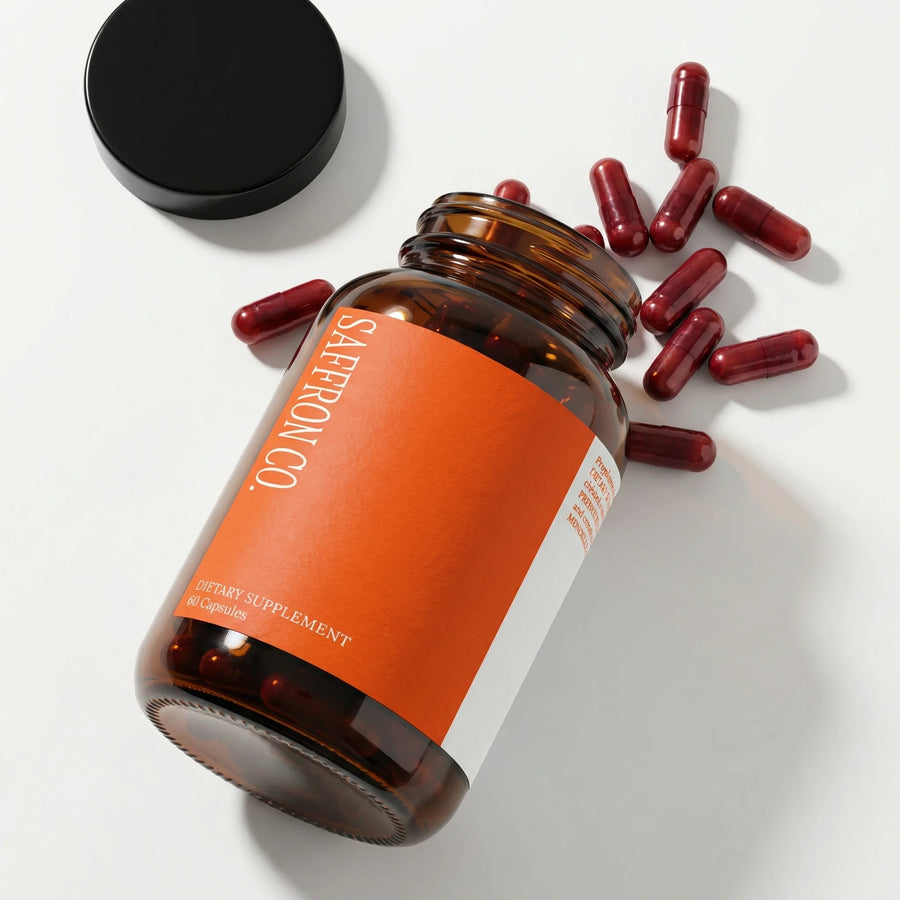
Built for the way women's symptoms cluster.
Saffron Co. pairs the studied 30 mg daily saffron dose with Rhodiola for stress adaptation, magnesium glycinate for nervous-system support, ProbioMood® NU-10 for the gut-brain axis, and active vitamin B6 (P5P), for mood, stress, and libido support in one daily stack.
Realistic expectations, side effects, and when saffron is not the right tool
Saffron may help support mood and related concerns for some women. That is the honest case for it. But it is not fast, universal, or strong enough to override every reason someone feels off.
How long saffron takes to work, and what results usually look like
Most women who respond to saffron notice it gradually. Not overnight. Not usually as a dramatic transformation. The more common pattern is subtler: feeling a little steadier, less emotionally jagged, a bit more interested in life, or clearer in the head after a few consistent weeks.
Possible side effects, interactions, and who should talk to a clinician first
Saffron is generally well tolerated, but natural does not mean risk-free. Mild side effects can happen, and individual sensitivity varies.
If you take prescription medication for mood, sleep, blood thinning, or fertility-related concerns, talk with your healthcare provider before adding saffron or any new supplement. The same applies if you are pregnant or breastfeeding. This article is for informational purposes and is not medical advice.
When to consider medical or mental-health support instead of self-managing
Supplements have a place. They also have a limit.
When to reach for support, not a supplement: if low mood is severe, persistent, or interfering with daily functioning, professional support is the right next step. The same is true if you suspect PMDD, clinical depression, an anxiety disorder, or menopausal symptoms significant enough to disrupt sleep, work, or relationships. Saffron may help support the wellness end of the spectrum; it is not a substitute for proper assessment when something deeper is going on.
FAQ: saffron benefits for women
What does saffron do for women?
Saffron is most often used to support mood balance, emotional well-being, stress resilience, libido, and mental clarity. It is also relevant for women dealing with PMS-related mood shifts or the overlapping challenges of perimenopause and menopause.
How long does it take for a saffron supplement to work?
Most research and real-world use suggest giving saffron 4 to 8 weeks of consistent daily use before judging the effect. Some women notice subtle changes sooner, but gradual improvement is more typical than instant results.
Is saffron good for menopause or perimenopause symptoms?
Saffron may be helpful for some menopause or perimenopause-related concerns, especially mood shifts, stress sensitivity, lower libido, and sleep-adjacent quality-of-life issues. It does not treat menopause itself, but it may help support how you feel during that transition.
Can saffron help support libido in women?
It may. The research on saffron and libido in women is smaller than the mood research, but it is meaningful enough to make saffron a reasonable option to consider, especially when stress, emotional flatness, and hormonal shifts are part of the picture.
What is the best dose of saffron for health benefits?
The best-studied daily dose is around 28 to 30 mg of a standardized saffron extract. That range matters more than vague marketing language about potency.
Is it safe to take saffron every day?
For many healthy adults, saffron appears to be suitable for daily use when taken as directed. But anyone who is pregnant, breastfeeding, or taking prescription medications should check with a healthcare provider first.
This article is for informational purposes and is not medical advice. Saffron supplements do not diagnose, treat, or cure PMS, PMDD, perimenopause, menopause, depression, anxiety, or any other condition, and they are not a substitute for therapy, prescribed medication, or clinician-guided care where those are needed. If you take prescription medication, are pregnant or breastfeeding, or have symptoms that disrupt daily life, talk with a qualified healthcare provider before starting a new supplement. These statements have not been evaluated by the Food and Drug Administration. This product is not intended to diagnose, treat, cure, or prevent any disease.