
Magnesium glycinate vs citrate
Magnesium glycinate is the form people stay on for months, and magnesium citrate is the form people reach for when they want their bowels to move. Both deliver magnesium. They behave differently once they reach your gut, and that behavior is what should decide which bottle you buy.
Adults need 310 to 420 mg of magnesium a day depending on age and sex, and the tolerable upper limit for supplemental magnesium sits at 350 mg a day on top of what food provides. Those numbers come from the NIH Office of Dietary Supplements, and they apply whichever form you pick. What changes between glycinate and citrate is not the mineral. It is the molecule magnesium arrives attached to, and how your intestines react to that partner.
In magnesium glycinate, magnesium is bound to glycine, an amino acid. In magnesium citrate, it is bound to citric acid. Citric acid draws water into the intestine. Glycine does not. That single difference explains almost everything people notice in daily use.
Magnesium glycinate vs citrate at a glance
Match the form to the job you want done rather than hunting for the objectively superior one.
| What you want | Better fit | Why |
|---|---|---|
| Sleep and evening routines | Magnesium glycinate | Gentle enough to take at night without digestive urgency |
| Occasional constipation | Magnesium citrate | Pulls water into the intestines, which loosens stools |
| A sensitive stomach | Magnesium glycinate | Usually tolerated at doses where citrate starts causing trouble |
| Taking it every day for months | Magnesium glycinate | The form people stay consistent with, which is what closes an intake gap |
| Topping up a general intake gap | Either form | Both are better absorbed than oxide |
The short version: glycinate for sleep, stress and daily use. Citrate when bowel regularity is part of why you are supplementing. If neither goal describes you and you simply want to close a dietary gap, either one works and the one you remember to take wins.
What is the difference between magnesium glycinate and citrate?
The difference is the compound magnesium is bound to, and the downstream effect that compound has on your digestive tract. Glycine is an amino acid your body uses as an inhibitory neurotransmitter. Citric acid is an organic acid with an osmotic effect in the gut.
People who want magnesium without any change to their bathroom habits choose glycinate. People who want magnesium and would not mind a nudge toward regularity choose citrate. Neither is a compromise version of the other.
One label detail trips up most shoppers. Magnesium supplements list the compound weight and the elemental magnesium separately, and elemental magnesium is the figure that matters when you compare two bottles. A capsule holding 1,000 mg of magnesium citrate does not deliver 1,000 mg of magnesium.
Absorption and bioavailability
Magnesium glycinate and magnesium citrate are both well-absorbed forms, which is why they crowd out oxide in evidence-led supplement discussions. Absorption is also not where the decision gets made.
Dose size, whether you take it with food, and your own digestive sensitivity all move the result. Someone can absorb citrate perfectly well and still abandon it in week two because of what it does an hour after swallowing. A form you take for six months beats a marginally better-absorbed form you quit.
Digestive effects and tolerability
Here the two forms separate clearly. Magnesium citrate draws water into the intestines, softening stools and speeding transit. That is the mechanism behind its use before colonoscopies, and a milder version of it is what you get from a daily capsule.
Magnesium glycinate lacks that osmotic pull, which is why it is the default for people taking magnesium for sleep, muscle relaxation or general intake. At high enough doses any magnesium supplement can upset your stomach. Citrate simply gets there sooner and more predictably.
Where magnesium oxide fits
Magnesium oxide is the cheap form on the bottom shelf, and it is poorly absorbed compared with glycinate and citrate. Much of it passes through, which is exactly why it also works as a laxative.
That makes oxide reasonable for occasional constipation relief and a weak pick for daily magnesium support. If you are comparing magnesium glycinate vs citrate vs oxide for a supplement you plan to take every morning, oxide is the one to rule out first.
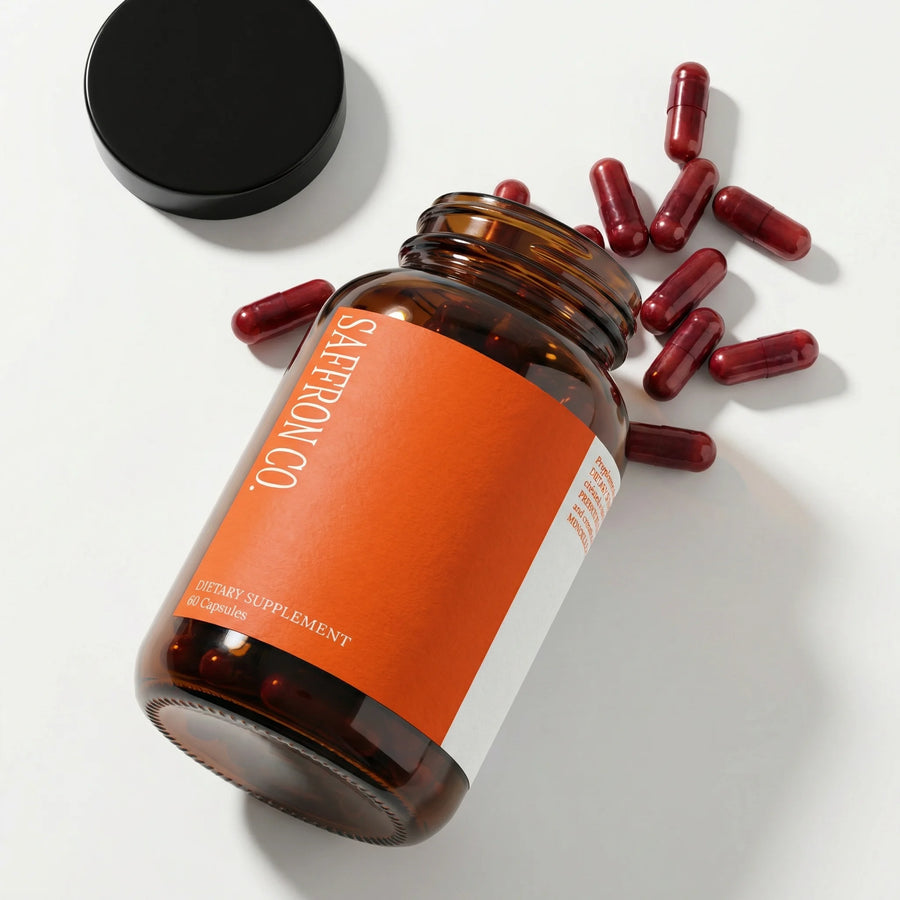
Magnesium glycinate, already in the formula.
Saffron Co pairs 140 mg of magnesium as magnesium glycinate with the clinically studied 30 mg saffron dose, Rhodiola, active B6 and a probiotic. Structure-function support for mood, stress and sleep, not a treatment for any condition.
Plans: $59.90/mo 30-day auto-ship · $119.92 90-day auto-ship (best value) · $69.90 one-time. 90-day money-back guarantee.
See What's InsideWhich form fits your goal: sleep, constipation, stress, or daily support?
Compare the two by use case. Crowning a winner in the abstract is how people end up with a bottle that does not suit them.
For sleep and evening use
For sleep, magnesium glycinate is the sensible pick. Glycine has its own calming profile, and magnesium supports normal nerve and muscle function, so an evening capsule slots into a wind-down routine without side effects that wake you up.
Citrate at night is not dangerous, it is just awkward. A form that speeds intestinal transit is the wrong thing to introduce two hours before bed, particularly if you already sleep lightly. If sleep is the whole reason you are buying magnesium, our guide to saffron for sleep covers what the trials measured and over what timeframe.
For constipation and bowel regularity
Magnesium citrate is the practical choice when occasional constipation is part of why you are supplementing. The osmotic effect that makes it awkward at bedtime is the effect you actually want here.
Citrate is not a fix for chronic constipation. Persistent symptoms deserve a proper look at hydration, fiber, medication side effects and activity levels before a supplement gets the credit or the blame. And if your digestion is already regular, citrate tends to overshoot.
For everyday stress and a sensitive stomach
Magnesium is not a treatment for anxiety disorders and it does not replace mental health care. What it does is support normal nervous system function, which matters most when your intake has been short for a while.
For anyone who feels digestive side effects easily, glycinate is the form that survives contact with real life. It is also the reason formulas designed for daily use pick glycinate over cheaper, harsher magnesium salts. Saffron Co's Mood and Vitality Capsules carry 140 mg of magnesium as magnesium glycinate alongside 30 mg of standardized Spanish saffron, Rhodiola, active B6 as P5P and a probiotic. The reasoning behind each ingredient is laid out in why this formula, and the full panel is broken down in what is inside each capsule.
On cost: a standalone citrate bottle is usually cheaper than a standalone glycinate bottle, and that gap is real if magnesium alone is what you are shopping for. It stops mattering when magnesium is one of five ingredients inside a formula you were going to take anyway.
For weight loss
Neither form causes fat loss. If the scale drops after a few days of magnesium citrate, that is a bowel movement and a water shift, not body composition changing.
Magnesium is worth taking to correct an intake gap and to support normal muscle and nerve function. Treat any product marketed to you as a magnesium weight-loss supplement as marketing.
Can you take magnesium glycinate and citrate together?
You can, and most people have no reason to. Two forms means two bottles, two doses to track and one combined magnesium total that is easier to push too high.
The combination makes sense for one specific pattern: citrate earlier in the day when regularity is the goal, glycinate in the evening when it is not. If that describes you, count the elemental magnesium across both products rather than reading each label in isolation, and stay under the 350 mg supplemental ceiling unless a clinician has told you otherwise.
Anyone taking prescription medication, and anyone with kidney disease, should clear magnesium with a healthcare provider first. The same goes for persistent constipation, ongoing diarrhea or unexplained fatigue, which are worth investigating rather than supplementing around.
Dose and timing
Divided doses are easier to tolerate than one large one, whichever form you use. Most people take glycinate in the evening and citrate earlier in the day, for the reasons above, though no rule forces either.
Read the panel for elemental magnesium rather than compound weight, and start at the low end of the label range for a week before deciding the form does not agree with you.
Who should ask a clinician first
Check with a clinician before starting magnesium if you:
- have kidney disease or reduced kidney function, since magnesium clearance depends on it
- take tetracycline or quinolone antibiotics, which magnesium binds in the gut
- take levothyroxine or a bisphosphonate, both of which need separation from mineral supplements
- take a diuretic or a proton pump inhibitor, which alter magnesium levels over time
- have digestive symptoms that have not improved in several weeks
Magnesium can interfere with the absorption of some medications taken at the same time, so spacing doses by a few hours is often enough to solve the problem.
Side effects, and what magnesium will not do
Side effects from both forms are digestive. Citrate causes loose stools more readily; glycinate is likelier to cause trouble only when the dose climbs or you take it on an empty stomach.
Magnesium will not rescue sleep that late caffeine, alcohol or untreated sleep apnea is wrecking. It will not resolve chronic anxiety, and it will not explain away severe constipation or unexplained fatigue that needs a diagnosis. Those limits hold no matter which form you buy.
Choose magnesium glycinate if
- sleep or evening calm is the main reason you are buying magnesium
- your digestion reacts to supplements easily
- you want a laxative effect nowhere in the picture
- you plan to take it daily for months rather than in short bursts
- you are already taking a formula that includes glycinate, such as a mood or sleep blend
Choose magnesium citrate if
- occasional constipation is part of why you are supplementing
- you tolerate magnesium well at standard doses
- you want the cheapest well-absorbed form sold as a standalone
- you take it in the morning rather than at night
- you want the bowel effect rather than merely accepting it

Saffron Co Mood & Vitality Capsules
Best for the reader whose magnesium glycinate is meant to sit inside an evening mood and sleep routine rather than stand alone. Two capsules carry 140 mg of magnesium as glycinate, 30 mg of standardized Spanish saffron, Rhodiola, active B6 and a probiotic. If you are correcting a large magnesium shortfall specifically, 140 mg is a moderate dose and a standalone glycinate may still have a place alongside it.
Birthed by nature. Backed by science.
Take it nightly for the several weeks the saffron research uses. If your mood, stress and sleep do not feel steadier, get your money back, no questions asked.
Plans: $59.90/mo 30-day auto-ship · $119.92 90-day auto-ship (best value) · $69.90 one-time. 90-day money-back guarantee.
Try Saffron Co Risk-FreeCommon questions
Is magnesium glycinate or citrate better for sleep?
Magnesium glycinate is the better fit for sleep. It carries no osmotic laxative effect, so an evening dose will not send you to the bathroom, and glycine itself has a calming profile. Magnesium citrate still supplies magnesium, but taking it close to bedtime risks the digestive urgency that interrupts the night you were trying to improve.
Can I take magnesium glycinate and citrate together?
You can, though most people do not need both. The one pattern that justifies it is citrate earlier in the day for bowel regularity and glycinate in the evening. Add up the elemental magnesium from both products, keep supplemental magnesium under the 350 mg daily upper limit, and check with a healthcare provider first if you have kidney disease or take prescription medication.
What is the difference between magnesium glycinate, citrate, and oxide?
Magnesium glycinate is magnesium bound to the amino acid glycine and is the gentlest of the three for daily use. Magnesium citrate is bound to citric acid, which draws water into the intestine and loosens stools, making it the pick when regularity is the goal. Magnesium oxide is the cheapest form and the least well absorbed, so it functions mainly as a laxative rather than a daily magnesium source.
How much magnesium should I take per day?
Adults need 310 to 420 mg of total magnesium a day depending on age and sex, counting food. The NIH sets the tolerable upper limit for magnesium from supplements at 350 mg a day, separate from dietary intake, because the excess is what causes diarrhea and cramping. Most single-form supplements land between 100 and 200 mg of elemental magnesium per serving, which is why reading the elemental figure rather than the compound weight matters.
This article is for informational purposes only and is not medical advice. Magnesium, saffron and the other ingredients discussed are supportive, structure-function ingredients; they do not diagnose, treat, or cure constipation, anxiety, insomnia, or any condition, and are not a substitute for clinician-guided care. If your symptoms are severe, persistent, or escalating, or you take prescription medication, have kidney disease, or are pregnant or nursing, talk with a qualified healthcare provider before starting a new supplement. These statements have not been evaluated by the Food and Drug Administration. This product is not intended to diagnose, treat, cure, or prevent any disease.