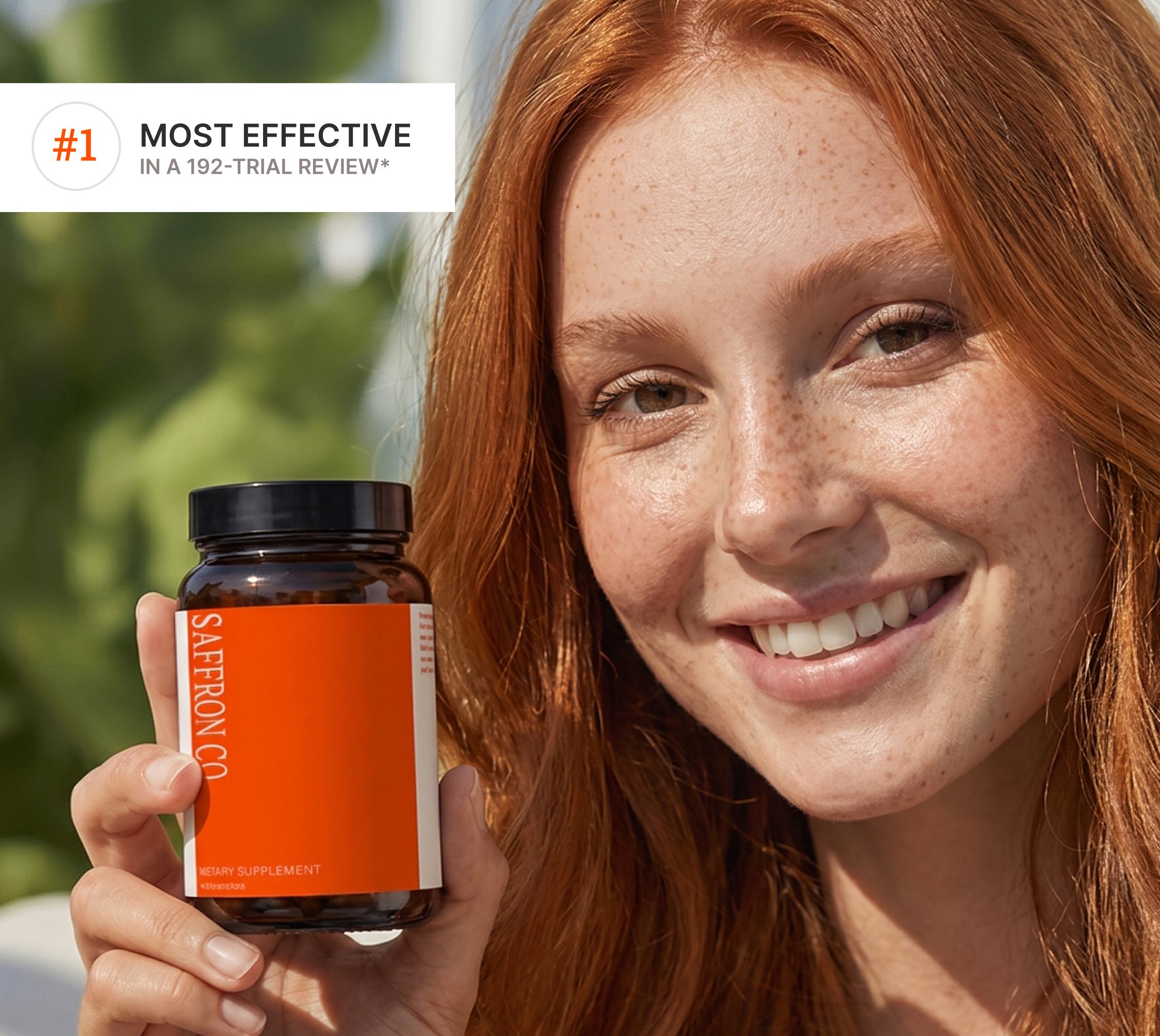

Match the supplement to your symptom
Different PMS symptoms need different support. Saffron Co is the mood layer: the studied saffron dose with magnesium and active B6, in one daily non-hormonal capsule.
See the FormulaSupplements for PMS work best matched to your loudest symptom, not bought as a ten-ingredient "hormone balance" blend. Here is what the evidence actually supports for premenstrual mood, fatigue, cramps, and bloating, and how to tell when the real issue needs a clinician rather than another supplement.
If you are looking into supplements for PMS, you are probably not looking for a miracle. You are looking for something that makes the week before your period feel more manageable.
That is a reasonable goal. PMS is common, but that does not mean it is minor. For some women it shows up as irritability, mood swings, fatigue, bloating, breast tenderness, or cramps that reliably arrive in the second half of the cycle. For others, it is less predictable and harder to separate from stress, poor sleep, or an underlying hormone issue.
Some supplements may help support mood balance, physical comfort, or energy across the premenstrual window. But they are not a cure-all, and they work best when matched to the symptoms you are actually trying to improve. If you want more context on how formulation quality matters in mood-support products, Saffron Co's why this formula page explains that logic clearly.
Jump to the supplement-by-symptom table →
What PMS is, and when supplements may actually help
PMS, or premenstrual syndrome, refers to a recurring pattern of emotional and physical symptoms that show up in the luteal phase of the cycle, usually after ovulation and before bleeding begins.
That is different from occasional pre-period discomfort, which may happen once in a while without a clear monthly pattern. It is also different from PMDD, or premenstrual dysphoric disorder, which involves much more severe mood symptoms and usually deserves medical support rather than self-treatment alone.
PMS symptoms often include mood swings, irritability, fatigue, bloating, breast tenderness, cramps, food cravings, and trouble concentrating. Not everyone gets the same mix. One woman may mostly feel flat, weepy, and tired. Another may deal with breast soreness and bloating but very little mood change. That matters, because the best supplements for PMS depend on symptom type. Calcium, magnesium, vitamin B6, and chasteberry come up often because they each have some research behind them. Still, even the better evidence is rarely perfect: many studies are short, small, or score symptoms differently.
The one rule that saves money: match the supplement to your dominant symptom, and take it consistently alongside sleep, regular meals, and stress support. Supplements are less likely to help if the real issue is untreated anemia, thyroid dysfunction, endometriosis, very heavy bleeding, or a more serious mood concern.
Track before you judge: PMS is pattern-based, so give any supplement two to three full cycles and log timing, symptom severity, sleep, and bleeding. A note in your phone is enough. Without the pattern, it is easy to misread what is actually changing.
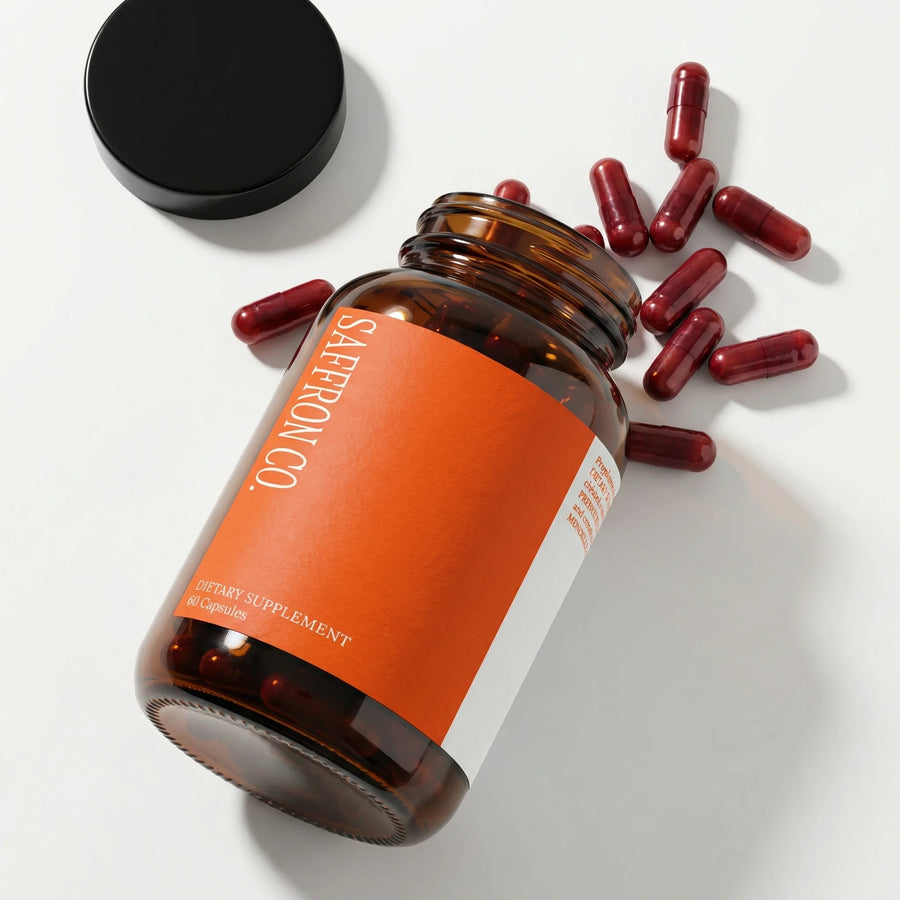
The mood side of PMS, in one capsule.
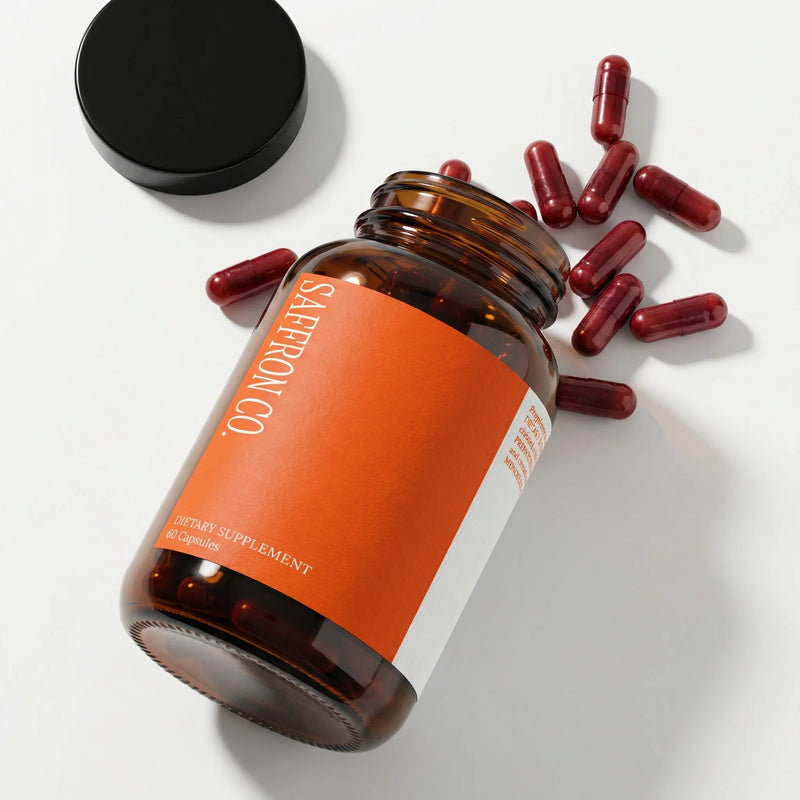
If your PMS is mostly mood, Saffron Co pairs the studied 30 mg saffron dose with magnesium glycinate and active vitamin B6 (P5P), three ingredients that show up in the PMS-mood research, plus Rhodiola and a probiotic. Daily support, not a treatment for PMS or PMDD.
How to tell whether your symptoms are likely PMS
The clearest clue is timing. PMS symptoms usually appear in the luteal phase, the week or two before your period, then improve once bleeding starts or shortly after. If your irritability, low mood, cravings, or breast tenderness consistently rise before your period and ease during the first few days of bleeding, PMS becomes much more likely. If symptoms happen randomly across the month, or stay severe throughout the whole cycle, something else may be contributing.
When PMS deserves medical attention instead of self-treatment
Speak with a clinician, not a supplement aisle, if you notice:
- severe mood symptoms, or panic, hopelessness, or major emotional instability
- pain that disrupts work, sleep, or daily function
- very heavy bleeding or sudden cycle changes
- symptoms getting worse over time, or interfering with relationships and normal functioning
Those patterns can point to PMDD, fibroids, endometriosis, thyroid issues, iron deficiency, or other concerns that need more than supplements.
The best supplements for PMS, by symptom type
The most useful way to approach PMS supplements is to ask a simple question first: what is actually bothering you most? Here is how the best-studied options map to symptoms.
| Supplement | Best for | Evidence |
|---|---|---|
| Calcium (~1,200 mg) | Broad PMS: mood, fatigue, cravings, physical discomfort | Strongest nutrient |
| Magnesium (200 to 400 mg) | Cramps, bloating, tension, mood; best paired with B6 | Good |
| Vitamin B6 (up to 100 mg) | Mood cofactor, low energy | Supporting |
| Saffron (30 mg) | Premenstrual mood, emotional flatness, low motivation | Promising |
| Chasteberry (Vitex) | Irritability and mood swings, breast tenderness, broad cyclical symptoms | Mixed |
| Omega-3s | Cramps and inflammatory discomfort | Modest |
| Evening primrose oil | Breast tenderness, bloating | Weak |
Supplements for PMS mood swings
If your main issue is mood swings, irritability, emotional flatness, or stress reactivity, the strongest starting points are usually calcium, magnesium, vitamin B6, and possibly saffron.
Calcium has some of the most consistent evidence across PMS symptoms, including mood-related ones. It may help support normal neurotransmitter and muscle function, which may partly explain why it keeps showing up in PMS research.
Magnesium may help with irritability, tension, and physical discomfort, especially if you are low in it to begin with. It also supports the nervous system and muscle relaxation.
Vitamin B6 plays a role in neurotransmitter production, including the serotonin and dopamine pathways that influence mood.
Saffron is not the classic first supplement people think of for PMS, but it is clinically studied for mood support more broadly. For women whose PMS shows up mostly as emotional flatness, low motivation, irritability, or feeling unlike themselves before the period, saffron may be worth considering as part of a mood-support routine. The evidence here is promising but still smaller than it is for calcium or magnesium in PMS specifically.
Chasteberry (Vitex) belongs in this conversation too. It is often filed under breast tenderness, but its best-known trial pointed to a specific benefit for irritability, mood changes, and anger, which are exactly the premenstrual mood swings this section is about. The overall evidence is mixed and it is not in every mood stack, but if irritability is your single loudest symptom, it is worth knowing about.
If your search is really about the best supplements for PMS mood swings or natural remedies for premenstrual mood, start with the options above before buying a giant "hormone balance" blend with ten underdosed ingredients.
Supplements for PMS fatigue
PMS fatigue is real, but it is also easy to oversimplify. Magnesium and vitamin B6 may help support energy indirectly by supporting nervous system function and neurotransmitter pathways. They can be reasonable starting points if fatigue predictably worsens before your period.
Still, if fatigue is pronounced, do not assume it is just PMS. Poor sleep, heavy periods, low iron, thyroid issues, stress, and blood sugar instability are all common contributors. If exhaustion is significant or getting worse, a basic medical workup is often more useful than adding another supplement.
Supplements that may help cramps, bloating, and breast tenderness
For more physical symptoms, a few options come up repeatedly:
Magnesium may help with cramps because it supports muscle relaxation. It may also help with tension and fluid-related discomfort in some women.
Omega-3s have some research suggesting they may support inflammatory balance and period-related comfort, though the PMS-specific evidence is not as strong or consistent as supplement marketing often suggests.
Chasteberry is one of the better-known herbal options for PMS, particularly for breast tenderness and broader premenstrual symptoms. Evidence is relevant but mixed, and not everyone responds well to herbs.
Evening primrose oil is often used for breast tenderness and bloating, but the evidence is modest and inconsistent. Some women feel it helps. Others notice little.
What the research says about the most common PMS supplements
There is a reason the same handful of supplements keep coming up. They are not magic. They just have more real research behind them than most "PMS support" products on the shelf. Broadly, vitamins and minerals tend to have more consistent evidence than trend-driven herbal blends. Herbs and fatty acids can still be useful, but the certainty is usually lower.
Does calcium actually help PMS?
Calcium is one of the most credible options in this category. Across clinical research, it has shown fairly consistent support for PMS symptom clusters, including mood swings, irritability, fatigue, and physical discomfort. That does not mean it works dramatically for everyone. It means calcium has a stronger track record than many other ingredients people throw into PMS formulas.
How magnesium may help with PMS mood swings and cramps
Magnesium supports muscle relaxation, nerve signaling, and normal stress regulation. That makes it one of the more logical options for both cramps and mood-related PMS symptoms. Many women prefer magnesium glycinate because it is generally well absorbed and often easier on the stomach than cheaper forms like oxide. It is not a guarantee of results, but it is usually a better form choice.
Where vitamin B6 fits, and why dose matters
Vitamin B6 helps the body make and use neurotransmitters involved in mood regulation. That is why it often appears in discussions of PMS mood swings, irritability, and low energy. But more is not better. Long-term high doses of B6 can cause nerve-related side effects, so keep chronic intake at or under 100 mg a day rather than megadosing.
Chasteberry, omega-3s, and other options with mixed evidence
Chasteberry has meaningful but mixed evidence, especially for breast tenderness and broader cyclical symptoms. Omega-3s may help some women, especially where inflammatory discomfort is part of the picture. Evening primrose oil and ginkgo are both used for PMS, but the research is less convincing overall.
St. John's wort deserves extra caution. It is known for mood-related use, but it also has significant medication interactions, including with antidepressants and birth control. That makes it a poor self-experiment for many women without medical guidance.
How to choose supplements for PMS without wasting money
Most people do not need five new products at once. They need a cleaner strategy. Choose based on your dominant symptoms first, then look for meaningful doses, well-absorbed forms, third-party testing, simple labels, and no proprietary blends hiding ingredient amounts.
Single-ingredient supplements vs multi-ingredient PMS formulas
Single-ingredient products make it easier to test what is actually helping. They are usually better if you want control and clear feedback. Multi-ingredient formulas offer convenience and may suit women with mixed symptoms across mood and body. The downside is that many are cluttered, underdosed, or built more for shelf appeal than formulation logic.
A practical symptom-first framework
A simple decision path:
- Mood swings first: calcium, magnesium, vitamin B6, or saffron-centered support
- Fatigue first: magnesium and B6, but also rule out iron, thyroid, sleep, and heavy bleeding
- Cramps first: magnesium, and possibly omega-3s
- Mixed mood and body symptoms: start with one or two foundational options rather than a broad blend
Where a mood-support formula may fit in a PMS routine
If your main PMS issue is emotional rather than physical, meaning mood swings, emotional flatness, stress reactivity, or low motivation, a saffron-centered formula may be worth considering.
This is where Saffron Co Mood and Vitality Capsules can make sense for the right reader. The formula uses 30 mg of Spanish saffron standardized to about 3% crocin and 1.2% safranal, the dose and standardization used in the mood research, supported by Rhodiola for stress adaptation, magnesium glycinate for nervous-system support, and active-form vitamin B6 for neurotransmitter activation, with a probiotic to support the gut-brain connection. It is not designed as a cycle-only product. It is better framed as a daily mood-support ritual for women who want broader emotional balance with consistent use. You can view the full details on the Saffron Co product page.
You will also notice the formula leaves out calcium, the nutrient with the strongest overall PMS evidence. That is deliberate. An effective PMS calcium dose is a bulky 1,200 mg that belongs in its own tablet or your daily diet, not crammed into a mood capsule. Saffron Co focuses on the mood-specific actives and is built to sit alongside calcium, not replace it, so if your PMS is broad rather than mostly mood, pair the capsule with a separate calcium supplement.
As a newer brand, Saffron Co has less long-term independently published history than more established supplement companies. The 90-day money-back guarantee is how the brand answers that honestly. Buy it if your PMS picture is mostly mood-related and you want a more complete saffron-based formula rather than a single ingredient. Consider simpler single-ingredient options first if you are mainly trying to test one symptom, like cramps or bloating.
Birthed by nature. Backed by science.
Give it the one to three cycles the research uses. If the mood side of your PMS week does not feel steadier, get your money back, no questions asked.
Realistic expectations, safety, and what supplements cannot do
Most supplements for PMS need at least one to three cycles to judge fairly. Some people notice changes sooner, but monthly symptoms are easier to assess over repeated cycles than over a few days. Supplements may help support mood balance, physical comfort, or stress resilience. They will not override severe hormone issues, untreated anemia, chronic sleep loss, or significant mental health concerns.
If you are taking prescription medication, especially for mood, sleep, or hormone-related concerns, talk with your healthcare provider before starting a new supplement. The same applies if you are pregnant, breastfeeding, trying to conceive, or managing an ongoing medical condition. This article is for informational purposes and is not medical advice.
How to reduce PMS mood swings beyond supplements
Supplements work better when the basics are not working against you. Helpful foundations include regular sleep, blood sugar stability, regular meals instead of long gaps without eating, consistent exercise, stress-regulation practices, and paying attention to caffeine and alcohol if they worsen irritability or sleep. If your nervous system is already running hot, the week before your period often makes that more obvious.
What to do if supplements are not enough
If supplements are not helping after a fair trial, do not assume you failed or chose badly. It may simply mean the real driver is elsewhere. Consider medical evaluation if you suspect PMDD, iron deficiency, thyroid dysfunction, endometriosis, fibroids, unusually heavy bleeding, or persistent low mood beyond the premenstrual window. Bad PMS can sometimes be true PMS. It can also be the label people use for several different problems that need different solutions.
FAQ: supplements for PMS
What are the best supplements for PMS mood swings?
The strongest starting points are usually calcium, magnesium, and vitamin B6. Saffron may also be worth considering when mood swings come with emotional flatness, irritability, or low motivation. The best fit depends on whether mood symptoms are your main issue or part of a wider PMS picture.
Do supplements for PMS actually work?
Some do, for some people. The evidence is strongest for a small number of options, especially calcium, magnesium, vitamin B6, and chasteberry. Results vary, and most studies are small or short, so realistic expectations matter.
Which supplements help with PMS fatigue?
Magnesium and vitamin B6 are the most common starting points. But if fatigue is significant, heavy periods, low iron, thyroid issues, poor sleep, and stress should be ruled out rather than assuming the cause is only PMS.
How long do PMS supplements take to work?
Most need one to three cycles to assess fairly. Because PMS symptoms follow a monthly pattern, it is more useful to track changes across cycles than to expect a clear result in a few days.
Can I take magnesium and vitamin B6 together for PMS?
Often yes, and they are commonly paired in PMS support. But dose still matters, especially with B6 (keep chronic intake at or under 100 mg a day). If you use other supplements or medications, it is worth checking with a healthcare provider first.
What is the best natural remedy for PMS mood swings?
There is no single best answer for everyone. Calcium, magnesium, and vitamin B6 have some of the best evidence. If the bigger issue is feeling flat, reactive, or unlike yourself before your period, a saffron-centered mood-support approach may also be worth considering as part of a broader routine.
This article is for informational purposes only and is not medical advice. Calcium, magnesium, vitamin B6, saffron, chasteberry, and other supplements discussed here are supportive tools; they do not diagnose, treat, or cure PMS, PMDD, or any condition, and are not a substitute for clinician-guided care. Keep vitamin B6 at or under 100 mg per day for chronic use. If your premenstrual symptoms are severe, persistent, or escalating, or you take prescription medication or are pregnant or nursing, talk with a qualified healthcare provider before starting a new supplement. These statements have not been evaluated by the Food and Drug Administration. This product is not intended to diagnose, treat, cure, or prevent any disease.