Steadier through the premenstrual week
Saffron, magnesium, and active B6: three ingredients with premenstrual-mood evidence, in one daily non-hormonal capsule.
See the FormulaMood swings before your period are your brain responding to the luteal-phase hormone shift, not you overreacting. Here is what actually causes them, how to tell PMS from PMDD, and which lifestyle steps and ingredients have real evidence for premenstrual mood, saffron included and honestly ranked against what beats it.
If you get emotional in the days before your period, you are not imagining it and you are not overreacting. Mood swings before a period can look different from person to person. For some it is irritability out of nowhere; for others it is tearfulness, flatness, anxiety, or feeling more sensitive than usual. Your patience disappears faster, small problems feel bigger, your emotional skin gets thinner.
This pattern often shows up during the luteal phase of the menstrual cycle, the stretch after ovulation and before bleeding starts, when hormone levels shift most noticeably. Not every emotional change before a period means something is wrong. Premenstrual mood changes are common. But patterns matter: if the same cluster of symptoms shows up around the same point in your cycle and eases once your period begins, that tells you your mood may be responding to your cycle, not just your schedule or stress.
When do mood swings before a period usually start?
Mood swings before a period usually start after ovulation, during the luteal phase. For many women, symptoms begin about 5 to 10 days before bleeding starts and improve once the period arrives, or within the first few days. That timing is one of the biggest clues that PMS may be part of the picture. If your mood symptoms appear mainly in that premenstrual window and then lift, the cycle itself may be playing a meaningful role, and saffron for PMS covers that lane in more depth.
Common emotional and physical PMS symptoms
Mood swings often travel with other PMS symptoms, including bloating, breast tenderness, cravings, fatigue, poor sleep, brain fog, headaches, appetite changes, and feeling more stressed or emotionally reactive. That combination can make the premenstrual week feel heavier than it looks on paper. It is rarely just mood in isolation.
Jump to the ingredient evidence →
Steadier mood, every cycle.
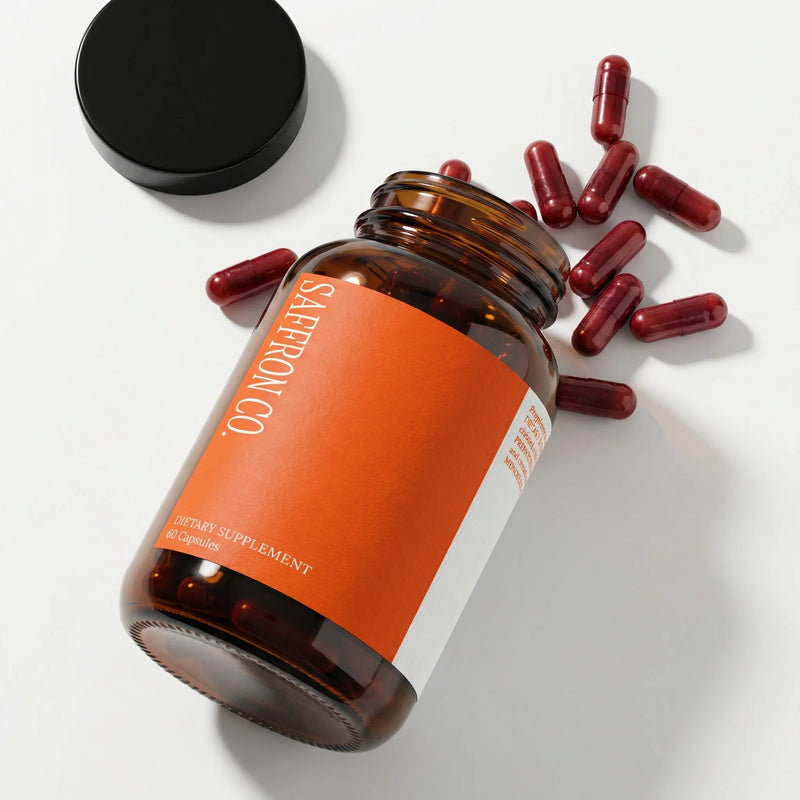
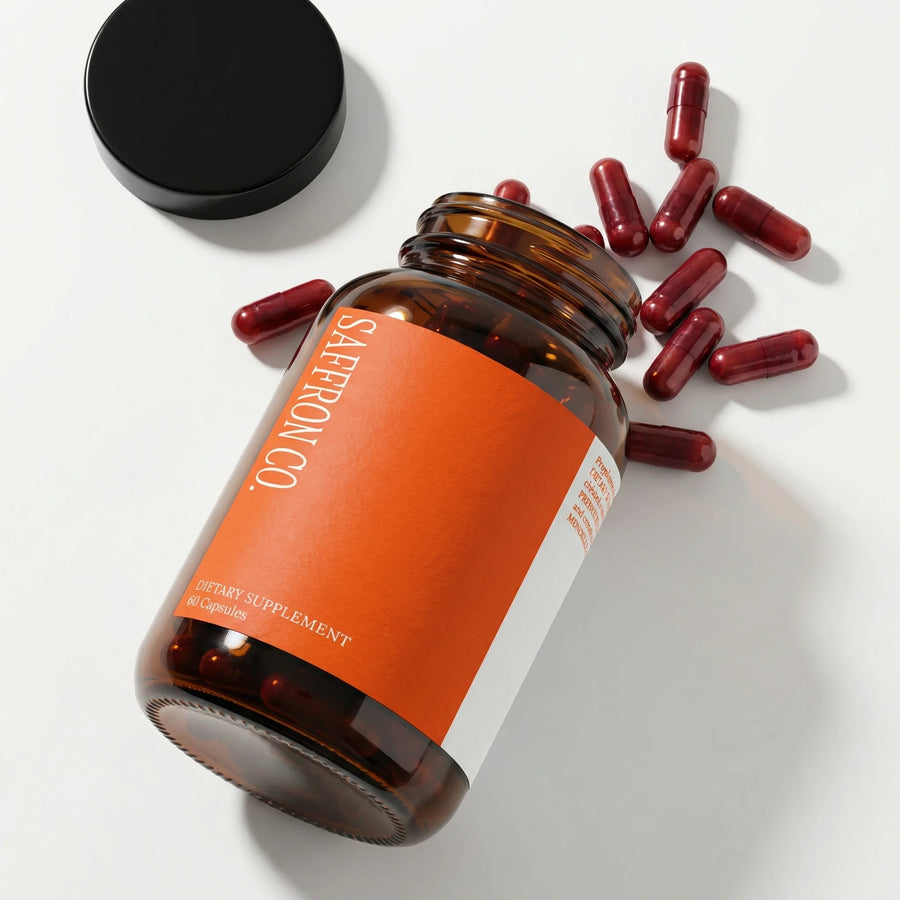
Saffron Co pairs the clinically studied 30 mg saffron dose with magnesium glycinate and active vitamin B6 (P5P), three ingredients with premenstrual-mood evidence, plus Rhodiola and a probiotic. A daily ritual for premenstrual mood support, not a treatment for PMS or PMDD.
What causes PMS mood swings?
PMS mood swings are largely tied to hormone shifts before menstruation. After ovulation, estrogen and progesterone rise and then fall if pregnancy does not occur, and for some women the brain and body are more sensitive to those changes. This does not mean your hormones are abnormal. Often the issue is sensitivity to normal hormonal fluctuation.
Why the cycle moves your mood: estrogen and progesterone influence more than reproduction. They shape serotonin, stress response, sleep quality, and emotional regulation. When they shift quickly in the luteal phase, mood can shift with them, which is why the days before a period can feel more fragile, edgy, or emotionally intense.
Sensitivity varies. One person may notice mild irritability; another may feel like the whole week before her period becomes harder to manage. Both are within the range of PMS. Other factors intensify it: chronic stress, sleep debt, blood sugar swings, and perimenopause can all make premenstrual mood symptoms hit harder.
Why period mood swings can feel worse some months
Some months, period mood swings feel sharper not because your cycle changed, but because the rest of life piled on top of it. Common amplifiers include burnout, a high mental load, relationship tension, overtraining or under-recovery, alcohol, inconsistent meals, and too much caffeine on too little sleep. A nervous system already stretched thin tends to tolerate hormonal change less gracefully.
How perimenopause can change the picture
Perimenopause can make premenstrual mood symptoms more intense, less predictable, or longer-lasting. During perimenopause, estrogen and progesterone fluctuate more erratically, which can change your usual rhythm. If your period mood swings seem to be getting worse in your late 30s or 40s, saffron for perimenopause and the broader perimenopause shift may be part of the explanation.
PMS vs PMDD: how to tell the difference
PMS, or premenstrual syndrome, refers to the emotional and physical symptoms that happen in the days before a period and improve once menstruation begins. PMDD, or premenstrual dysphoric disorder, is a more severe cyclical condition with mood symptoms that are more disruptive and harder to function through. A useful question is not just whether you feel different before your period, but how much it interferes with your ability to work, relate, care for yourself, or get through the day. If low mood, anxiety, or irritability continue throughout the month rather than clustering premenstrually, a broader concern may be worth discussing with a clinician. Our guide to saffron for PMDD covers where that line sits.
Signs it may be PMDD instead of typical PMS
Symptoms more consistent with PMDD: intense anger or rage, sudden hopelessness, panic or severe anxiety, conflict that spikes predictably before each period, feeling unable to function at work or home, and marked relief shortly after the period begins. PMDD is not just "bad PMS." It is a diagnosable condition that deserves proper evaluation. If you ever have thoughts of self-harm, seek immediate professional support.
When to talk with a healthcare provider
If your symptoms are severe, worsening, or affecting daily functioning, speak with a healthcare provider. A good first step is to track symptoms for at least two cycles: note when mood changes begin, what they feel like, when they lift, and whether they line up with the premenstrual phase. That pattern helps a clinician distinguish PMS, PMDD, perimenopause-related shifts, and other contributors. This article is for education only and is not medical advice.
How to manage mood swings before a period
The most useful approach starts with basics that support the body through the luteal phase, not because the answer is "just do self-care," but because sleep, food, stress load, and recovery genuinely affect how intensely hormone shifts are felt. Regular meals help keep blood sugar steadier, adequate magnesium may support the nervous system, and reducing alcohol helps because it often worsens sleep, anxiety, and next-day irritability. These steps may soften the edges. They may not erase symptoms completely, and that distinction matters.
Lifestyle supports that often help
Supportive habits during the premenstrual week often include keeping sleep and wake times consistent, getting morning light soon after waking, choosing gentle exercise (walking, strength training, yoga) over pushing through exhaustion, eating protein-rich meals regularly, including fiber-rich foods, staying hydrated, and protecting recovery if you already feel depleted. Many women do better when they stop expecting the premenstrual week to perform exactly like every other week.
Which ingredients actually have evidence for premenstrual mood
Supplements are supportive tools, not fixes, and they do not diagnose or treat PMS, PMDD, or any condition. That said, a handful of ingredients have real randomized-trial evidence specifically for premenstrual mood. Here is the honest ranking, saffron included and placed where the evidence puts it.
| Ingredient | Evidence for premenstrual mood | The honest read |
|---|---|---|
| Chasteberry (Vitex) | Strongest fit | Randomized trials and a systematic review show it beats placebo for PMS, specifically on irritability, mood alteration, and anger. The best-matched botanical for premenstrual mood swings; works through dopamine and prolactin pathways. |
| Calcium (~1,200 mg) | Best nutrient | A large trial cut PMS symptoms by roughly half versus placebo, with mood among the domains that improved. A plain, well-tolerated nutrient, and one of the most reproducible findings in the PMS literature. |
| Saffron (30 mg) | Strong | In its landmark trial, 76% of women had at least a 50% drop in PMS symptoms versus 8% on placebo, and a 2025 meta-analysis confirms benefit. It sits close behind, with the cleanest mechanism story: saffron acts on the serotonin pathway premenstrual mood runs through. |
| Vitamin B6 (up to 100 mg) | Supporting | A BMJ meta-analysis found B6 improves premenstrual symptoms including mood. A useful cofactor; keep daily intake at or under 100 mg, since higher chronic doses risk nerve issues. |
| Magnesium (with B6) | Support only | Small trials suggest magnesium, especially paired with B6, reduces premenstrual mood and anxiety. Evidence is thinner than calcium or Vitex, so treat it as support, not a hero ingredient. |
Reading the table honestly: if premenstrual irritability and mood swings are your single loudest symptom, chasteberry (Vitex) is the most precisely matched, and calcium is the best-evidenced everyday nutrient. Saffron sits close behind, with its own randomized trial (Agha-Hosseini 2008), a 2025 meta-analysis, and the cleanest mechanism story, since saffron's compounds act on serotonin the way premenstrual mood does. The Vitex evidence comes from a systematic review of double-blind trials, and the B6 evidence from a BMJ meta-analysis.
Where a saffron-based formula fits
For women who want a daily saffron-based ritual, a saffron-based formula may be worth considering, and the roundup of natural mood supplements compares the field. Saffron Co pairs the studied 30 mg saffron dose with magnesium glycinate and active vitamin B6 (P5P), three of the ingredients above with premenstrual-mood evidence, plus Rhodiola for stress adaptation and a probiotic for the gut-brain axis. It is the saffron-plus-cofactors route rather than the Vitex or calcium route, so if your one dominant symptom is premenstrual irritability, a chasteberry product may suit you better. As a newer brand, Saffron Co answers its shorter track record with a 90-day money-back guarantee.
Birthed by nature. Backed by science.
Three ingredients with premenstrual-mood evidence in one daily capsule. Give it the couple of cycles the research uses, and if your premenstrual weeks do not feel steadier, get your money back.
Realistic expectations, and when support should go beyond self-care
Premenstrual mood swings often improve with supportive habits, better cycle awareness, and sometimes well-chosen ingredients. But there is an honest ceiling. Lifestyle changes, tracking, and supplements may reduce intensity; they do not diagnose or treat PMDD or anxiety, and they do not replace medical care when symptoms become severe, persistent, or disruptive. The middle ground is usually most helpful: pay attention to the pattern, support the body well, and escalate care when it starts affecting your life in a bigger way.
A simple plan for this cycle: (1) track your symptoms and note when they begin and end; (2) prioritize sleep and regular meals, especially the week before your period; (3) reduce avoidable stressors where possible, including alcohol, overtraining, and long gaps between meals; (4) if you add an ingredient, give it a couple of full cycles before judging it; (5) if symptoms feel intense, cyclical, or disruptive enough to suggest PMDD, speak with a clinician.
FAQ: mood swings before a period
What causes mood swings before a period?
Mood swings before a period are usually caused by hormonal shifts in the luteal phase, especially changes in estrogen and progesterone after ovulation. These shifts can affect serotonin, sleep, stress response, and emotional regulation. Stress, poor sleep, blood sugar swings, and perimenopause can make symptoms feel worse.
How many days before a period do mood swings start?
For many women, mood swings start about 5 to 10 days before a period. They often begin after ovulation and ease once bleeding starts or within the first few days.
What supplements have evidence for premenstrual mood?
Chasteberry (Vitex) and calcium have the strongest randomized-trial evidence for premenstrual mood, with saffron close behind (a randomized trial plus a 2025 meta-analysis). Vitamin B6 and magnesium act as supporting cofactors. All are supportive tools, not treatments for PMS, PMDD, or any condition.
Are mood swings before a period normal, or could it be PMDD?
Mild to moderate mood changes before a period are common with PMS. If symptoms are severe, highly cyclical, and disruptive to daily life, PMDD may be worth discussing with a healthcare provider. Tracking symptoms over at least two cycles can help clarify the pattern.
Why are my period mood swings getting worse with age?
Period mood swings can get worse with age because perimenopause often brings more erratic estrogen and progesterone fluctuations. These changes can make mood symptoms feel more intense, less predictable, and more closely tied to sleep problems, anxiety, and brain fog. If the shift feels significant, it is worth discussing with a clinician.
This article is for informational purposes only and is not medical advice. Saffron, chasteberry, calcium, B6, and magnesium are supportive ingredients; they do not diagnose, treat, or cure PMS, PMDD, or any condition, and are not a substitute for clinician-guided care. Keep vitamin B6 at or under 100 mg per day for chronic use. If your premenstrual symptoms are severe, persistent, or escalating, or you take prescription medication or are pregnant or nursing, talk with a qualified healthcare provider before starting a new supplement. These statements have not been evaluated by the Food and Drug Administration. This product is not intended to diagnose, treat, cure, or prevent any disease.