

Perimenopause mood swings ride on fluctuating estrogen and progesterone, not on you handling life worse than everyone else. Here is what actually drives them, how to tell normal from more-than-normal, and what genuinely helps, from sleep and blood sugar to hormone therapy and saffron.
Why perimenopause mood swings happen in the first place
Perimenopause mood swings are real. They are common. And they are not a sign that you are weak, failing, or somehow handling life worse than everyone else.
For many women, this stage feels confusing because the emotional shifts can arrive fast. You may feel steady one week, then unusually irritable, anxious, flat, or tearful the next. That is not imagined. It reflects real biological change.
Perimenopause is the transition leading up to menopause, and it often begins in the late 30s or 40s. For some women it starts earlier than expected, and it can last several years before periods stop completely. During that time, estrogen and progesterone do not decline in a straight line. They fluctuate, and those swings can affect mood, serotonin, GABA, sleep quality, stress response, and the broader systems involved in emotional regulation.
That is part of why mood can feel less predictable during this phase, and why support often needs to go beyond generic advice about just managing stress. If you are exploring natural support during this transition, it helps to understand why this formula uses a saffron-centered approach for mood balance, stress resilience, focus, and libido.
Why it hits so fast: estrogen shapes serotonin (mood, motivation, steadiness) and progesterone supports calming, GABA-related activity. When both swing unpredictably, the brain keeps having to re-adjust, which is why you can feel reactive, weepy, or unlike yourself in a way that seems out of proportion to what is actually happening.
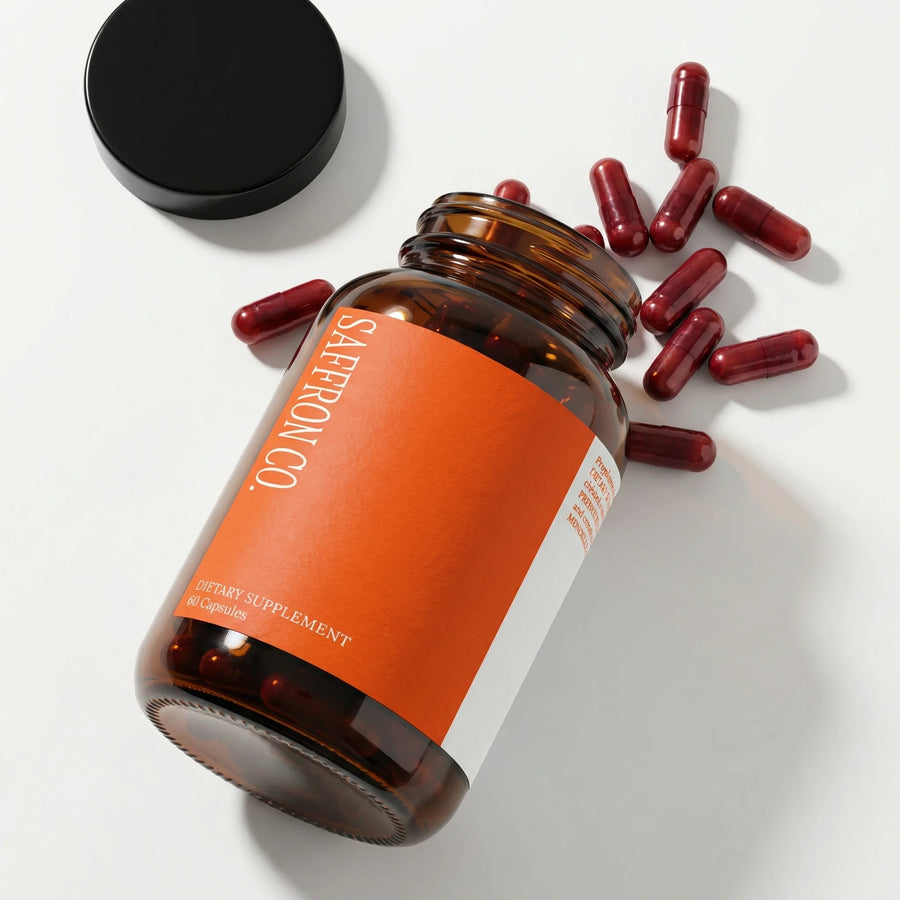
Daily support for the weeks you don't feel like yourself.
Perimenopause mood swings ride on shifting estrogen and progesterone. Saffron Co pairs the studied 30 mg saffron dose with Rhodiola, magnesium glycinate, active vitamin B6 (P5P), and a probiotic, non-hormonal daily support for mood, stress, and steadiness through the transition.
What is perimenopause, exactly?
Perimenopause is not a single event. It is the hormonal transition before menopause. You can still be having periods during perimenopause, sometimes regularly, sometimes not. What changes first is often the pattern: cycles may shorten, lengthen, get heavier or lighter, or feel more PMS-like than they used to. At the same time, poor sleep, brain fog, low libido, anxiety, and mood swings can begin to show up.
Menopause itself is defined as 12 consecutive months without a period, and perimenopause vs menopause is a distinction worth knowing: perimenopause is everything leading up to that point.
Why hormones can change your mood so quickly
Estrogen and progesterone influence more than reproduction. They also affect brain chemistry. Estrogen interacts with the serotonin pathways that matter for mood, motivation, and emotional steadiness. Progesterone is tied more closely to calming systems, including GABA-related activity, which can influence how settled or overstimulated you feel. When these hormones swing, the brain has to keep adapting with them.
That can help explain why some women feel unusually reactive, weepy, anxious, or unlike themselves during perimenopause. Add sleep disruption, hot flashes, night waking, work pressure, caregiving stress, or a heavy mental load, and those mood shifts can feel even sharper.
What perimenopause mood swings can feel like
Perimenopause mood swings are not always dramatic in the way people expect. Sometimes they look like irritability or sudden sadness. Sometimes they feel more like anxiety, emotional flatness, rage, or crying over things that would not normally hit so hard. A lot of women describe it more simply: I just do not feel like myself.
This can overlap with the broader cluster of perimenopause symptoms people search for, including brain fog, low motivation, poor sleep, low libido, fatigue, cycle changes, and hot flashes. The exact symptom count matters less than the pattern: perimenopause often affects mood, cognition, sleep, energy, and cycles all at once.
Common emotional and cognitive symptoms
Common emotional and cognitive symptoms during perimenopause can include:
- irritability that feels out of proportion
- faster mood shifts than usual
- anxiety or a sense of being on edge
- low motivation
- emotional flatness
- crying more easily
- difficulty concentrating and brain fog
- feeling mentally overloaded
- not feeling like yourself
For some women, the hardest part is not one symptom on its own. It is the combination. You may be managing brain fog, a demanding schedule, poor sleep, and a shorter fuse all at once.
When mood swings come bundled with other symptoms
Mood is often harder to regulate when other perimenopause symptoms are active in the background. Night waking can leave you emotionally thinner the next day. Hot flashes can interrupt sleep repeatedly. PMS-like changes may feel stronger or last longer than they used to. Fatigue can make everything feel more intense, including conflict, stress, and decision-making. Some women do experience especially difficult symptoms. That does not mean something is wrong, but it does mean you deserve real support, not dismissal.
How to tell what is typical, and when to look deeper
Some mood variability is common in perimenopause. But it is also important not to assume every emotional change is just hormones. Thyroid issues, chronic stress, burnout, medication side effects, depression, anxiety disorders, and major life strain can overlap with perimenopause in ways that look very similar. That is why a thoughtful evaluation matters, especially if symptoms are persistent or escalating. Lifestyle tools and supplements may help support mood balance, but they also have limits, and in some cases clinical care is the right next step.
Signs it may be more than a normal hormonal shift
Look deeper, or get evaluated, if your symptoms last for weeks without much relief; interfere with work, parenting, relationships, or daily functioning; involve panic or intense anxiety; include persistent low mood or loss of interest in normal life; or feel unusually severe or unmanageable for you. A simple symptom-and-cycle log (sleep, bleeding, hot flashes, energy, irritability, anxiety, mood) often makes the pattern clearer on paper than it feels in the moment.
When to speak with a healthcare provider
Speak with a healthcare provider if you are dealing with severe sleep disruption, intense anxiety, heavy bleeding, sudden symptom escalation, mood changes that feel unmanageable, or persistent emotional symptoms affecting daily life. If you are currently taking prescription medication for mood, sleep, or any other condition, talk with your provider before adding a new supplement. Medication changes should always be clinician-guided. This article is for informational purposes only and is not medical advice.
What actually helps with perimenopause mood swings
The most useful approach is usually layered. Start with the basics that stabilize the system, then consider whether medical or natural support belongs on top. Here is how the main options compare.
| Approach | What it may do | Best when |
|---|---|---|
| Lifestyle basics | Steadies the systems mood rides on: sleep, blood sugar, movement, lower alcohol | Always. The foundation that makes everything else work better. |
| Hormone therapy (HRT/MHT) | Addresses the hormonal driver directly | Mood paired with hot flashes, sleep loss, or cycle changes. Clinician-led. |
| Natural support | May support mood balance, stress response, and steadiness (saffron, magnesium, Rhodiola) | Milder symptoms, or alongside the basics before a medical route. |
| Clinical / mental-health care | Proper evaluation and treatment | Severe, persistent, or escalating symptoms, or a possible mood disorder. |
Lifestyle changes that can make a real difference
The basics matter more during hormonal transition than many women expect. A consistent sleep routine helps protect emotional regulation. So does eating protein-rich meals that support blood sugar stability, especially earlier in the day. Walking, strength training, and regular movement help with stress response, energy, and sleep quality. Reducing alcohol may help too, particularly if it worsens night waking, hot flashes, or next-day irritability.
Stress regulation practices matter, but they do not need to be elaborate: shorter work sprints, fewer unnecessary commitments, more daylight, breathing practices, therapy, or simply admitting your nervous system is carrying too much. These are not glamorous fixes. They are the foundation that makes everything else work better.
Medical options worth discussing
Some women benefit from hormone replacement therapy, also called HRT or MHT, depending on their symptoms, health history, and stage of transition. Others do better with non-hormonal, clinician-guided options. This is not a one-size-fits-all decision. It is a discussion worth having if mood swings are paired with major sleep disruption, hot flashes, heavy cycle changes, or a strong sense that your baseline has shifted. Medical support is not a failure. It is one valid tool among several.
Natural support options, including saffron
Some women want daily support for mood balance, stress resilience, focus, and libido during perimenopause, especially if they are not ready for a medical route or want to support the basics first. Saffron for perimenopause is one of the more interesting options here because it has been clinically studied for mood support. Research at the 28 to 30 mg per day dose is encouraging, with randomized trials pointing to benefit for emotional well-being and low mood. Most studies are small and short, often 6 to 8 weeks, so the honest read is that saffron may help some people with consistent use while longer-term data builds. If you want to weigh formulas side by side, our guide to the best perimenopause supplements and the roundup of natural perimenopause supplements compare the options.
For women who want a complete daily ritual rather than saffron alone, Saffron Co Mood and Vitality Capsules use 30 mg of Spanish saffron standardized to at least 3.0% trans-crocin and about 1.2% safranal, paired with Rhodiola rosea for stress adaptation, magnesium glycinate for nervous-system support, vitamin B6 in its active P5P form, and a probiotic for the gut-brain axis. As a newer brand, Saffron Co has less long-term published history than some established competitors, which is what the 90-day money-back guarantee answers.
Realistic expectations: what improves, what may not, and how long it takes
Perimenopause mood swings usually improve through a combination of support, not one magic fix. That may mean better sleep, steadier blood sugar, less alcohol, more movement, hormone support where appropriate, and a consistent daily routine that lowers overall stress load. That is the honest picture.
What natural remedies can and cannot do
Natural approaches may help support mood balance, stress response, emotional steadiness, and mental clarity, and help you feel more resilient around the edges of hormonal change. What they cannot do is replace mental-health care when symptoms are severe, persistent, or interfering with normal life. They also do not work overnight. Supplements, including saffron, are generally measured over several weeks of daily use, not a few days.
A practical next-step framework
A simple sequence beats impulse-buying three supplements at once: (1) track symptoms and cycle patterns for a few weeks; (2) protect sleep and stabilize blood sugar with consistent meals; (3) review symptoms with a clinician, especially if they are escalating; (4) choose one support strategy at a time; (5) stay consistent for 4 to 8 weeks before judging whether it is helping. Slower, but far more likely to tell you what is actually working.
Birthed by nature. Backed by science.
Give it the 4 to 8 week window the saffron research uses. If the mood side of perimenopause does not feel steadier, get your money back, no questions asked.
FAQ: perimenopause mood swings
How long do perimenopause mood swings last?
They can come and go throughout the perimenopause transition, which may last several years. For some women symptoms are mild and intermittent; for others they are more noticeable during certain phases of the cycle or as hormone fluctuations become more pronounced.
What helps perimenopause mood swings naturally?
The most reliable starting points are better sleep, blood sugar stability, regular movement, lower alcohol where relevant, and stress-regulation practices. Some women also explore natural support such as clinically studied saffron for mood balance, but results vary and usually take several weeks of consistent use.
Can perimenopause cause anxiety, rage, or feeling flat?
Yes. Perimenopause can affect mood in different ways, including anxiety, irritability, sudden anger, emotional flatness, and a general sense of not feeling like yourself. Hormone fluctuations, poor sleep, stress, and other symptoms like brain fog or fatigue often interact rather than showing up separately.
This article is for informational purposes only and is not medical advice. Perimenopause mood symptoms can overlap with thyroid, depression, anxiety, and other conditions that deserve evaluation; saffron and other supplements do not diagnose, treat, or cure any condition and are not a substitute for clinician-guided care or hormone therapy where those are needed. If symptoms are severe, persistent, or escalating, or you take prescription medication or are pregnant or nursing, talk with a qualified healthcare provider before starting a new supplement. These statements have not been evaluated by the Food and Drug Administration. This product is not intended to diagnose, treat, cure, or prevent any disease.