
Saffron Co. vs Youtheory Saffron
Saffron Co. and Youtheory Saffron are the two products in the saffron supplement category whose formulas overlap the most: both pair a saffron extract with Rhodiola rosea, and both are taken as a daily capsule aimed at mood and emotional well-being. The two products diverge on saffron extract (patented Affron vs. generic standardized), on supporting actives (Sensoril ashwagandha vs. magnesium glycinate, a branded probiotic, and active B6), and on price (Youtheory is roughly half the cost). This comparison walks through what is actually inside each capsule, what each one is built to do, and why the price difference exists. Every figure is sourced from each brand's own product page or published research.
Why Saffron Is Important
Saffron is the dried red stigma of the Crocus sativus flower, with three primary bioactive compounds, safranal, crocin, and picrocrocin, that are the focus of most modern research.
The clinical research base behind saffron is unusually deep for an herbal ingredient. A 2013 meta-analysis in the Journal of Integrative Medicine reviewed randomized controlled trials and reported positive effects of saffron versus placebo in adults with mild-to-moderate depression. A 2018 systematic review and meta-analysis reached similar conclusions on depressive symptoms. Independent ingredient databases like Examine.com's saffron page and consumer-health resources like Healthline's overview of saffron summarize that body of research, which also covers sleep, libido, PMS, and menopause symptoms.
Saffron is a dietary supplement, not a medication, and individual response varies. What makes the ingredient interesting in 2026 is the volume of published human trials. For deeper context, see the brand's clinical studies on saffron and how saffron works in the brain.
About Saffron Co.
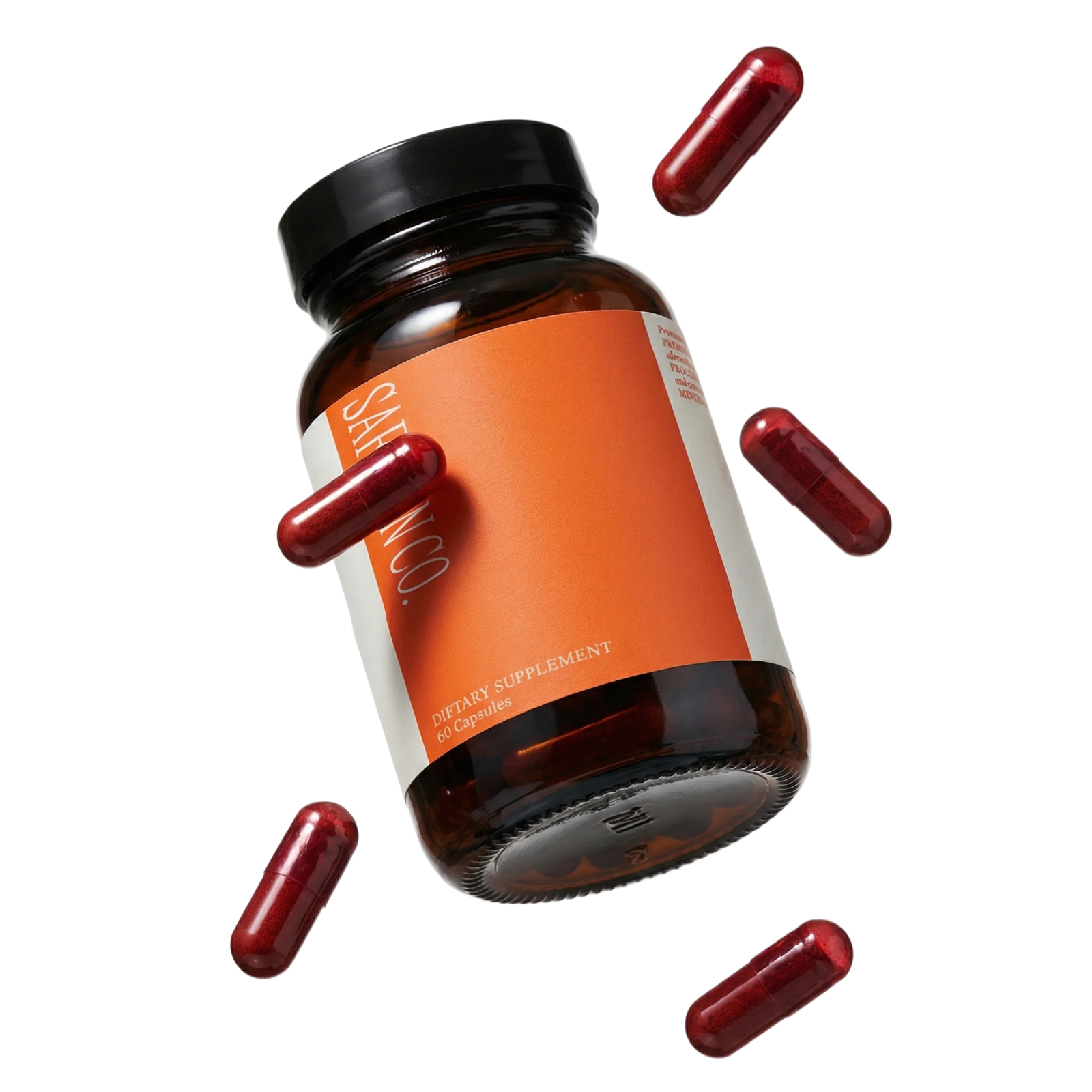
Saffron Co. is a direct-to-consumer brand built around a single five-ingredient daily capsule designed for the modern stress cluster: low mood, mental fog, low energy, low libido, and the symptoms that show up around perimenopause and menopause. The formula pairs standardized saffron with a clinical-grade rhodiola, an elemental magnesium dose as glycinate, a branded spore-based probiotic, and the active form of vitamin B6.
The full active panel is:
- Saffron Extract: 15 mg per capsule (30 mg/day at 2 capsules), standardized to >=3.0% trans-crocin and ~1.2% safranal
- Rhodiola rosea Extract: 50 mg per capsule (100 mg/day), standardized to 3% rosavins / 1% salidroside
- Magnesium (as glycinate): 70 mg elemental per capsule (140 mg elemental/day), Albion TRAACS or equivalent chelate
- ProbioMood (NU-10): 1 billion CFU per capsule (2 billion CFU/day) of Bacillus coagulans, a spore-based, vegan probiotic
- Vitamin B6 (P5P): 2.5 mg per capsule (5 mg/day) as Pyridoxal-5-Phosphate, the bioactive form
The product comes in a 60-capsule bottle taken at one to two capsules per day. It is vegan and gluten-free, the brand states it uses no flow agents (no magnesium stearate) and no synthetic dyes, and every batch is third-party tested through an ISO-accredited lab. Pricing on the site is $69.90 for a one-time order, $59.90 on the 30-day subscription, and $119.92 for the 90-day plan (three bottles, ~$39.97/bottle). All orders ship free, and the brand backs the product with a 90-day money-back guarantee. The why this formula page explains the rationale, and the guarantee page covers the return policy.
About Youtheory
Youtheory is a mass-retail wellness brand sold in major US retailers including Costco, Target, Vitacost, and Amazon, in addition to its own direct-to-consumer site. Youtheory Saffron is the brand's saffron-based mood product, built around the patented Affron saffron extract paired with two adaptogens, a higher dose of Rhodiola rosea and a branded Sensoril ashwagandha.
Youtheory's Supplement Facts panel for Saffron (per 2-capsule serving) lists:
- Rhodiola Extract (Rhodiola rosea, root): 350 mg, generic standardized
- Sensoril Ashwagandha Extract (Withania somnifera, root and leaf): 150 mg, as Sensoril (trademark of Natreon, Inc.)
- Affron Saffron Extract (Crocus sativus L., stigma): 30 mg, as Affron (trademark of Pharmactive, Inc.)
- Other ingredients: Vegetable capsule (hypromellose), microcrystalline cellulose, croscarmellose sodium, magnesium stearate, silicon dioxide
The product comes in a 60-capsule bottle, with a serving size of 2 capsules once daily, which makes the bottle a 30-day supply. It is labeled gluten-free, dairy-free, soy-free, and vegetarian. The product is manufactured in a GMP-certified facility and is third-party tested for purity and potency. Allergen statement: manufactured in a facility that processes whey, milk, and fish extracts.
Pricing on youtheory.com is $35.99 for a single bottle. Youtheory.com does not currently offer a subscription program on its own site, though a Subscribe & Save program at 5% to 10% off is available through Amazon as a third-party channel. youtheory.com ships free on orders of $40 or more (a non-refundable $14.99 fee applies for orders under that threshold), and ships within the United States only. The brand offers a 45-day satisfaction guarantee from the date of purchase, applicable to products bought directly from youtheory.com or authorized US sellers.
Why Saffron Is So Expensive
Both products are built on the same flower, and saffron is famous for its price. According to Britannica's explainer on why saffron is so expensive, it takes roughly 150 flowers to produce one gram of usable saffron. Each Crocus sativus flower has only three red stigmas, hand-picked within a short blooming window each fall. There is no commercial machinery that replaces that labor.
For supplement formulators, three more variables affect what a finished saffron product has to cost:
- Raw vs. extract: Ground stigma is cheaper than a standardized extract. Saffron Co. uses a generic saffron extract standardized to >=3% trans-crocin and ~1.2% safranal. Youtheory uses Affron, a patented Pharmactive extract with its own clinical research file at low doses (around 14 to 28 mg/day).
- Branded clinical extracts: Patented extracts like Affron carry licensing costs that generic standardized extracts do not. Affron in particular has been studied in published mood trials in adults and trials in adolescents.
- Origin and grade: Spanish, Iranian, Greek, and Kashmiri saffron all command different prices, and within each origin there are grade tiers based on crocin (color), safranal (aroma), and freedom from yellow stamen.
So a 30 mg dose of patented Affron and a 30 mg dose of generically standardized saffron are not the same input cost. For more, see saffron vs. saffron extract, saffron extract, and the brand's global saffron statistics page.
Saffron Co. vs Youtheory: Side-by-Side
These two formulas are the closest in spirit in the saffron supplement category. Both pair a saffron extract with Rhodiola rosea and both are taken as a daily capsule. The differences sit in the supporting actives, the saffron extract itself, and the brand's positioning. Youtheory leans on a higher rhodiola dose and a branded Sensoril ashwagandha. Saffron Co. leans on magnesium glycinate, a branded probiotic, and active B6 in addition to rhodiola.
Format and Daily Dose
| Spec | Saffron Co. | Youtheory Saffron |
|---|---|---|
| Format | Vegan capsule | Vegetarian capsule (contains magnesium stearate) |
| Units per bottle | 60 capsules | 60 capsules (30 servings of 2) |
| Daily dose | 1 to 2 capsules per day | 2 capsules once daily |
| Days supply per bottle | 30 to 60 days | 30 days |
| Intended use case | Mood, focus, energy, libido, perimenopause / menopause | Mood, mental focus, energy |
| Formula type | 5-ingredient stack (saffron + rhodiola + Mg glycinate + B. coagulans + P5P) | 3-ingredient stack (saffron + rhodiola + ashwagandha) |
Saffron Content and Standardization
| Saffron details | Saffron Co. | Youtheory Saffron |
|---|---|---|
| Saffron per capsule | 15 mg | 15 mg |
| Saffron per daily serving | 30 mg (at 2 caps/day) | 30 mg (at 2 caps/day) |
| Standardization published | >=3.0% trans-crocin, ~1.2% safranal | Standardized per Pharmactive's Affron specification |
| Branded extract | Generic (with published standardization) | Affron (Pharmactive, Inc.) |
| Research focus of extract | Generic standardized extract used for general saffron benefits | Patented extract studied at low doses for mood in adults and adolescents |
Both products land at the same daily saffron dose (30 mg). The difference is the form of the extract. Youtheory's Affron is the patented and most published saffron extract for mood specifically. Saffron Co.'s extract is generic but specified with comparable trans-crocin and safranal levels. For more on dose context, see saffron dosage.
Full Ingredient Comparison
| Active ingredient | Saffron Co. (per day, 2 caps) | Youtheory Saffron (per day, 2 caps) |
|---|---|---|
| Saffron extract | 30 mg, generic standardized | 30 mg, Affron (Pharmactive) |
| Rhodiola rosea | 100 mg (3% rosavins / 1% salidroside) | 350 mg, generic standardized |
| Ashwagandha | Not included | 150 mg Sensoril (Natreon) |
| Magnesium glycinate | 140 mg elemental (~990 mg chelate) | Not included |
| Probiotic (Bacillus coagulans) | 2 billion CFU (ProbioMood NU-10) | Not included |
| Vitamin B6 (P5P) | 5 mg as Pyridoxal-5-Phosphate | Not included |
| Other / inactive ingredients | Not publicly disclosed on website (brand states no magnesium stearate) | Vegetable capsule (hypromellose), microcrystalline cellulose, croscarmellose sodium, magnesium stearate, silicon dioxide |
Where Youtheory wins on raw adaptogen milligrams (3.5x the rhodiola dose, plus 150 mg Sensoril ashwagandha that Saffron Co. does not include), Saffron Co. wins on the supporting "non-adaptogen" layer: a real elemental magnesium dose, a branded gut-brain probiotic, and the active form of B6. The two formulas are paying for different pieces of the puzzle. For background on each Saffron Co. ingredient, see the saffron supplement ingredients overview.
Price and Subscription
| Pricing | Saffron Co. | Youtheory Saffron |
|---|---|---|
| One-time price (1 bottle, brand site) | $69.90 (free shipping) | $35.99 + $14.99 shipping under $40 = $50.98 total, or free at $40+ |
| Subscription on brand site | $59.90 monthly / $119.92 for 3 bottles on 90-day plan (~$39.97/bottle) | Not available on youtheory.com |
| Subscription on third-party channels | Not applicable | Amazon Subscribe & Save: ~$34.19 (5% off), down to ~$32.39 (10% off after 5+ deliveries) |
| Cost per day at recommended dose | $2.33 one-time, $1.33 on 90-day plan | $1.20 one-time at $40+ cart, ~$1.08 on Amazon S&S |
| Welcome bonus | Welcome kit with subscription ($25 value) | None disclosed |
Shipping and Guarantee
| Policy | Saffron Co. | Youtheory Saffron |
|---|---|---|
| Free shipping | Free on all orders | Free on orders $40+ (else $14.99 non-refundable fee) |
| International shipping | US-focused | US only, no international shipping |
| Money-back guarantee | 90 days, even if empty | 45 days from date of purchase (youtheory.com or authorized US sellers) |
| Cancel subscription | Anytime, no strings | Not applicable on youtheory.com; Amazon S&S can be cancelled anytime |
Why Saffron Co. Costs More
This is the largest price gap in the four comparisons we have run, and it deserves an honest answer. Youtheory Saffron is $35.99 on its own site, with free shipping if your cart hits $40, and as low as ~$32.39 per bottle on Amazon Subscribe & Save. Saffron Co. is $69.90 one-time and ~$39.97 per bottle on the deepest subscription tier. Five concrete reasons that gap exists:
1. Youtheory is a mass-retail brand with massive scale advantages. Youtheory's products are stocked in Costco, Target, Vitacost, Amazon, and many other large retail channels. That scale drives down per-unit manufacturing cost in a way a smaller direct-to-consumer brand selling on its own site cannot easily match. This is not an argument that Saffron Co. is "worth" the difference for every shopper, but it is the largest single line item explaining the price gap.
2. Youtheory does not include magnesium, a probiotic, or active B6. Youtheory's stack is three ingredients (Affron saffron, rhodiola, Sensoril ashwagandha). Saffron Co. is five (saffron, rhodiola, magnesium glycinate, branded probiotic, active P5P B6). Two of those Saffron Co. ingredients in particular are cost drivers: magnesium glycinate, a chelated form noted in the NIH Office of Dietary Supplements magnesium fact sheet for higher bioavailability than the cheaper magnesium oxide, and P5P (Pyridoxal-5-Phosphate), the bioactive form of vitamin B6 described in the NIH ODS vitamin B6 fact sheet. Delivering 140 mg of elemental magnesium as a glycinate chelate takes roughly 990 mg of total chelate mass per day, which adds meaningful capsule volume and raw material cost.
3. Excipient choices. Youtheory's label lists magnesium stearate as an inactive ingredient. Magnesium stearate is a standard flow agent in mass-market capsule manufacturing; it speeds up encapsulation and is widely considered safe. Saffron Co. states that its formula uses no flow agents, which slows down the encapsulation process and raises per-capsule production cost.
4. Branded probiotic strain. Saffron Co.'s probiotic is ProbioMood NU-10, a branded spore-based Bacillus coagulans strain with its own strain-identity documentation. Branded probiotic strains carry licensing fees and require strain-specific testing. Youtheory does not include a probiotic, so the cost line does not exist on its bill of materials.
5. Different research focus on saffron itself. Youtheory pays the licensing premium for Affron, a patented saffron extract studied at low doses for mood. Saffron Co. uses a generic standardized extract specified at >=3% trans-crocin and ~1.2% safranal, which is typically less expensive per gram than a patented extract but still meaningfully more expensive than ground saffron stigma. Both formulators are paying real money for saffron, just at different price points.
Honestly: Youtheory Saffron is the cheapest comparable mood-stack option in this comparison, and on a per-day basis it is the lowest-cost product across all four head-to-head comparisons we have published. Saffron Co. is more expensive because the formula includes ingredients Youtheory leaves out, uses more expensive forms of two of those ingredients, and is sold through a direct-to-consumer channel without retail-scale leverage.
Who Is Saffron Co. For?
Saffron Co. is built for someone dealing with the cluster of complaints that has become unusually common in 2026: low mood, mental fog, low energy, low libido, and the felt sense of running 21st-century stress on biology that has not changed in 10,000 years. As modern stressors pose unprecedented threats to wellbeing, a growing wave of people are swapping mainstream solutions for natural remedies that restore emotional vitality without causing dependency, numbness, or low drive, and Saffron Co.'s five-ingredient capsule is built around that audience.
That positioning is most relevant in four overlapping use cases:
Mood support. Saffron has been extensively studied for mood, including the meta-analyses cited above and the broader research summarized on Examine.com. Saffron Co.'s formula adds Bacillus coagulans, a spore-based probiotic, in the context of the increasingly well-documented gut-brain relationship. P5P participates in neurotransmitter synthesis (including serotonin and dopamine) per the NIH ODS B6 fact sheet. For more, see saffron for mood, saffron for mood support, natural mood supplements, and best supplements for mood.
Libido. Saffron has been explored in clinical research on sexual function in both men and women, including a 2012 randomized trial. The brand has a dedicated saffron for libido resource.
Focus. Rhodiola is an adaptogen with research on cognitive performance under stress, summarized on Examine.com's Rhodiola page. Note that Youtheory carries a higher rhodiola dose (350 mg vs. 100 mg). Saffron Co.'s rhodiola is paired with elemental magnesium and active B6, which support different pieces of the stress and cognition picture. For practical context, see best adaptogens for stress.
Menopause and perimenopause. Saffron has been investigated for symptoms commonly associated with menopause, including hot flashes, low mood, and reduced libido, in published clinical research like the 2018 trial on saffron in menopausal women. Magnesium status and B6 status are also relevant to a number of menopause-era symptoms per the NIH ODS fact sheets above. See saffron for menopause, best perimenopause supplements, perimenopause and libido, and saffron for women.
Who Is Youtheory Saffron For?
Youtheory Saffron is built for someone who wants a saffron, rhodiola, and ashwagandha stack at the lowest reasonable price, with the patented Affron extract on the saffron portion. If you do not specifically need a magnesium dose or a probiotic in the same capsule, do not mind a magnesium-stearate excipient, and want to take advantage of mass-retail pricing, this is the most affordable mood-stack option in the saffron supplement category, and it is widely available in big-box retail.
The trade-offs are: no elemental magnesium dose, no probiotic, no active P5P B6, a 45-day guarantee window versus Saffron Co.'s 90 days, a $40 minimum on youtheory.com for free shipping (or a $14.99 non-refundable shipping fee), and no subscription option on the brand's own site (Subscribe & Save is only available via Amazon).
Saffron Co. vs Youtheory: Final Thoughts
These two products are the most direct competitors in the saffron supplement category. The formulas overlap on the saffron-plus-rhodiola foundation, and they part ways from there. Youtheory adds 150 mg of branded Sensoril ashwagandha and uses the patented Affron extract for saffron. Saffron Co. adds an elemental magnesium dose as glycinate, a branded spore-based probiotic, and the active form of B6, with a generic-but-standardized saffron extract.
If your primary goal is the saffron-plus-adaptogen pairing at the lowest reasonable price, Youtheory Saffron is the most cost-effective option in this comparison and is widely stocked in retail. If your goal is a mood, focus, libido, and menopause stack that also covers a real elemental magnesium dose, an active form of B6, and a gut-brain probiotic, Saffron Co. is built around that audience and the price reflects the broader stack. For real-world feedback, see the Saffron Co. reviews page and the broader best saffron supplements and best saffron extract roundups.
FAQ
Is Youtheory's Affron the same as the saffron in Saffron Co.?
Both come from Crocus sativus, but Affron is a patented saffron extract by Pharmactive with its own clinical research file at low doses (around 14 to 28 mg/day for mood). Saffron Co. uses a generic standardized saffron extract specified at >=3% trans-crocin and ~1.2% safranal. Both are standardized for the same bioactive class, but the patent status and dedicated research file differ. See saffron vs. saffron extract.
Why does Youtheory cost roughly half as much as Saffron Co.?
Three main reasons. First, Youtheory is a mass-retail brand sold in Costco, Target, Amazon, and other large channels, which gives it scale advantages a direct-to-consumer brand cannot easily match. Second, Youtheory's stack is three ingredients to Saffron Co.'s five, and Saffron Co. uses more expensive forms of two of those (magnesium glycinate chelate and active P5P B6) plus a branded probiotic strain Youtheory does not include. Third, Youtheory uses magnesium stearate as a flow agent in encapsulation; Saffron Co. does not, which slows down manufacturing and raises per-capsule cost.
Does Youtheory have more adaptogens than Saffron Co.?
Yes, on raw milligrams. Youtheory delivers 350 mg of rhodiola and 150 mg of Sensoril ashwagandha per day. Saffron Co. delivers 100 mg of rhodiola and no ashwagandha. Saffron Co.'s formula trades raw adaptogen milligrams for an elemental magnesium dose, a probiotic strain, and active B6.
Which has the better return policy?
Saffron Co. offers 90 days from purchase, even with empty bottles, with no questions asked. Youtheory offers 45 days from purchase for products bought from youtheory.com or authorized US sellers. Both are above the 30-day industry baseline, but Saffron Co.'s window is twice as long.
Does Youtheory ship internationally?
No. Youtheory.com explicitly states that it does not currently ship outside the United States. Saffron Co. is also US-focused. For international shoppers, SaffPro offers worldwide shipping; see our Saffron Co. vs SaffPro comparison for details.
How long does it take to feel the effects of saffron?
Most published saffron trials measured outcomes after four to eight weeks of daily use. Saffron is not a fast-acting compound. Saffron Co. notes that benefits usually appear in two to three weeks with consistent use, with fuller effect after six to eight weeks.
Try Saffron Co.
If you have read this comparison and the mood / focus / libido / menopause framing is what you came in looking for, the place to start is the Saffron Co. product page. Every order is backed by the brand's 90-day money-back guarantee, which is twice the length of Youtheory's 45-day window, so you can give the formula a full eight-week trial (the timeframe most saffron trials are measured at) and still return it if it is not working for you.
Read more

Saffron Co. vs Ritual Stress Relief BioSeries side-by-side: saffron dose, ingredients, price, formula. Mood and libido vs stress. See what's inside.
Saffron Co. vs Happy Saffron Plus: compare ingredients, saffron extracts, mood benefits, pricing, capsule dose, guarantees, and which one fits your routine. The article compares both saffr...